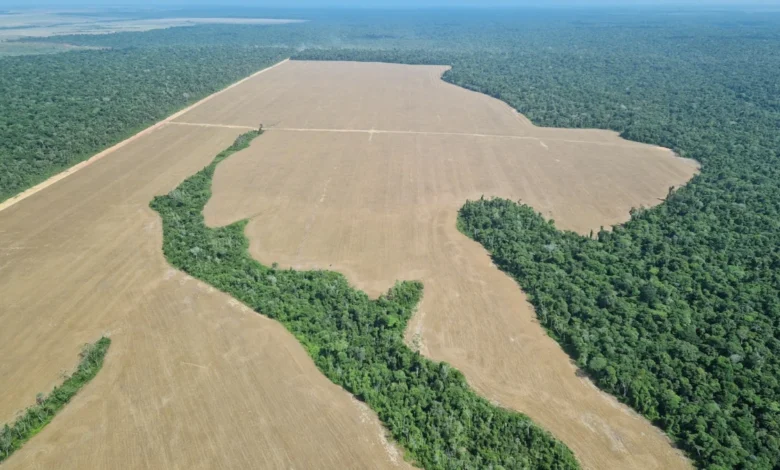
The Brazilian Amazon has reached a significant environmental milestone, with recent data from the national space agency, INPE, confirming that deforestation rates have plummeted to their lowest levels in a decade. This achievement is being hailed globally as a primary victory for the administration of President Luiz Inácio Lula da Silva, who assumed office in 2023 with a bold mandate to restore Brazil’s environmental protections. Upon his inauguration, President Lula pledged to eliminate illegal deforestation entirely by 2030, a sharp departure from the policies of his predecessor, Jair Bolsonaro, during whose tenure the rainforest saw record-breaking destruction. To achieve these results, the current administration has aggressively ramped up enforcement, deploying environmental police to raid illegal mining operations on Indigenous lands and utilizing advanced remote sensing technology to monitor forest cover in real-time.
However, this hard-won progress is now standing on a precipice. Despite the official statistics showing a downward trend in forest loss, a convergence of market volatility, the collapse of voluntary trade agreements, and shifting corporate commitments suggests that the Amazon may be entering a new era of risk. Environmental experts and researchers warn that the structural drivers of deforestation—primarily the global demand for beef and soybeans—are beginning to circumvent the safeguards that have kept the forest standing over the last several years.
The Collapse of the Amazon Soy Moratorium
For nearly two decades, the Amazon Soy Moratorium (ASM) served as a cornerstone of rainforest preservation. Established in 2006 following an intense public campaign led by Greenpeace and other advocacy groups, the pact was a voluntary agreement between major commodity traders and the Brazilian government. Under the terms of the ASM, member companies—which control the vast majority of the soy trade in the region—committed to not purchasing soybeans grown on land deforested after July 2008. The agreement was remarkably effective; research consistently showed that while soy production in Brazil skyrocketed, only a tiny fraction of that growth occurred on newly cleared Amazonian land, as farmers chose to expand onto degraded pastures instead.
The stability of this system was upended in January of this year when several prominent agrifood groups and regional producer associations announced their withdrawal from the moratorium. The exit was fueled by growing resentment among Brazilian soy farmers who argued that the private agreement imposed stricter limitations than the national Forest Code, thereby infringing on their property rights and economic potential. This fragmentation of the trade agreement has created a "leakage" effect, where soy can once again be sold to traders who are no longer bound by the 2008 cutoff date.
In a new paper published last week in the journal Science, a team of researchers from both the United States and Brazil quantified the potential fallout from this shift. Their findings are staggering: the Amazon forest is at risk of losing 1.4 million hectares—an area roughly equivalent to 2 million soccer fields—to deforestation over the next decade. The researchers argue that without the "market-cleansing" effect of the moratorium, land that was previously considered toxic for international investment will once again become a target for clear-cutting.
Historical Context: From Mato Grosso to Global Supply Chains
To understand the severity of the current threat, one must look at the history of agricultural expansion in the state of Mato Grosso, Brazil’s leading producer of soybeans. In the early 2000s, before the moratorium was implemented, soy cultivation was the primary engine of forest destruction. Between 2001 and 2005, approximately 25 percent of all new soy production in the state came directly from the clearing of primary rainforest.
The implementation of the ASM changed the economic calculus of the region. Lisa Rausch, a researcher at the University of Wisconsin-Madison and a co-author of the Science paper, noted that the moratorium was successful because it created a scenario where deforested land lost its commercial value for the most profitable crop. For years, the private sector’s adherence to the pact meant that even if the government lacked the resources to police every hectare, the market itself acted as a barrier.
The concern now is that the removal of these market barriers will trigger a chain reaction. Ane Alencar, Director of Science at the Amazon Environmental Research Institute (IPAM), explains that when soy moves into areas previously used for cattle ranching—which is often the case when environmental restrictions are lifted—the cattle ranching industry does not simply disappear. Instead, it is pushed deeper into the "new frontiers" of the forest, leading to secondary waves of deforestation in even more remote and biodiverse regions.
Corporate Backsliding and the Net-Zero Mirage
The erosion of the Soy Moratorium coincides with a broader trend of flagging environmental commitments within the global meat industry. JBS, the world’s largest meat processing company, recently faced significant criticism after walking back its high-profile promise to reach net-zero deforestation across its entire supply chain by 2040. The company had long touted this goal as a central pillar of its sustainability strategy, but in recent disclosures and interviews, leadership admitted that the pledge was "aspirational" rather than a binding operational mandate.
This retreat from accountability has sparked outrage among environmental advocates and climate scientists. Last year, the New York Attorney General filed a lawsuit against JBS USA, alleging that the company’s claims regarding its climate impact were misleading to consumers. The litigation highlights a growing skepticism toward corporate "green" pledges that lack transparent, third-party verification.
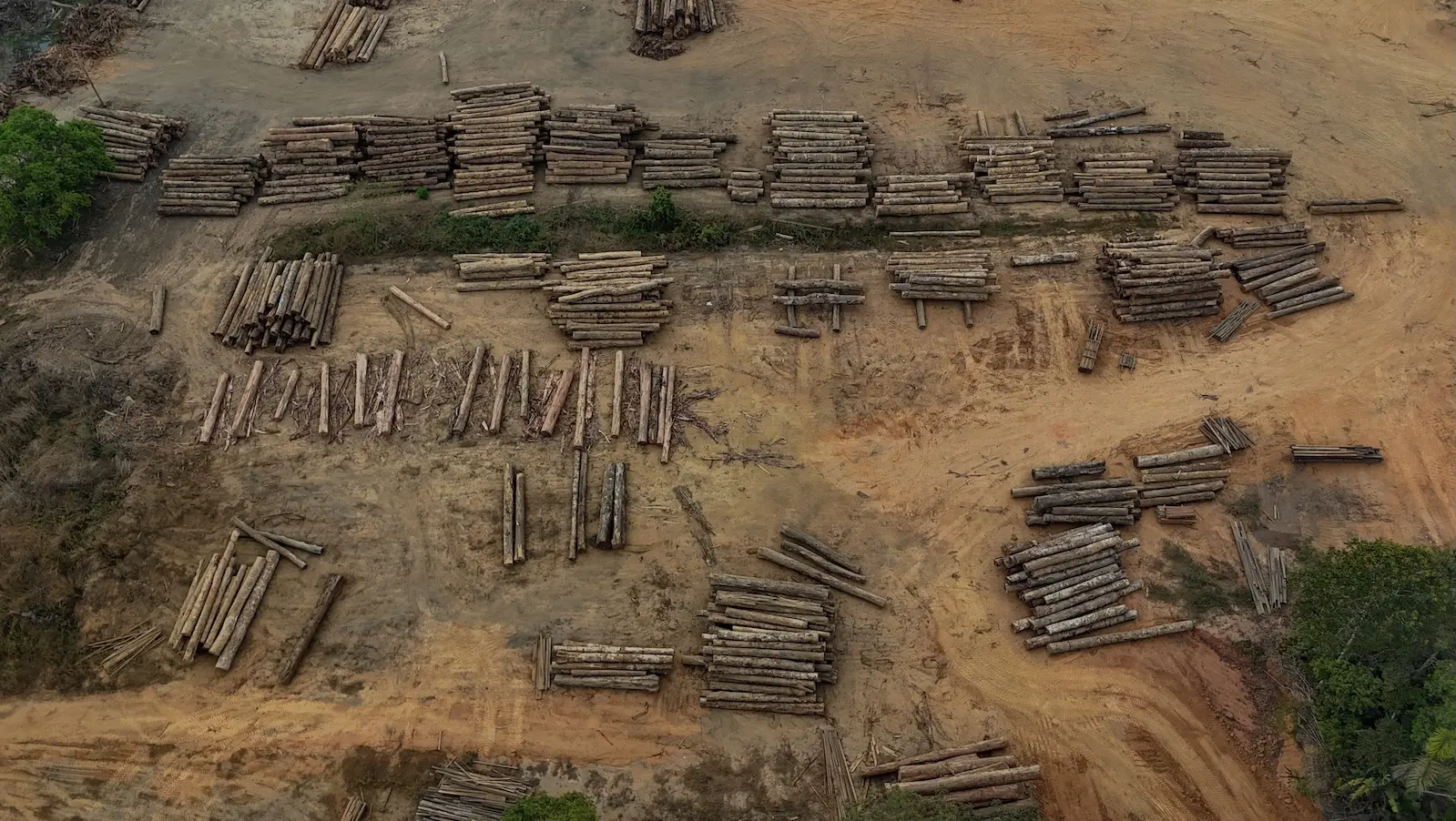
Despite these setbacks, Alencar believes that the private sector remains the most potent lever for change. She argues that because these multinational corporations are highly sensitive to public opinion and international brand reputation, renewed consumer pressure and targeted advocacy campaigns are essential to force a return to responsible sourcing. "They are very reactive to public opinion," Alencar stated, suggesting that the current lull in corporate responsibility is partly due to a lack of sustained external pressure.
Regional Comparisons: Colombia’s Legislative Approach
While Brazil struggles with the fragility of voluntary agreements, its neighbor, Colombia, is attempting a different path through formal legislation. The Colombian government recently passed a landmark law aimed at increasing the traceability of its beef industry. This law requires government agencies to work directly with cattle ranchers to ensure that herds are not raised on illegally deforested land.
Crucially, the Colombian law extends its reach to the entire supply chain, including slaughterhouses, meat processors, cattle auctioneers, and exporters. By making it illegal for any entity to move or sell products derived from deforested areas, Colombia is attempting to codify the principles of the Soy Moratorium into national law. While experts like Lisa Rausch view this as a "strong signal," they remain cautious about the implementation. The logistical challenge of tracking millions of head of cattle across rugged terrain remains a formidable obstacle for Colombian authorities.
The Limits of the Brazilian Forest Code
Within Brazil, the primary legal instrument for forest protection is the Forest Code. This law mandates that landowners in the Amazon biome must maintain 80 percent of their property as a "legal reserve" of native vegetation. When these limits are exceeded, the land is placed under an embargo, which legally prohibits it from being used for commercial agricultural purposes.
However, the Science paper reveals a troubling loophole: approximately 20 percent of soy farms currently operating in the Amazon have existing embargoes against them for illegal deforestation, yet many continue to find ways to bring their products to market. This "laundering" of agricultural products—where crops from illegal plots are mixed with those from legal ones—remains a persistent challenge for regulators.
Rausch argues that the Forest Code, while essential, is insufficient on its own to deter deforestation when the economic incentives for land grabbing remain high. "The economic incentives for deforestation are still there," she warned. She emphasized that while the recent drop in deforestation rates is a positive development, it may only be a "temporary drop" unless new, more robust market mechanisms are introduced to replace the crumbling Soy Moratorium.
Political Volatility and the 2026 Horizon
The future of the Amazon is also inextricably linked to Brazil’s volatile political landscape. As President Lula prepares for a potential reelection bid, he faces a growing opposition led by the "ruralista" bloc—the powerful agribusiness caucus in Congress. One of the primary challengers emerging on the horizon is Flávio Bolsonaro, a senator and the son of the former president.
The Bolsonaro era was defined by the systematic dismantling of environmental agencies, the slashing of budgets for forest protection, and rhetoric that encouraged land invaders. The prospect of a return to "anti-environmental" governance looms large over the current conservation efforts. Ane Alencar expressed deep concern regarding the upcoming political cycle, noting that the gains made under the Lula administration could be undone almost overnight if the executive branch once again prioritizes short-term agricultural expansion over ecological stability.
Conclusion: A Critical Juncture for the Global Climate
The Amazon rainforest plays a vital role in the global climate system, acting as a massive carbon sink that helps regulate temperatures and rainfall patterns across South America and beyond. The news that deforestation is at a decade-low is a testament to what can be achieved through political will and rigorous enforcement. Yet, the findings from the scientific community serve as a sobering reminder that the forest’s safety is far from guaranteed.
The potential loss of 1.4 million hectares over the next decade would not only represent a catastrophic loss of biodiversity but would also release billions of tons of carbon dioxide into the atmosphere, further accelerating global warming. As the Amazon Soy Moratorium continues to fray and major corporations retreat from their climate goals, the responsibility for the forest’s survival is shifting back to a combination of government policy, international trade regulations—such as the European Union’s new Deforestation Regulation (EUDR)—and the persistent vigilance of the global community. The progress seen today is a fragile victory, one that requires constant reinforcement to prevent the "creeping back" of destruction.