The first thing Brightline wants you to know about its bankruptcy is that the trains will keep running. Following a Chapter 11 bankruptcy protection filing, the company has moved to reassure its three million annual passengers that service remains unaffected. This legal maneuver, designed to restructure a staggering $4.4 billion debt load, marks a pivotal moment for the Florida-based rail operator and serves as a sobering case study on the financial realities of developing high-speed rail within the American private sector.
The Financial Restructuring
The bankruptcy filing follows months of intensive negotiations with bondholders. According to financial disclosures, the company aims to secure an additional $490 million in financing. This infusion of capital is intended to provide the necessary breathing room for the company to stabilize its balance sheet while it continues to scale operations.
The filing, however, is strategically limited. It does not include Brightline Trains Florida, the operating entity, nor does it impact the development of Brightline West, the high-speed project currently connecting Las Vegas and Southern California. By insulating its operational units from the debt-heavy parent company, Brightline hopes to maintain its reputation as a reliable, premium transit alternative while it resolves the structural deficits incurred during the massive capital expenditure phases of construction and expansion.
A Chronology of Growth and Challenges
The evolution of Brightline is a timeline of rapid expansion and technical ambition.
- 2018: Brightline officially launches passenger service between Miami and West Palm Beach, marking the first time in over a century that a private company has built and operated an intercity passenger rail line in the U.S.
- 2020: Service is suspended due to the global pandemic, forcing the company to pivot its financial strategy during a period of zero revenue.
- 2023: The long-awaited extension to Orlando International Airport opens, connecting the state’s primary population centers to its major tourism hub.
- 2025: Brightline reports a 14 percent increase in ridership and a 17 percent increase in revenue year-over-year for the period of January through August, demonstrating strong consumer demand.
- Late 2025/Early 2026: Financial pressures regarding the servicing of its $4.4 billion debt lead to the decision to pursue Chapter 11 restructuring.
Despite these milestones, the company has struggled to meet its own aggressive fiscal targets. Analysts at Debtwire report that current ridership and revenue figures are approximately half and one-third, respectively, of what the company forecasted in 2024. These shortfalls necessitated the current restructuring to ensure the long-term viability of the project.
Safety and Public Scrutiny
Beyond the balance sheet, Brightline has navigated a complex landscape of public relations and safety concerns. Since its inception in 2018, the line has faced intense scrutiny regarding its safety record. Reports indicate that as of January 2026, over 180 fatalities have been linked to the rail corridor. The majority of these incidents involved pedestrians or motorists on the tracks.
Brightline has consistently maintained that none of these tragic incidents were the result of mechanical failure or operational negligence. In response to the high frequency of incidents, the company has invested hundreds of millions of dollars into safety infrastructure, including grade-separation projects, enhanced fencing, and advanced signaling systems. These efforts reflect the immense difficulty of operating high-speed, high-frequency trains through dense, pre-existing urban corridors.
The Passenger Experience
For the average rider, the "Brightline experience" remains a stark contrast to traditional public transit. Users frequently compare the service to air travel, citing its comfort, reliability, and ease of use. Ivan Reich, a regular commuter and local attorney, highlights that the value proposition—while premium—is highly attractive to a specific demographic. "It’s a luxury experience," Reich notes. "It’s pleasant, it’s comfortable, and there’s really nothing to complain about regarding the ride itself."

However, the cost remains a barrier to entry for many. While a short commute might cost $35, long-distance tickets can exceed $120. This pricing model is a necessity for a private firm seeking to recoup massive infrastructure costs, but it highlights the gap between "luxury" private rail and the "mass transit" needs of the general population.
The Broader Implications for American Infrastructure
The bankruptcy of a high-profile, private-sector rail pioneer brings into focus the "who pays" question that has long plagued American transportation policy. As Amtrak smashes its own ridership records, the demand for rail is clearly at a historical high. Yet, the financing of the underlying infrastructure remains an unresolved debate.
Industry experts, including Jim Mathews of the Rail Passengers Association, argue that the government must adopt a more robust role in rail financing. "Building a railroad is very hard and very expensive," Mathews stated. "This is a good example of why governments always have a legitimate role to play."
This sentiment is echoed by infrastructure advocates who point to the aviation and highway sectors as models. In those industries, the public sector absorbs the cost of airports and interstate highways, while private entities operate the vehicles. Critics of the current model, such as Rick Harnish of the High Speed Rail Alliance, argue that it is unreasonable to expect private capital to fully fund the massive, decades-long infrastructure projects required for a functional high-speed rail network.
Looking West: The Challenges of Integration
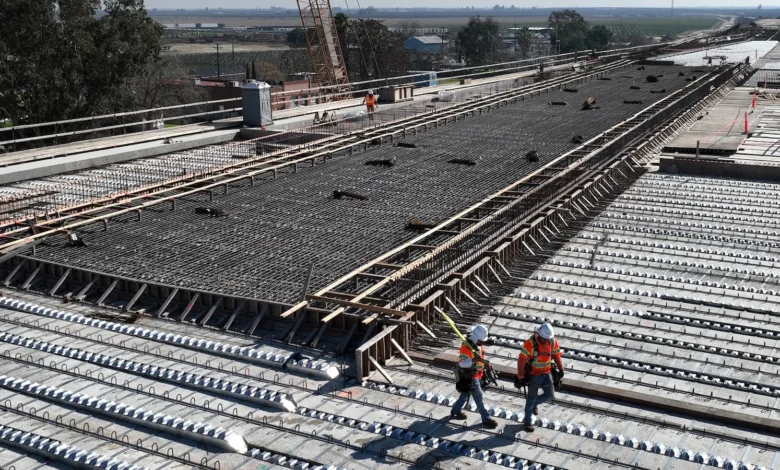
The financial struggle of the Florida line casts a long shadow over Brightline West, the proposed 218-mile line connecting Las Vegas to Rancho Cucamonga. The project, estimated at $21 billion, is currently balancing $3 billion in federal grants with a pending request for a $6 billion federal loan.
The project highlights another critical issue: intermodal integration. Alon Levy, a research scholar at the NYU Marron Institute, points out that stopping in the suburbs rather than the heart of Los Angeles—due to the complexities of integrating with existing, publicly operated transit systems like Metrolink—limits the overall utility of the rail line. Achieving a seamless, national rail network, according to researchers, will likely require a top-down federal mandate to coordinate the disparate interests of local, state, and private stakeholders.
Conclusion: A Testing Ground for the Future
The current situation in Florida is more than a standard corporate restructuring; it is a stress test for the viability of public-private partnerships (P3s) in the rail sector. While the company remains confident that the transaction will serve as a "catalyst for further growth," the reality is that the margin for error in private rail development is razor-thin.
As the United States continues to evaluate its transportation future, the path taken by Brightline will be studied closely. Whether the future of high-speed rail relies on the ingenuity of private firms or the deep pockets of the public treasury—or, more likely, a sophisticated hybrid of both—remains the central question. For now, the trains continue to run, providing a glimpse of what could be, while the financial architects behind the scenes work to ensure the tracks remain open for the long term. The transition from a startup-like growth phase to a stable, sustainable utility is rarely seamless, and Brightline’s journey is currently the most prominent example of that transition in the modern American landscape.