The recent decision by President Donald Trump to slash the size of two of Utah’s most prominent national monuments has sparked a significant rift between the state’s political leadership and its general population. Despite assertions from high-ranking Republican officials that the reductions align with the will of local residents, a mounting body of empirical data suggests that a clear majority of Utahns—and residents across the broader Mountain West—actually support maintaining or even expanding these protected lands. Last week, President Trump signed two executive orders that reduced the Grand Staircase-Escalante and Bears Ears national monuments by approximately 90 percent each, a move that has reignited a fierce national debate over land use, tribal sovereignty, and the limits of executive power.
The proclamations, signed during a high-profile ceremony in the Oval Office, represent a dramatic shift in federal land management policy. Flanked by Utah Governor Spencer Cox and members of the state’s congressional delegation, including Representative Celeste Maloy and Senator Mike Lee, the president argued that the previous boundaries were an example of federal overreach that hindered economic development and restricted public access. However, recent surveys conducted by academic institutions and independent polling firms indicate that the political rhetoric of "giving the land back to the people" may not reflect the actual desires of the Utah electorate.
A Growing Divide Between Polling and Policy
Data from Utah State University (USU) presents a stark contrast to the claims made by the state’s political establishment. In comprehensive surveys conducted throughout 2024 and 2025, researchers found that 61 percent of Utah residents supported or strongly supported the preservation of Bears Ears as a national monument. Conversely, only 19 percent expressed opposition. When specifically asked about the prospect of shrinking the monument’s boundaries, 53 percent of respondents were opposed, while only 26 percent supported the reduction.
"It is very contradictive of our findings," noted Michaelann Nelson, a professor of environmental rhetoric at Utah State University’s Price campus and the lead author of the study. Nelson suggested that political leaders appear to be "picking and choosing" which constituents they listen to, often prioritizing industry interests and a vocal minority over the broader public consensus.
The disconnect extends beyond the borders of Utah. The annual Conservation in the West Poll, conducted by Colorado College, has tracked sentiment across eight Mountain West states—Arizona, Colorado, Idaho, Montana, Nevada, New Mexico, Utah, and Wyoming—for over a decade. The 2026 data shows that 91 percent of voters in these states want existing national monuments kept in place. This reflects a steady upward trend from 80 percent in 2017. Perhaps most surprisingly, the support for monument protection remains high across the political spectrum. Among respondents who identified as supporters of the "MAGA" movement, 87 percent favored keeping existing monument designations, an increase from 81 percent the previous year.
The Evolution of Bears Ears and Grand Staircase-Escalante
The history of these monuments is a narrative of shifting political tides and the use of the 1906 Antiquities Act. Grand Staircase-Escalante was established by President Bill Clinton in 1996, originally encompassing nearly 1.9 million acres of rugged canyons and paleontological treasures. Its creation was met with immediate hostility from Utah Republicans, who viewed it as a "midnight" land grab. Over thirty years, however, the monument became an integral part of the regional economy, particularly for the gateway communities of Escalante and Kanab. Following Trump’s latest order, the monument has been whittled down to just over 181,500 acres.
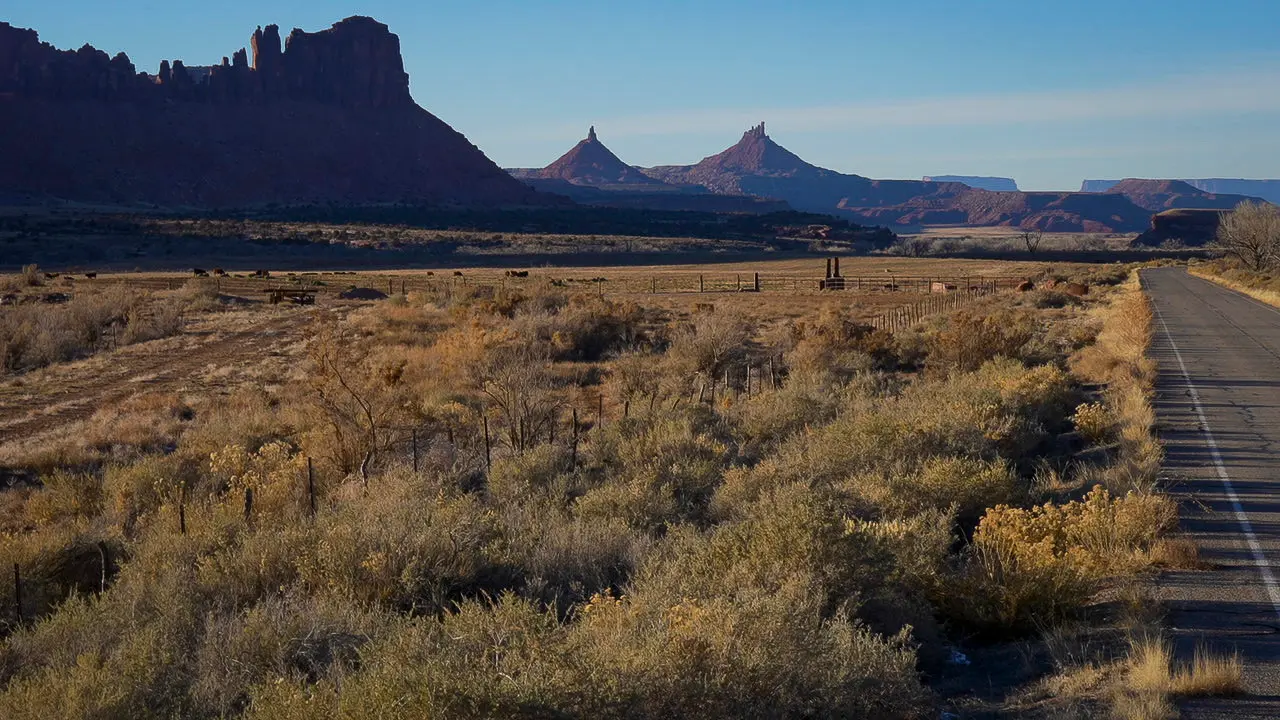
Bears Ears National Monument has a more recent and culturally complex history. Designated by President Barack Obama in 2016, it was the first national monument created at the specific request of a coalition of Native American tribes, including the Navajo Nation, Hopi Tribe, Ute Mountain Ute Tribe, Ute Indian Tribe, and Zuni Tribe. The original 1.35-million-acre designation was intended to protect thousands of archaeological sites and ancestral lands. Under the new executive orders, Bears Ears has been reduced to approximately 121,000 acres, a move that critics argue leaves the vast majority of the region’s cultural heritage vulnerable to looting and industrial damage.
The legal justification cited by the Trump administration rests on a specific clause in the Antiquities Act, which directs presidents to reserve the "smallest area compatible with the proper care and management of the objects to be protected." Governor Spencer Cox echoed this sentiment, stating that "multimillion-acre monuments that are bigger than the state of Delaware certainly do not fit that designation."
Industrial Interests and Mineral Extraction
While the administration has framed the cuts as a win for "multiple use" and "fairness," the role of extractive industries remains a focal point of the controversy. In his proclamation, Trump cited the need to access "critical minerals" such as copper, nickel, and uranium to bolster domestic supply chains. This aligns with historical patterns; during Trump’s first term in 2017, when he first attempted to downsize these same monuments, internal records revealed that mining companies had lobbied the administration specifically to remove areas with high mineral potential from protected status.
The 2026 orders explicitly mention the region’s deposits as a justification for the boundary changes. However, conservation groups and some economists argue that the long-term value of the outdoor recreation economy—which generates billions for Utah—outweighs the short-term gains from mining. Furthermore, the Colorado College poll found that voters across both parties increasingly prioritize conservation and renewables over fossil fuel and mineral development on public lands.
Impact on Tribal Sovereignty and Local Governance
One of the most significant casualties of the reduction is the dissolution of the Bears Ears Intertribal Commission. This body provided a formal mechanism for federal agencies to consult with tribal leaders on the management of ancestral lands. By disbanding this commission, the executive order has effectively stripped Indigenous nations of their seat at the table.
This move appears to be out of step with the Utah public. A December 2024 survey by New Bridge Strategies found that nearly 90 percent of Utahns believe Native American tribes should have a strong role in managing their ancestral lands. Additionally, 81 percent of respondents stated that the administration should honor existing agreements with tribes regarding land management.
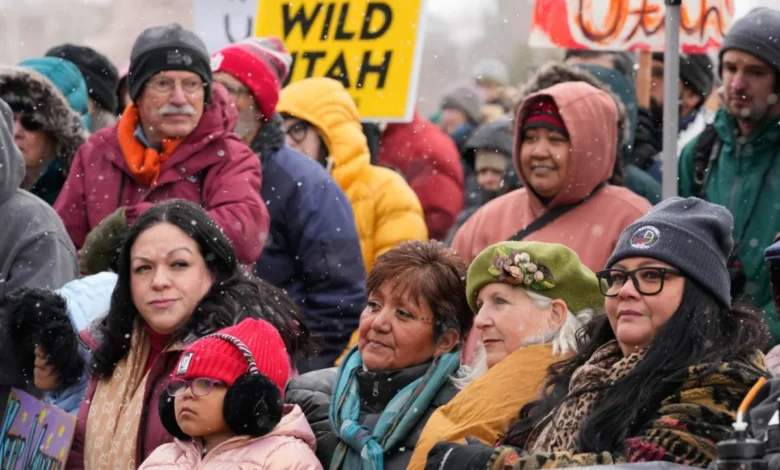
"The monuments are not just lines on a map; they are living landscapes with deep spiritual significance," said Autumn Gillard of the Piute Indian Tribe of Utah during a recent protest at the Governor’s Mansion. Hundreds of demonstrators gathered in Salt Lake City to voice their opposition, organized by the Southern Utah Wilderness Alliance (SUWA) and other advocacy groups.
Fact-Checking the "Access" Argument
During the signing ceremony, President Trump claimed that the monument designations had effectively "closed off" the land to the public. "You can’t do anything. You can’t go hunting. You can’t go fishing… you can virtually not even walk on it," he asserted.
However, land management records and existing regulations contradict these claims. Unlike National Parks, which have stricter prohibitions, National Monuments managed by the Bureau of Land Management (BLM) typically allow for a wide range of activities. Hunting, fishing, and the use of off-road vehicles on designated trails were all permitted within the original boundaries of Bears Ears and Grand Staircase-Escalante. The primary activities prohibited by the monument designations were new mining claims and large-scale industrial development.
Critics of the reduction argue that by removing protections, the administration is not "opening" the land to the public, but rather opening it to private industrial interests that may eventually restrict public access through the development of mines and infrastructure.
Legal and Economic Implications
The reduction of the monuments is expected to trigger a protracted legal battle. Environmental groups, tribal nations, and outdoor industry brands have historically challenged such moves, arguing that while the Antiquities Act gives a president the power to create a monument, it does not explicitly grant the power to abolish or drastically diminish one. Only Congress, they argue, has the authority to make such significant changes to public land status.
In the interim, the uncertainty creates a difficult environment for local law enforcement and land managers. A statement from the Utah Senate noted that the popularity of these areas has led to increased visitation, which puts a strain on resources. Proponents of the monuments argue that the solution is increased federal funding for management and infrastructure, rather than the removal of protections that would invite further degradation.
As the legal challenges move through the courts, the political fallout in Utah continues to grow. The data suggests a shift in the American West, where "public lands" are increasingly viewed as a shared heritage rather than a commodity to be liquidated. For Utah’s political leaders, the challenge will be reconciling their traditional pro-industry stances with an electorate that is increasingly vocal about its desire to keep the "Mighty 5" state’s wild places intact.
The coming months will likely see continued protests and a surge in litigation as the reality of the 90 percent reduction sets in. For now, the "fairness" touted by the Oval Office remains a matter of intense dispute, with the majority of Utahns seemingly on the side of the landscapes they call home.