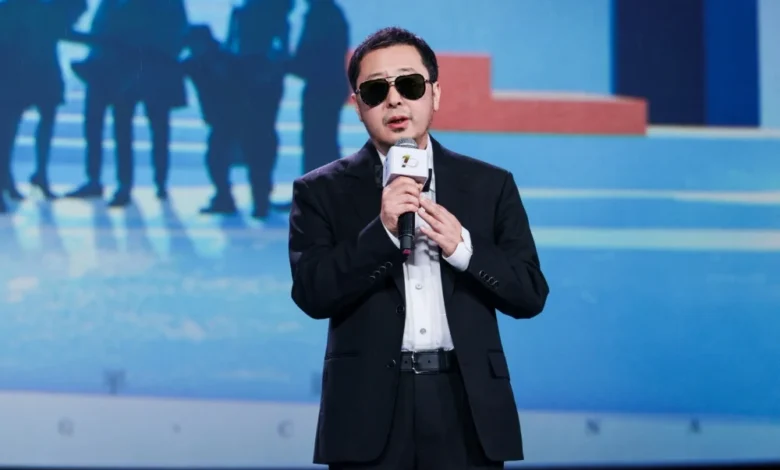
Renowned Chinese filmmaker Jia Zhangke is set to transition directly from festival administration to hands-on pre-production, focusing heavily on location scouting and production design for his upcoming feature film, the continent-spanning road movie Mamma Dunhuang. The transition will occur immediately following the conclusion of the 10th Pingyao Crouching Tiger Hidden Dragon International Film Festival, which wraps up its anniversary run on September 30.
As initially reported by industry publication Variety, Mamma Dunhuang chronicles the physical and emotional journey of a protagonist who undertakes an ambitious road trip, driving westward from the historic desert hub of Dunhuang, situated near Central Asia, all the way to China’s eastern coastline. Principal photography for the project is officially scheduled to commence in the early winter months.
A Continental Journey Rooted in Silk Road History
The film’s geographical scope serves as a central thematic element for Jia, who has long expressed a profound fascination with the cultural and historical weight of western China. Speaking on the conceptual origins of the narrative, Jia noted the profound distance and historical connectivity encapsulated by the route.
"I really love western China, and I go to Dunhuang quite often. Dunhuang was a vital transit hub on the ancient Silk Road; keep going west and you can arrive in Rome. Yet, it is so far from the ocean," Jia explained. "So this whole film is a continental story that starts in Dunhuang and travels from the west to the eastern coastline—she drives until the sea comes into view."
Frequent collaborator and award-winning actress Zhao Tao—recognized internationally for her acclaimed performance in Shun Li and the Poet, for which she claimed the prestigious David di Donatello Award for best actress—is set to anchor the film’s cast. In Mamma Dunhuang, Zhao will portray a homebound woman who leans on artificial intelligence to navigate the logistical and emotional challenges of her cross-country odyssey.
Addressing the thematic integration of modern technology within the film’s plot, Jia clarified his stance on the production methodologies being deployed behind the camera. "I will not use AI in making ‘Mamma Dunhuang,’" Jia stated. "It only plays a role in the story."
A Decade of Pingyao: Evolution, Agility, and Curation
While preparation for Mamma Dunhuang ramps up, Jia remains deeply engaged in the ongoing success and strategic direction of the Pingyao Crouching Tiger Hidden Dragon International Film Festival. Marking its milestone 10th edition this year, the festival has established itself as a premier destination for global art-house cinema within China.
Reflecting on the rapid transformations that have characterized the past decade, Jia emphasized the necessity of structural adaptability. Although the festival has only been operational for ten years, the broader film ecosystem, media landscape, and technological advancements have shifted dramatically. According to the founder, Pingyao has consistently remained nimble, adapting alongside industry changes to capture emerging trends for its curation.
Looking forward, Jia expressed confidence that cinema will continue to evolve at a rapid pace, necessitating sustained organizational agility. This flexibility, he argues, enables the festival to respond in real time to the most pressing cinematic and cultural topics resonating with contemporary audiences.
Rather than positioning Pingyao as a traditional hall of fame celebrating established industry titans, Jia envisions the event as a dedicated haven for cinephiles. While major international film festivals frequently program hundreds of titles annually, Pingyao maintains a intentionally lean, boutique lineup designed to maximize market visibility for selected works. The official program for the milestone tenth edition features a focused selection of just 51 films.
"As a festival, not only must it have great programs, but also a vibe of equality, freedom, and ease, setting a tone where the filmmakers and audiences can merge together," Jia said. He underscored the deliberate effort put into securing high artistic value while maintaining broad international representation, prioritizing regions less familiar to domestic audiences—such as northeastern Europe and South America—to introduce a wider spectrum of global cinema to Chinese viewers.
Infrastructure Challenges and Audience Demand
The growing appetite for independent and international cinema at Pingyao is underscored by significant logistical milestones. During the current festival cycle, the event’s online ticketing system logged an impressive volume of traffic, recording more than 70 million visits.
However, this surging demand has intensified existing structural limitations tied to the festival’s unique geographic setting. Pingyao is hosted within an ancient city recognized as a UNESCO World Heritage Site, which places strict regulatory constraints on modern real estate development and architectural expansion.
Addressing the capacity bottleneck, Jia revealed ongoing efforts to expand the festival’s physical footprint without compromising the historical integrity of the location. "We’ve been working on building one more theater, ideally inside the ancient city walls, with 300–500 seats to enlarge the capacity. But it is very difficult to realize this plan; we are still discussing," Jia noted.
Navigating the Artificial Intelligence Frontier
Artificial intelligence remained a prominent talking point at this year’s festival, largely due to ongoing public discourse surrounding technological integration in the arts. For its fifth edition, Pingyao previously partnered with prominent visual artist Xu Bing on "AI-IF," an experimental project that invited festival attendees to create short films using AI-generated tools.
Despite such exploratory exhibitions, Jia confirmed that none of the films featured in the official competition and screening selections for the current milestone edition were produced using generative AI tools.
"We’ve been prudent," Jia stated, outlining the festival’s institutional philosophy toward emerging tech platforms. "But we maintain an open, observant, and inclusive stance toward AI. When it comes to technological advancement, each of us holds a different perspective, but there should be one fundamental attitude: we must understand and discuss it, not shy away from it. Pingyao upholds a spirit of prudent inclusivity."
The filmmaker’s pragmatic curiosity regarding artificial intelligence is mirrored in his personal creative endeavors; earlier this year, Jia generated considerable industry discussion by releasing an original AI-generated video.
Expanding Art-House Distribution Through Unknown Pleasures
Beyond his directorial duties and festival administration, Jia continues to shape the future of art-house cinema distribution in China through Unknown Pleasures, a specialized distribution company he co-founded. Named after his critically acclaimed 2002 feature film, the distribution banner is currently engaged in active negotiations to acquire two high-profile titles fresh out of the Cannes Film Festival circuit.
These potential acquisitions follow strategic moves made by the company earlier in the year. In June, Unknown Pleasures announced major acquisition agreements for "Minotaur," the latest feature by celebrated Russian auteur Andrey Zvyagintsev, and "La Gradiva," the debut feature film from French cinematographer Marine Atlan.
By securing these distinct international titles, Jia aims to create a symbiotic relationship between global art-house distribution and domestic exhibition platforms. "We hope Unknown Pleasures’ acquired titles all have a great showcase in Pingyao," Jia concluded, reinforcing his lifelong commitment to fostering a vibrant, interconnected ecosystem for international cinema.