Affordable Art & Drawing Supplies: Unleash Your Creativity Without Emptying Your Wallet
For aspiring artists and seasoned creators alike, the pursuit of artistic expression shouldn’t be hindered by financial constraints. Fortunately, the market is brimming with high-quality art and drawing supplies that offer exceptional value, allowing you to hone your skills and bring your visions to life without significant investment. This comprehensive guide delves into the best budget-friendly options across various mediums, focusing on accessibility, performance, and longevity to ensure your creative journey remains both fulfilling and economically sensible. From foundational sketching tools to vibrant coloring mediums and essential accessories, discover how to equip your art studio with professional-grade materials that won’t break the bank, enabling you to experiment, practice, and ultimately, excel.
Sketching and Drawing Essentials: The Foundation of Every Artwork
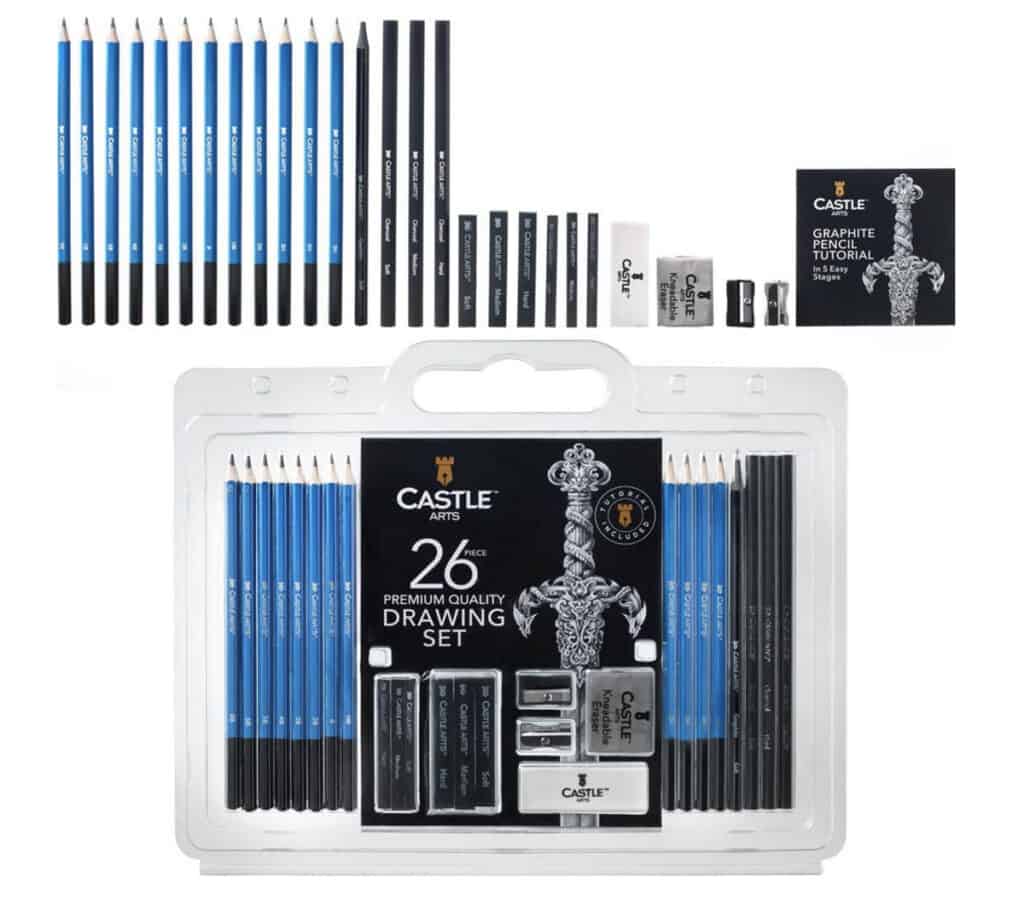
The bedrock of any artistic endeavor begins with the humble pencil. For sketching and foundational drawing, a versatile graphite pencil set is indispensable. Look for brands that offer a range of hardness grades, typically denoted by letters and numbers (e.g., HB, 2B, 4B, 2H). An HB pencil is your everyday workhorse, suitable for general sketching and outlining. Softer leads like 2B and 4B produce darker, richer lines and are excellent for shading and creating depth. Conversely, harder leads such as 2H are ideal for light, precise lines and technical drawing where smudging is undesirable. Brands like Faber-Castell’s Castell 9000 or Staedtler’s Noris range offer excellent quality at competitive prices. A good starter set might include a few HB, 2B, 4B, and perhaps a 2H pencil.
Beyond pencils, consider charcoal. Willow charcoal is incredibly affordable and offers a wonderfully expressive, smudgy quality perfect for bold sketches and studies. Vine charcoal is even softer and easier to erase, making it forgiving for beginners. Compressed charcoal sticks provide deeper blacks and more control for defined lines. Brands like Cretacolor and Winsor & Newton offer good value charcoal sets. Don’t overlook charcoal pencils either, which combine the rich blacks of charcoal with the control of a pencil, offering a great middle ground.
For line work and detailed drawing, fine-liner pens are essential. Look for sets with a variety of tip sizes, such as 0.05mm, 0.1mm, 0.3mm, and 0.8mm. These are perfect for inking illustrations, comic art, and adding fine details to drawings. Sakura Pigma Microns are a popular choice for their archival quality and consistent ink flow, and while individual pens can add up, starter sets are often reasonably priced. Pentel’s Pointliners and Staedtler’s Pigment Liners are also excellent budget-friendly alternatives.
Paper: The Canvas for Your Creations
The surface you draw on significantly impacts the final outcome. For everyday sketching and practice, inexpensive newsprint pads are an excellent choice. They are lightweight, affordable, and come in large formats, allowing for uninhibited exploration. However, newsprint is thin and not archival, so it’s best for practice rather than finished pieces.
For more durable sketches and studies, consider mixed-media paper. These papers are heavier than newsprint and can handle light washes of watercolor or acrylic, as well as pencil, charcoal, and ink. Brands like Canson XL Series Mixed Media pads offer excellent value and are widely available. Strathmore’s Toned Tan or Toned Gray sketchbooks are also fantastic affordable options, providing a pre-toned surface that can add depth and interest to your drawings without requiring additional coloring.
When working with markers, specialized marker paper is ideal, as it prevents bleeding and feathering. However, for budget-conscious artists, smooth Bristol board can be a good alternative. It’s a heavier, smoother paper that handles markers reasonably well, though some bleeding may occur.
For more finished works, consider a good quality drawing paper. Brands like Arches or Fabriano offer student-grade drawing papers that are acid-free and archival, ensuring your work will stand the test of time. Look for pads with a weight of at least 100gsm (grams per square meter). Cold-press watercolor paper can also be used for drawing, offering a textured surface that can add an interesting dimension to your work.
Coloring Pencils: Bringing Your Drawings to Life with Hue
Colored pencils are a versatile and portable medium, and you don’t need to invest in expensive professional brands to achieve stunning results. For beginners and those on a budget, Crayola colored pencils are a surprisingly capable option for basic coloring and experimentation. While they may lack the pigment saturation and blending capabilities of high-end pencils, they offer a vast spectrum of colors at an incredibly low price point, making them ideal for learning color theory and filling large areas.
As you progress, consider investing in mid-range colored pencil sets. Prismacolor Premier colored pencils are often cited as a top-tier choice, but their individual pencils can be costly. However, Prismacolor’s Scholar colored pencils offer a more affordable entry point, providing good pigment quality and blendability for their price. Similar to Prismacolor, Faber-Castell’s Polychromos are a gold standard, but their Goldfaber range offers a more budget-friendly alternative with good quality color and lightfastness.
Another excellent budget-friendly option is Marco Raffine. These pencils offer vibrant colors and decent blending properties, often compared favorably to more expensive brands. Derwent also offers several affordable ranges like the Academy or Coloursoft lines, which provide good value. When choosing colored pencils, prioritize pigment quality, lightfastness (how well the color resists fading over time), and blendability. Even with budget options, look for pencils that layer well and can be blended with techniques like burnishing (using a colorless blender or a lighter colored pencil to smooth the pigment).
Pastels: Vibrant Hues with Expressive Potential
Pastels, both soft and oil, offer a vibrant and tactile drawing experience. For budget-conscious artists, chalk pastels (often referred to as soft pastels) are a great starting point. Brands like Gallery Artists’ Soft Pastels or Winsor & Newton Cotman soft pastels offer good quality at accessible prices. These pastels are highly pigmented and can be blended easily with fingers, tortillons, or brushes to create soft transitions and atmospheric effects.
When working with soft pastels, remember that they are dusty, so a fixative spray is recommended to prevent smudging once your artwork is complete. Affordable fixatives are readily available from brands like Krylon or Loctite. For paper, try pastel paper or even lightly textured drawing paper.
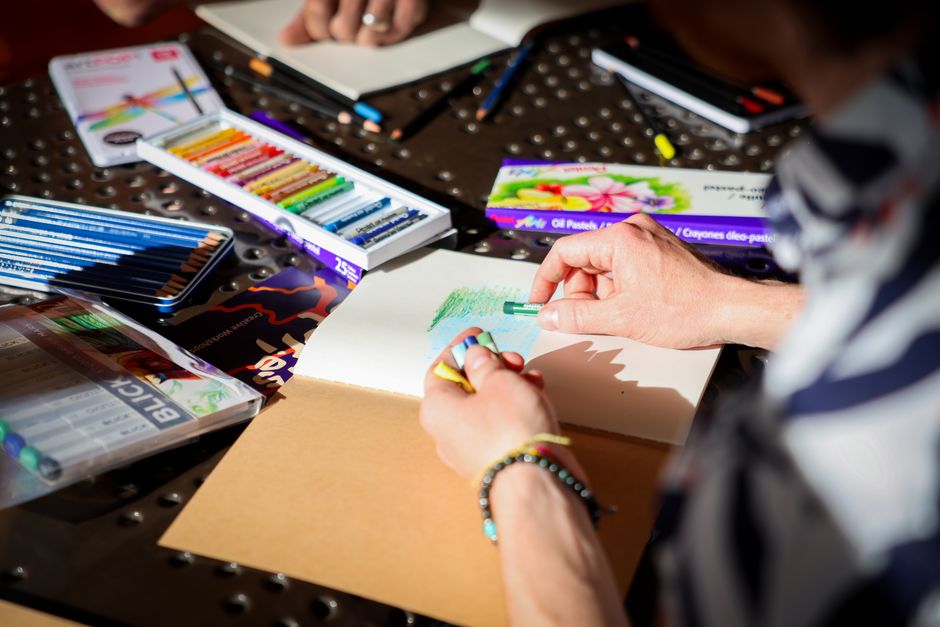
Oil pastels are another excellent choice for budget artists. They are less dusty than soft pastels and can be used for bold, expressive strokes or blended with solvents like mineral spirits for painterly effects. Pentel’s oil pastels are a popular and affordable option, offering good color saturation and blendability. Sakura oil pastels are also a good value. For working with oil pastels, smooth paper or cardstock is generally preferred.
Sketchbooks and Journals: Your Portable Studio
A good sketchbook is the artist’s constant companion. For everyday use and quick studies, wire-bound sketchbooks are incredibly economical. Look for pads with acid-free paper and a decent thickness. Brands like Studio Series by Canson or Sterling & Noble offer a wide variety of sizes and styles at very affordable prices.
For a more tactile and aesthetically pleasing experience, consider hardcover sketchbooks. While they may cost a little more, they offer better protection for your artwork and a more substantial feel. Many brands offer excellent value hardcover sketchbooks, such as Leuchtturm1917 (on sale or in their basic range) or Rhodia.
When choosing a sketchbook, consider the paper type. If you primarily use pencils and pens, a medium-weight, slightly textured paper is ideal. If you plan to incorporate light washes of watercolor or ink, opt for a mixed-media or watercolor sketchbook.
Essential Accessories: The Supporting Cast
Beyond your drawing tools and surfaces, a few essential accessories can greatly enhance your artistic process without breaking the bank.
-
Erasers: A good quality eraser is crucial for correcting mistakes and lifting graphite or charcoal. Kneaded erasers are highly versatile as they can be shaped to erase small details or used to lift larger areas of pigment without damaging the paper. Factis and Staedtler offer excellent and affordable kneaded erasers. A good vinyl eraser, like those from Pentel or Faber-Castell, is also useful for cleaner erasing of graphite.
-
Sharpeners: For pencils, a reliable sharpener is a must. Manual sharpeners are the most budget-friendly. Look for sharpeners with a good quality blade that provides a fine point without breaking the lead. Electric sharpeners can be more convenient but come at a higher cost. Consider a sharpener specifically designed for colored pencils if you use them frequently, as their softer leads require a different sharpening approach.
-
Blending Tools: Tortillons and blending stumps, made from tightly rolled paper, are indispensable for smudging and blending graphite and charcoal. They are very inexpensive and can be found in art supply stores or online. Brushes of various sizes, from cheap makeup brushes to dedicated art brushes, can also be used for soft blending, especially with pastels.
-
Rulers and Straight Edges: For accurate lines and architectural drawing, a good ruler is essential. A metal ruler is durable and won’t dull your drawing tools. Plastic rulers are more affordable but can be prone to damage.
-
Sketchbook Bag or Portfolio: To protect your artwork on the go, a simple portfolio or a durable tote bag can serve the purpose. Many art supply stores offer affordable portfolios in various sizes.
Where to Find Budget-Friendly Art Supplies
The key to acquiring affordable art supplies lies in smart shopping. Discount art supply stores, both online and brick-and-mortar, are invaluable resources. Stores like Blick Art Materials, Jerry’s Artarama, and Utrecht Art Supplies frequently have sales and offer student-grade materials at reduced prices. Amazon and other online marketplaces are also great for finding competitive pricing on a wide range of art supplies. Don’t overlook the art supply sections of larger retailers like Walmart or Target; while their selection may be limited, they often carry basic drawing and coloring kits that are perfect for beginners. Visiting thrift stores or secondhand shops can sometimes yield unexpected treasures like art books or even old, but still usable, art supplies.
Conclusion
The world of art is accessible to everyone, and the cost of entry doesn’t have to be prohibitive. By understanding the value of different materials and strategically selecting budget-friendly options, artists of all levels can equip themselves with the tools necessary for creative exploration and skill development. Focus on quality within your budget, prioritize the mediums you enjoy most, and remember that practice and experimentation are the most valuable tools in any artist’s arsenal. With these affordable art and drawing supplies, you can confidently embark on your artistic journey, unleashing your creativity without the burden of excessive spending.

