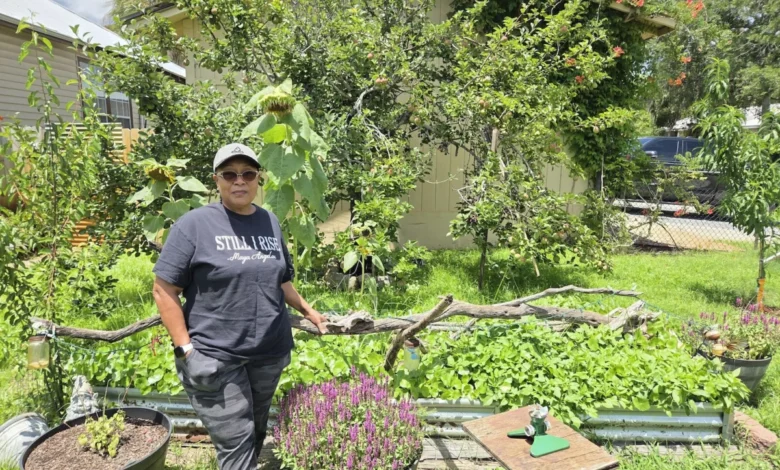
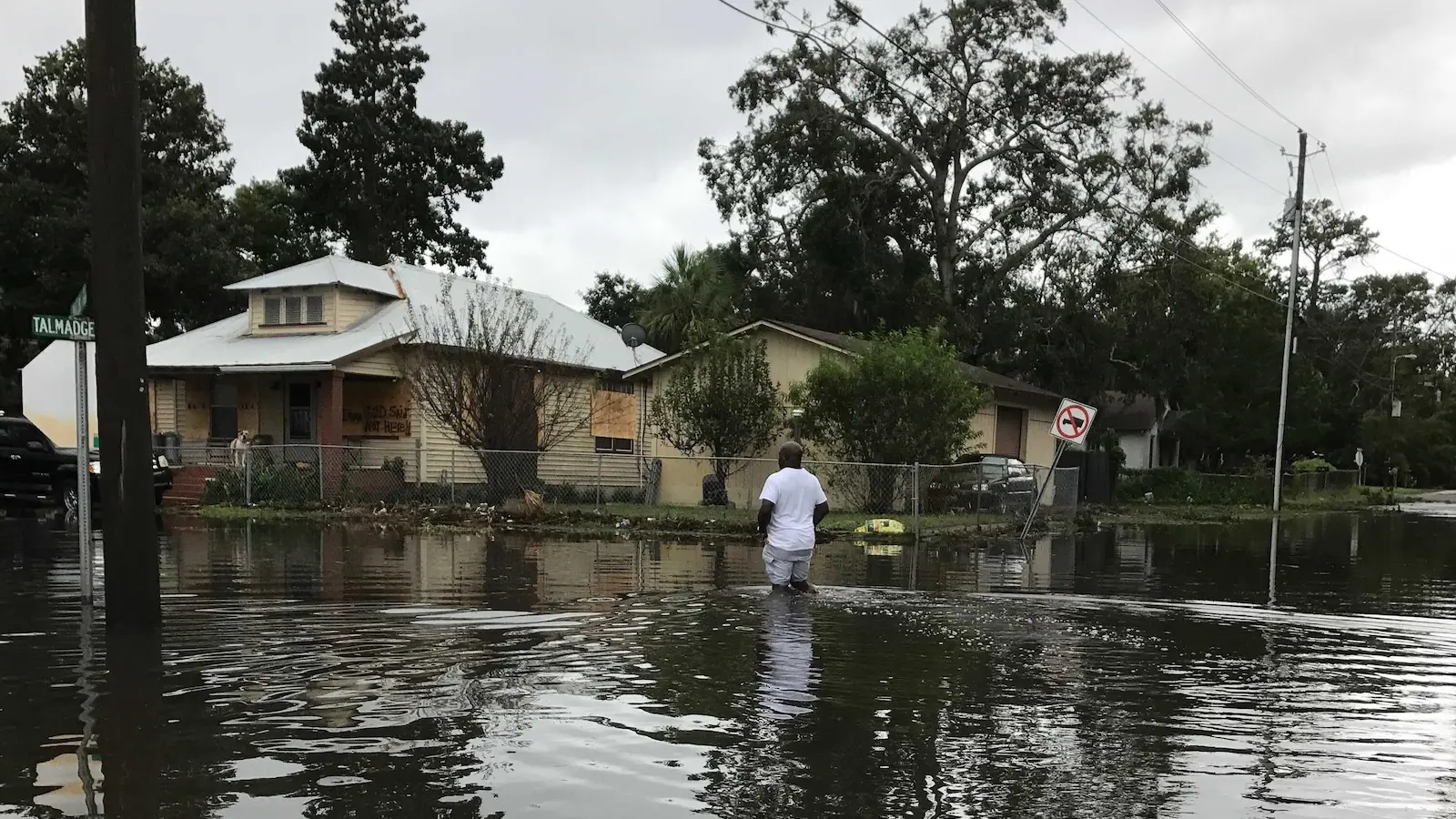
The coastal city of Brunswick, Georgia, long defined by its scenic marshes and historic industrial corridors, is becoming the epicenter of a groundbreaking scientific effort to understand the intersection of toxic pollution and climate change. For residents like Semona Holmes, the reality of living in this landscape is marked by a persistent anxiety that rises with every high tide. Holmes, who resides just across from the Brunswick waterfront, lives in a home characterized by lush fruit trees and a tranquil fish pond, yet her property is frequently besieged by floodwaters that transform her street into a navigable river. This flooding, which has at times reached knee-height and forced neighbors to use canoes for transit, represents more than a logistical hurdle; it is a potential vector for toxic exposure. Living only half a mile from a former pesticide plant designated as a federal Superfund site, Holmes fears that each flood event carries a invisible slurry of industrial chemicals into her garden and home.
In response to these long-standing community concerns, a consortium of six prestigious academic institutions is launching Georgia’s first Superfund research center. Funded by a $15 million grant from the National Institute of Environmental Health Sciences (NIEHS), the five-year project brings together researchers from Emory University, the University of Georgia, Georgia Tech, Morehouse School of Medicine, Spelman College, and Texas Tech University. The center’s primary objective is to conduct an exhaustive analysis of the four active Superfund sites in Glynn County, examining how legacy pollution interacts with modern environmental stressors like sea-level rise and intensified storm surges.
A Legacy of Industrial Contamination in Glynn County
To understand the urgency of the new research center, one must look at the industrial history of Glynn County. For decades, Brunswick was a hub for chemical manufacturing, wood treatment, and maritime industry. While these sectors provided jobs and economic growth, they left behind a legacy of environmental degradation. Under the Comprehensive Environmental Response, Compensation, and Liability Act (CERCLA) of 1980, the Environmental Protection Agency (EPA) identified thousands of "Superfund" sites across the United States—locations so contaminated with hazardous waste that they require long-term monitoring and remediation.
Glynn County currently hosts four such sites on the National Priorities List (NPL). These include the LCP Chemicals Georgia site, where mercury and polychlorinated biphenyls (PCBs) contaminated marshes; the Hercules 009 Landfill, which holds toxaphene-related waste; the Terry Creek Dredge Spoil Areas/Hercules Outfall; and the Brunswick Wood Preserving site. For decades, residents have lived in the shadow of these facilities, often with limited information regarding the cumulative impact of these toxins on their health and the local ecosystem.
The LCP Chemicals site, in particular, remains a point of significant concern. Historically, the facility produced caustic soda, chlorine gas, and various other chemicals, leading to severe mercury contamination in the surrounding estuaries. While remediation efforts have been ongoing for years, the persistence of these heavy metals in the sediment means that any disruption to the soil—such as that caused by extreme weather—could reintroduce toxins into the food chain or residential areas.
The Convergence of Pollution and Climate Change
The new research center arrives at a critical juncture as climate change alters the hydrological profile of the Georgia coast. According to data from the National Oceanic and Atmospheric Administration (NOAA), sea levels along the Georgia coast have risen significantly over the last century, with the rate of rise accelerating in recent decades. In Brunswick, "sunny day flooding"—where high tides push water into streets even without rain—has become increasingly common.
For the scientists involved in the project, the primary concern is the integrity of existing remediation measures. Many Superfund sites utilize "capping" as a solution, where contaminated soil is covered with layers of clay, synthetic liners, and clean dirt to prevent toxins from leaching out. However, these caps were often designed based on historical weather patterns that may no longer be relevant.
Noah Scovronick, an assistant professor of environmental health at Emory University and a key figure in the new center, emphasizes that climate resilience is a pillar of their research. The team aims to model how rising seas and more frequent, high-intensity hurricanes could breach containment structures. If a cap is compromised by erosion or prolonged inundation, the toxic materials beneath could be mobilized, flowing into the very communities the remediation was intended to protect.
Research Methodology and Objectives
The $15 million initiative is structured around two central goals: reconstructing the history of chemical exposure and mitigating future risks. To achieve this, the multi-institutional team will employ a variety of scientific disciplines, ranging from epidemiology to environmental engineering.
- Health Impact Assessment: Researchers will investigate the links between specific toxic substances found at the Glynn County sites—such as mercury, PCBs, and toxaphene—and the prevalence of chronic health conditions in the local population. This involves analyzing medical data and potentially conducting biomarker testing to determine if residents carry higher-than-average levels of industrial contaminants in their bodies.
- Environmental Sampling: The team will conduct extensive field research, collecting samples of air, soil, and water from residential neighborhoods, playgrounds, and public spaces. This data will provide a high-resolution map of where pollutants have migrated over time.
- Hydrological and Climate Modeling: Using advanced computational tools, Georgia Tech and University of Georgia researchers will simulate future flooding scenarios. By overlaying these models with the locations of toxic waste, they can identify "hotspots" where the risk of containment failure is highest.
- Community-Driven Inquiry: Unlike many top-down scientific studies, this center has integrated community feedback into its research design. Residents like Semona Holmes have met with the scientists to ensure that the study addresses the specific questions that have haunted local families for generations.
The Human Toll: Daily Life in a Contaminated Zone
For the families of Glynn County, the scientific data is a matter of daily survival and peace of mind. The lifestyle adjustments required to live safely near Superfund sites are substantial. Semona Holmes notes that her family has long since abandoned the use of tap water for drinking and avoids consuming seafood caught in local waterways—a significant sacrifice in a region where subsistence fishing has historically been a cultural and economic staple.
The concern is particularly acute regarding the younger generation. Holmes’s grandchildren attend an elementary school located only blocks from a toxic site. The sight of children playing on playgrounds where the soil might contain legacy chemicals is a source of constant stress for local parents and grandparents. "We want them to be healthy," Holmes said, echoing a sentiment felt by hundreds of families. "And you don’t want to worry that they’re playing on a playground that has contaminated soil."
The psychological burden of living in a "sacrifice zone"—a term often used by environmental justice advocates to describe areas where industrial interests have been prioritized over public health—is immense. Documenting the extent of the damage is seen by residents not just as a scientific necessity, but as a step toward moral and corporate accountability.
Implications for Environmental Justice and Policy
The launch of the Georgia Superfund research center carries implications that extend far beyond Glynn County. Across the United States, there is a growing recognition that environmental hazards disproportionately affect low-income communities and communities of color. The involvement of the Morehouse School of Medicine and Spelman College—two Historically Black Colleges and Universities (HBCUs)—is a deliberate effort to bring an environmental justice lens to the research.
The data produced by this five-year study could serve as a blueprint for other coastal regions facing similar dual threats of legacy pollution and climate change. From the Gulf Coast to the industrial corridors of the Northeast, thousands of hazardous waste sites are located in areas vulnerable to flooding. If the Georgia team can successfully develop models for "climate-resilient remediation," these strategies could be adopted by the EPA on a national scale.
Furthermore, the study seeks to hold the original polluters accountable. Holmes and other community members argue that acknowledgement is the first step toward justice. Many of the companies responsible for the contamination have undergone mergers, bankruptcies, or name changes, making it difficult for residents to seek redress. Formal scientific documentation of the contamination’s reach provides a factual basis for future policy changes and potential reparations.
Conclusion: A Path Toward Future Safety
As the researchers begin their work, the residents of Brunswick remain cautiously optimistic. The five-year timeline of the grant suggests a long-term commitment to the region, providing hope that the "river on the street" described by Semona Holmes will one day be nothing more than water.
The ultimate success of the Georgia Superfund research center will be measured not just in the number of peer-reviewed papers published, but in the tangible improvements to public health and safety in Glynn County. By bridging the gap between high-level academic research and the lived experience of community members, the center aims to ensure that the industrial mistakes of the 20th century do not become the environmental catastrophes of the 21st. As Holmes pointed out, beyond the recognition of wrongdoing, there must be "continued action." This $15 million investment represents the start of that action, promising a future where the health of the community is no longer dictated by its proximity to a toxic past.