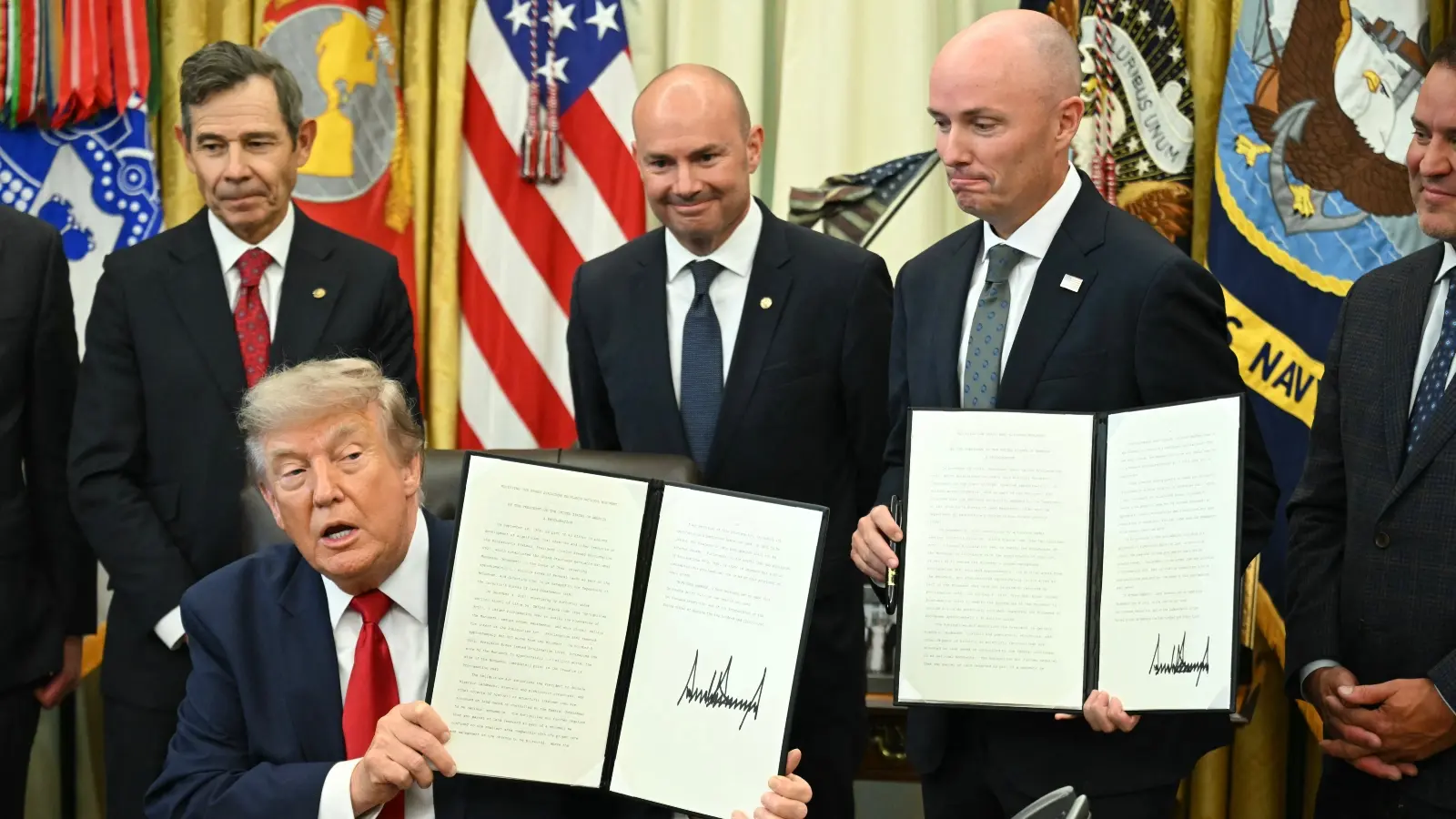
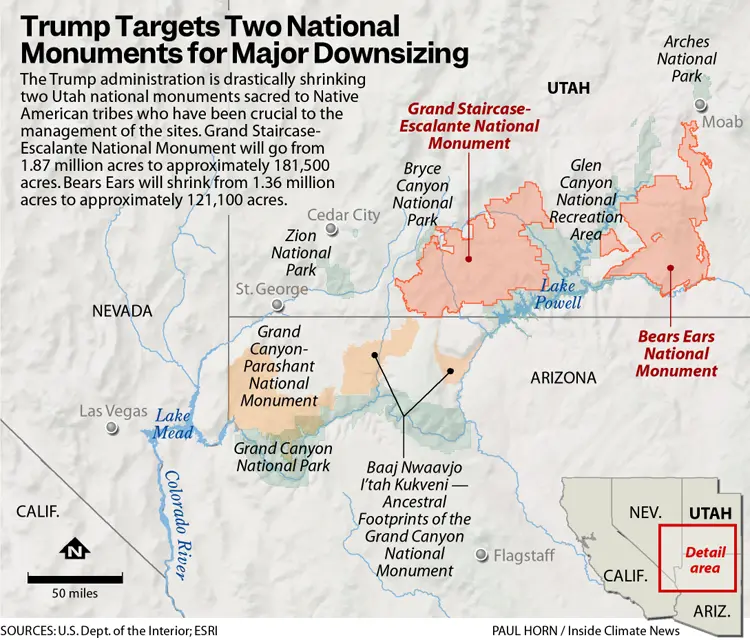
In a move that has reignited one of the most contentious battles over American public lands, President Donald Trump signed two executive orders on Monday that drastically reduce the size of the Bears Ears and Grand Staircase-Escalante National Monuments in southern Utah. The action slashes the protected areas from a combined 3.2 million acres to just 302,600 acres, representing an unprecedented rollback of federal land protections. The move is designed to reopen vast swaths of the American West to resource extraction, including mining, oil and gas drilling, and commercial grazing, marking a definitive shift in the federal government’s approach to conservation and indigenous co-stewardship.
The executive orders represent a significant escalation of a strategy first employed during the president’s previous term. While the 2017 reductions were historic in their own right, the 2026 orders go much further, leaving less than a quarter of the land that remained after the first round of cuts. Flanked by Utah’s Republican leadership, the president framed the decision as a restoration of local control and an end to federal overreach. However, the decision has been met with immediate vows of litigation from environmental groups and a sense of profound betrayal from Tribal Nations who viewed the monuments as sacred ancestral lands.
The Scale of the Reductions and Geographical Impact
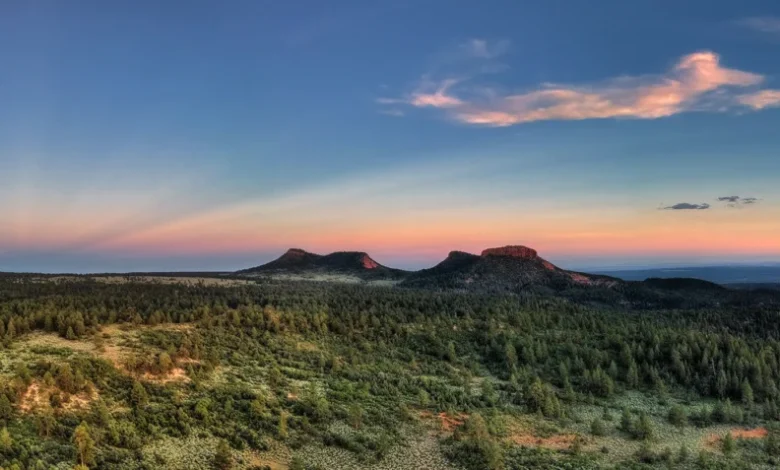
The sheer scale of the reduction is difficult to overstate. Prior to Monday’s orders, the two monuments covered a landscape larger than the state of Connecticut. Bears Ears National Monument, established to protect two prominent twin buttes and thousands of archaeological sites, originally spanned approximately 1.36 million acres. Under the new order, it has been fragmented into small, disconnected parcels. Grand Staircase-Escalante, a rugged expanse of cliffs and canyons known for its fossil-rich soil and remote wilderness, has seen its 1.87-million-acre footprint similarly gutted.
By reducing these monuments to roughly 10 percent of their previous size, the administration is effectively removing federal protections from millions of acres of land that contain some of the highest densities of archaeological sites in the United States. These include ancient cliff dwellings, petroglyphs, and ceremonial sites that are thousands of years old. Beyond the cultural heritage, the move impacts critical wildlife corridors and unique ecosystems that have remained largely undisturbed due to their remote locations.
A History of Contested Protection
The conflict over these Utah landscapes spans decades and multiple presidential administrations, illustrating the volatility of the Antiquities Act of 1906. This law grants presidents the authority to designate national monuments to protect "objects of historic or scientific interest."
- 1996: President Bill Clinton established the Grand Staircase-Escalante National Monument, a move that was initially met with fierce local opposition from Utah politicians who viewed it as a "land grab."
- 2016: President Barack Obama designated Bears Ears National Monument following years of advocacy from a historic coalition of five Tribal Nations: the Navajo, Hopi, Zuni, Ute Mountain Ute, and Ute Indian Tribe.
- 2017: In his first term, President Trump signed proclamations to reduce Bears Ears by 85 percent and Grand Staircase-Escalante by nearly 50 percent.
- 2021: Upon taking office, President Joe Biden issued an executive order restoring the original boundaries of both monuments, citing the need to protect cultural resources and combat climate change.
- 2024: The Bureau of Land Management (BLM) and the five tribes of the Bears Ears Commission finalized a historic co-management plan, the first of its kind, giving tribes a direct voice in the stewardship of the land.
- 2026: The current executive orders not only reverse Biden’s restoration but cut the monuments far deeper than the 2017 levels, while also disbanding the inter-tribal co-stewardship framework.
The Legal Debate: Presidential Authority and the Antiquities Act
At the heart of the looming legal battle is a fundamental disagreement over the interpretation of the Antiquities Act. While the Act clearly grants the president the power to create monuments, it is silent on whether a president has the authority to abolish or significantly diminish them. Legal scholars, including John Ruple of the University of Utah’s Wallace Stegner Center, argue that the power to rescind or shrink a monument rests solely with Congress.
The administration’s legal standing has been bolstered by a recent opinion from the Department of Justice, which asserts that the executive branch does indeed have the authority to review and eliminate national monuments. Furthermore, a June decision in the 10th Circuit Court of Appeals revived a lawsuit from the State of Utah that challenged the legality of the Antiquities Act itself. By issuing these orders now, the administration may be attempting to render existing lawsuits moot, forcing environmental and tribal groups to start the litigation process from scratch under a legal landscape that has become increasingly conservative.
Tribal Sovereignty and the End of Co-Stewardship
For the indigenous communities of the Four Corners region, the reduction of the monuments is viewed as more than a policy shift; it is described as an act of cultural erasure. The 2024 co-management agreement for Bears Ears was celebrated as a milestone in the "Land Back" movement, acknowledging tribal expertise in land management. Monday’s orders abruptly terminate the inter-tribal working group, removing the formal mechanism for indigenous input.
Davina Smith-Idjesa, a member of the Navajo Nation, emphasized the spiritual and practical necessity of the land. "This is our grocery store, our medicine cabinet, our classroom, our church," she stated. She noted that the history of the region is marred by the legacy of uranium mining, which left a trail of environmental contamination and illness among tribal members. The reopening of these lands to mining interests revives fears of a return to an era of industrial exploitation at the expense of tribal health and heritage.
Tribal leaders have also pointed out that they were not consulted prior to the signing of the orders, a move they argue violates the federal government’s trust responsibility to sovereign Tribal Nations.
Economic and Industrial Implications
The primary driver behind the reductions is the opening of the land to commercial interests. The Kaiparowits Plateau within Grand Staircase-Escalante is known to contain significant coal deposits, while the areas surrounding Bears Ears are rich in uranium and potentially oil and gas.
The administration argues that these resources are vital for American energy independence and local economic growth. In his remarks, the president claimed that previous protections made it "virtually impossible" for locals to use the land for traditional activities like hunting, fishing, or grazing. However, fact-checks by conservation groups have repeatedly shown that these activities were permitted under the monument designations, albeit with certain environmental safeguards.
Conversely, proponents of the monuments point to Utah’s thriving outdoor recreation economy. In recent years, Gateway communities like Moab and Escalante have seen a surge in tourism-related revenue. Conservationists argue that industrializing these landscapes will destroy the very wilderness values that draw millions of visitors to the state each year, potentially trading a sustainable long-term tourism economy for a short-term extractive boom.
National Political Context and Project 2025
The decision to shrink the Utah monuments aligns closely with the policy goals outlined in "Project 2025," a comprehensive roadmap for the current administration’s second term. The document calls for a massive sell-off of federal lands and the repeal of the Antiquities Act to prevent future presidents from "locking up" natural resources.

The move has drawn sharp rebukes from Democratic lawmakers in Washington. Senator Ben Ray Luján of New Mexico noted that while the monuments are located in Utah, they are national assets belonging to all Americans. Critics also point to public opinion polling, such as the Colorado College State of the Rockies poll, which consistently shows that a majority of Western voters support the protection of public lands and the maintenance of national monuments.
Future Outlook and Imminent Litigation
The executive orders are set to take effect in 60 days, but they are unlikely to result in immediate industrial activity. Earthjustice and other legal organizations have already prepared lawsuits to challenge the orders in federal court. These legal challenges will likely seek an immediate injunction to prevent any mining claims or drilling permits from being issued while the case moves through the judiciary.
The outcome of this battle will have implications far beyond Utah. If the courts uphold the president’s authority to unilaterally dismantle national monuments, it could jeopardize dozens of other protected sites across the country, from the Atlantic canyons to the forests of the Pacific Northwest. For now, the red rock country of southern Utah remains the front line in a national debate over whether the American landscape is a treasury of resources to be spent or a heritage to be preserved for future generations.
As Tracy Stone-Manning, president of the Wilderness Society, summarized: "As our nation marks 250 years, these public lands should be handed down, not over to drilling and mining interests." The next two months will determine if that vision of preservation can withstand the current administration’s drive for industrial expansion.