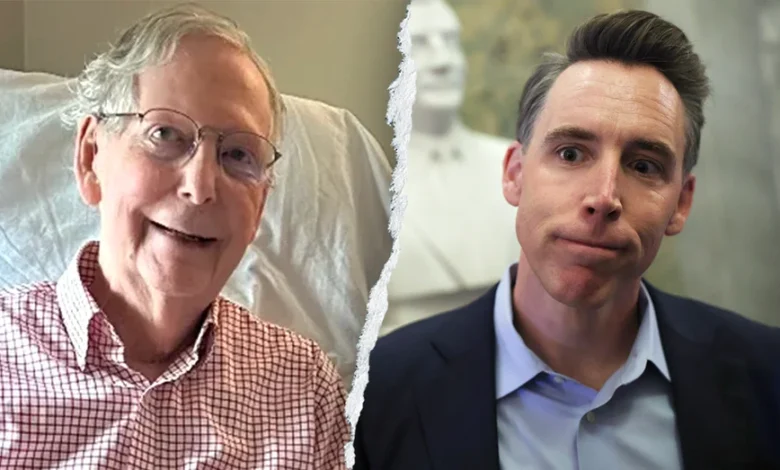
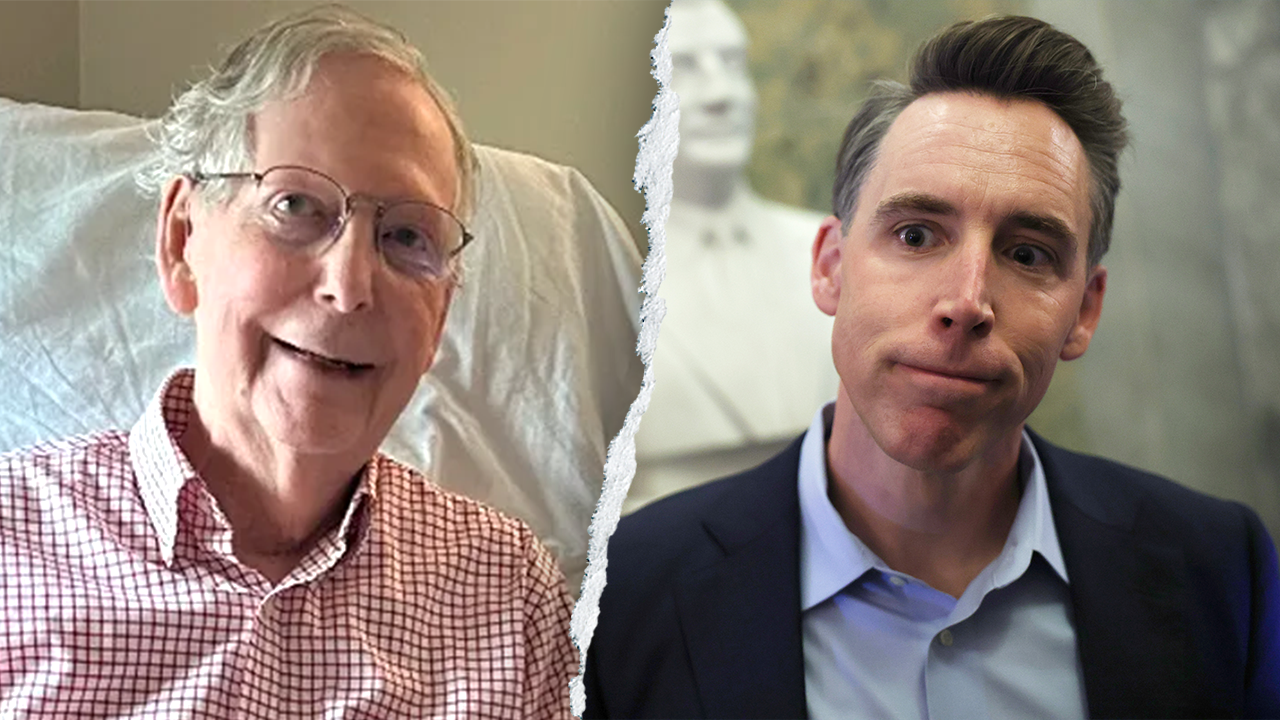
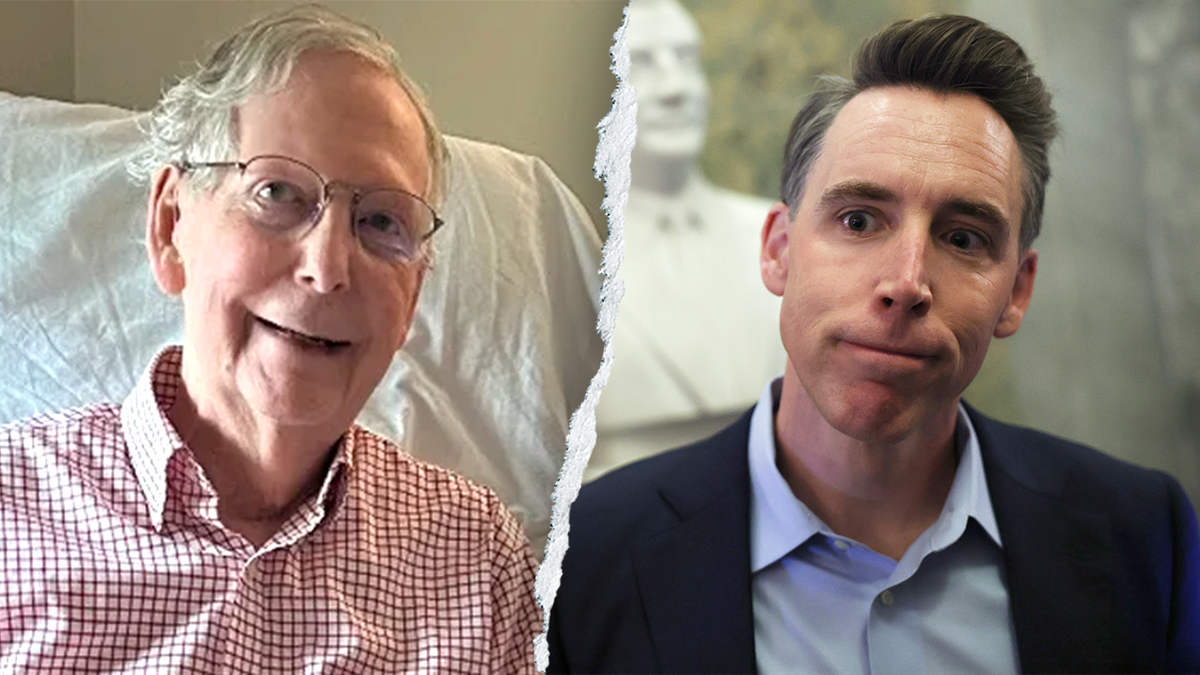
As an air of persistent uncertainty continues to envelop the condition of Kentucky Republican Senator Mitch McConnell, a prominent voice within his own party, Senator Josh Hawley (R-Mo.), has issued a pointed critique regarding the management of the crisis, forcefully reminding McConnell’s team of their fundamental "obligation to your constituents." The prolonged absence of the veteran lawmaker has not only sparked widespread concern for his health but has also ignited a fervent debate about transparency in congressional leadership and the operational integrity of the United States Senate, particularly given the body’s razor-thin partisan margins.
A Senator’s Unexpected Absence and Its Immediate Ramifications
Senator McConnell, 81 years old at the time of the incident, and a fixture in the upper chamber for nearly four decades, has been notably absent from the Senate floor for over a month following a significant fall at his Washington, D.C. home in March 2023. This unfortunate incident led to his hospitalization for a concussion and fractured ribs, subsequently complicated by a bout of pneumonia during his recovery. His extended convalescence has cast a long shadow over the legislative agenda of the Republican Party, which, as the minority caucus at the time, found its already delicate voting strength further compromised. The Senate’s partisan composition, with a narrow Democratic majority, meant that every Republican vote, especially that of its seasoned leader, was deemed crucial in the ongoing legislative battles and efforts to advance key components of the Republican platform.
Senator Hawley, known for his conservative populist stance and willingness to challenge party orthodoxy, conveyed his well wishes for McConnell’s recovery and that of his family during an interview with Fox News Digital. However, his remarks swiftly pivoted to a demand for greater openness, stating, "at a certain point you do have an obligation to your constituents and the country to tell them what’s going on." Hawley’s sentiment echoes a growing chorus of voices, both within and outside the Republican Party, calling for more detailed and timely information regarding the health status of such a powerful and influential figure.
The implications of McConnell’s absence extend beyond mere legislative inconvenience. With a Republican caucus operating with a slim minority, the effective loss of even one vote due to illness places immense strain on the party’s ability to block Democratic initiatives, push through its own legislative priorities, or even influence the terms of debate. Hawley articulated this concern plainly: "To be down a vote, we’ve got a slim majority; it’s not easy." This sentiment underscores the precarious balance of power in the Senate and the outsized impact that the health of individual members can have on national policy.
Chronology of Events Leading to the Current Situation
Mitch McConnell’s journey in the U.S. Senate began in 1984, marking the start of a distinguished career that would see him become one of the longest-serving and most powerful leaders in American political history. He was first elected to the Senate representing Kentucky, and over the decades, cultivated a reputation as a shrewd tactician and an astute legislative strategist. His ascent to leadership culminated in his election as Senate Majority Leader in 2015, a position he held until January 2021, when Democrats regained control of the chamber, making him the Senate Minority Leader.
- 1984: Mitch McConnell is first elected to the U.S. Senate, beginning his nearly 40-year tenure.
- 2007: Becomes Senate Minority Leader.
- 2015: Ascends to Senate Majority Leader, a position he holds for six years, overseeing significant legislative achievements for Republicans, including judicial appointments and tax reform.
- January 2021: Following the 2020 elections, Democrats gain a narrow majority, and McConnell transitions back to Senate Minority Leader.
- March 2023: While attending a private dinner, McConnell falls at his Washington, D.C. home. He is hospitalized and diagnosed with a concussion and fractured ribs.
- Following Hospitalization: McConnell enters a rehabilitation facility to recover from his injuries.
- April 2023: During his recovery, he develops pneumonia, further delaying his return to the Senate.
- Late April/Early May 2023: Pressure begins to mount from within his party and from the public for greater transparency regarding his condition and an estimated timeline for his return.
- May 2023 (Date of Hawley’s Interview Context): Senator Josh Hawley publicly calls for transparency from McConnell’s team, emphasizing the "obligation to constituents."
- May 2023 (McConnell’s Open Letter): Senator McConnell issues an open letter to Kentuckians, addressing his prolonged absence. He attributes his fall to mobility issues stemming from his childhood battle with polio and acknowledges he "won’t be able to return to the Senate floor to vote quite yet." He reiterates his intent to complete his term and promises updates.
This timeline highlights not only the physical toll of the incident on McConnell but also the escalating political pressure for information, a natural consequence of a prominent leader’s extended absence from public duty.
Background and Broader Context of Leadership Health and Transparency
The situation surrounding Senator McConnell’s health and the subsequent calls for transparency are not isolated incidents but rather part of a recurring theme in American politics: the delicate balance between a public official’s right to privacy and the public’s right to know about the fitness of their elected representatives, especially those in positions of significant power. The U.S. Congress, particularly the Senate, has a relatively high average age compared to the general population, making health issues a more frequent consideration.
McConnell’s stature as a seven-term senator and the longest-serving Senate Republican leader in history amplifies the scrutiny. Throughout his career, he has been a central figure in shaping conservative policy and strategy, earning both fervent admiration and staunch opposition. His strategic acumen, particularly in navigating legislative roadblocks and confirming conservative judicial appointments during the Trump administration, cemented his reputation as a formidable political force. The prospect of his prolonged incapacitation or even retirement sends ripples of uncertainty through the Republican Party, potentially triggering a significant leadership battle and reshaping the legislative landscape.
The immediate legislative impact cited by Hawley revolves around "President Donald Trump’s agenda" and a "voter integrity measure, the SAVE America Act." While the "SAVE America Act" is commonly associated with immigration enforcement, Hawley’s reference to it in the context of "voter I.D." suggests a broader legislative push by Republicans on election reform, a key priority for the party following recent election cycles. The absence of a single vote in a narrowly divided Senate can be the difference between a bill’s passage and its demise, or between confirming a nominee and leaving a position vacant. This underscores the practical, day-to-day consequences of McConnell’s continued absence.
Supporting Data and Political Landscape
At the time of McConnell’s fall in March 2023, the U.S. Senate was composed of 51 Democrats (including three independents who caucus with Democrats) and 49 Republicans. This 51-49 split meant that the Democratic majority was extremely narrow, allowing Republicans significant leverage to obstruct or demand concessions on legislation, provided they remained united. The absence of a Republican leader, even for a short period, disrupts this delicate balance.
Public opinion data consistently shows a strong desire among Americans for transparency from their elected officials, particularly concerning health matters that could affect their ability to perform their duties. A 2022 Pew Research Center study, for instance, indicated that a significant majority of Americans believe it is important for elected officials to be transparent about their health. This expectation intensifies for leaders who hold immense sway over national policy.
The average age of U.S. Senators in the 118th Congress (2023-2024) was around 65 years old, with many members in their 70s and 80s. Senator McConnell himself, at 81, was among the older members. This demographic reality frequently fuels discussions about the physical and mental demands of congressional service. While age does not inherently equate to diminished capacity, as Hawley acknowledged by citing 90-year-old Senator Chuck Grassley (R-Iowa) as "sharp as a tack and spry," it does bring health concerns to the forefront more often.
The specific "SAVE America Act" mentioned by Hawley, if indeed referring to a voter integrity bill as he implied, would be a contentious piece of legislation. Republican efforts to enact stricter voter ID laws and other election security measures have been a cornerstone of their legislative platform, often facing strong opposition from Democrats who argue such measures suppress voter turnout. McConnell’s leadership and strategic maneuvering would be indispensable in rallying his caucus and potentially negotiating bipartisan support or even forcing difficult votes on such measures.
Official Responses and Reactions Across the Aisle
Senator Hawley’s call for transparency, while directed at McConnell’s team, implicitly highlighted a perceived lack of communication from Republican leadership more broadly. He noted, "I just hear a lot from leadership that, ‘Well, we don’t have the votes for this.’ Like the voter I.D., we don’t have the votes for that. Well, we might want to do something about that." This statement suggests a frustration with the perceived inertia and an internal debate about how to address the immediate challenge of reduced voting strength. Hawley also revealed his own exclusion from detailed information, stating he had been "totally in the dark" about McConnell’s condition and had "never had any idea about any of his health stuff." This suggests a breakdown in communication even among senior members of the same caucus.
While Hawley deferred to the then-Senate Republican Whip, John Thune (R-S.D.), on the tactical handling of McConnell’s situation, his public statements represent a notable departure from the typical closed-door discussions within party leadership. Thune, as the second-highest-ranking Republican in the Senate, would naturally be at the forefront of managing the caucus in McConnell’s absence and serving as a crucial point of contact.
The concerns about McConnell’s absence were not confined to his own party. Representative Alexandria Ocasio-Cortez (D-N.Y.) was quoted as saying, "’This is not normal,’ AOC unloads on McConnell’s prolonged absence," reflecting a broader sentiment that the lack of detailed information was problematic, regardless of partisan affiliation. Such cross-aisle concern underscores the institutional importance of a healthy and transparent leadership.
McConnell’s open letter to Kentuckians, his first direct public communication addressing his health crisis, sought to reassure his constituents and colleagues. By attributing his fall to lingering mobility issues from polio, he provided a personal context for his injury. His pledge to finish his term and keep constituents updated served as an attempt to project stability and commitment. However, his acknowledgment that he "won’t be able to return to the Senate floor to vote quite yet" confirmed that his recovery would be protracted, leaving the political implications of his absence to linger.
Broader Impact and Implications for the Future
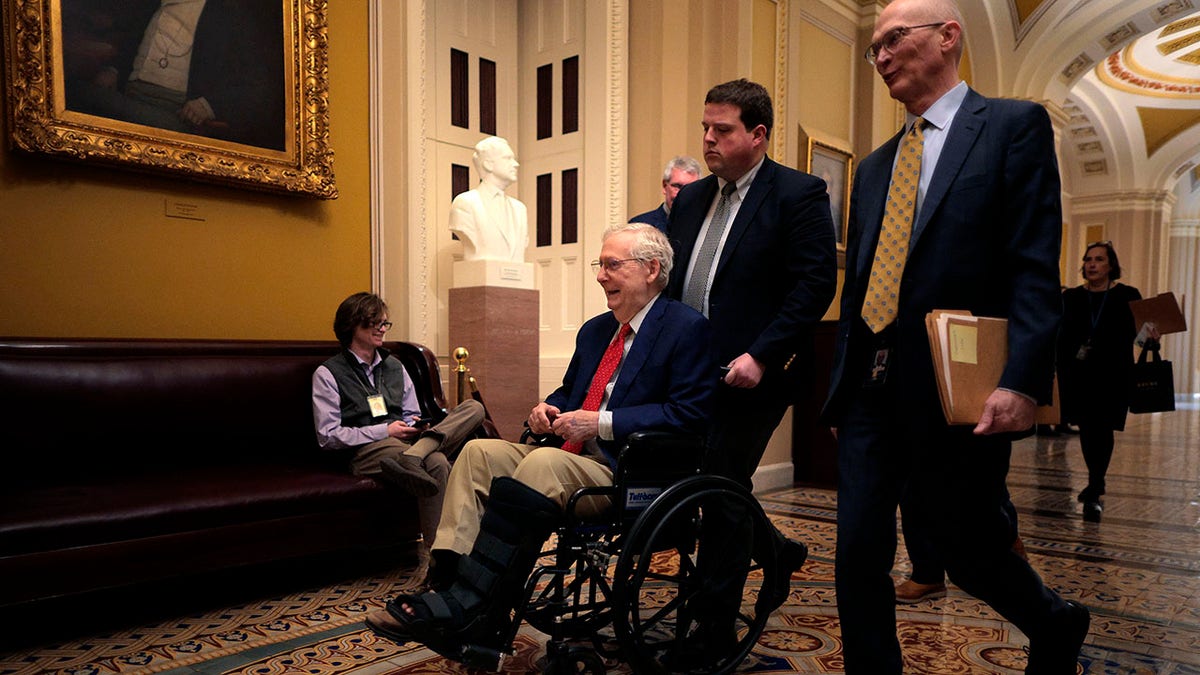
The saga surrounding Senator McConnell’s health and absence carries several profound implications for the Republican Party, the Senate, and American politics at large:
-
Legislative Stagnation: The most immediate impact is the potential for legislative stagnation. In a closely divided Senate, the absence of a skilled negotiator and vote-counter like McConnell can slow down or derail critical legislative processes. This affects not only the passage of Republican-backed bills but also the party’s ability to effectively counter Democratic initiatives, confirm judicial nominees, or participate robustly in budget negotiations. The "dead sprint to wrap up key parts of President Donald Trump’s agenda" (which likely refers to ongoing efforts to advance conservative priorities) would undoubtedly suffer.
-
Leadership Vacuum and Succession Debate: McConnell’s prolonged absence inevitably raises questions about a potential leadership vacuum. While John Thune as Whip stepped into a more prominent role, the absence of the official leader creates uncertainty. Should McConnell’s health prevent him from returning or compel him to step down, it would trigger a fierce leadership contest within the Republican caucus, potentially reshaping the party’s direction and strategy for years to come. Key contenders like Thune, Senator John Cornyn (R-TX), and Senator Rick Scott (R-FL) would likely emerge.
-
Debate on Term Limits and Age Limits: Senator Hawley’s pivot to advocating for term limits, rather than strict age limits, injects new energy into an old debate. While acknowledging that age itself is not a disqualifier (referencing Senator Grassley), Hawley argues that "People just come here and stay forever. And I don’t think it’s what the founders intended; I don’t think it’s what people want." This incident serves as a powerful case study for proponents of term limits, arguing that fresh perspectives and renewed vigor are essential for effective governance, regardless of individual health circumstances. A constitutional amendment for term limits, as Hawley proposes, is a long shot, but the discussion itself highlights growing public dissatisfaction with career politicians.
-
Precedent for Transparency: The calls for transparency around McConnell’s health could set new precedents for how political leaders and their teams communicate about medical issues. In an era of instant information and heightened public scrutiny, the traditional reluctance to share extensive health details is increasingly challenged. The expectation for timely and comprehensive updates may become a norm, particularly for individuals holding critical national roles. This also relates to broader discussions about public trust and accountability in government.
-
Impact on Public Trust: The perception of opacity surrounding a leader’s health can erode public trust in government institutions. When constituents feel they are "in the dark" about the well-being of their representatives, it can foster cynicism and detachment. McConnell’s eventual open letter was a step towards addressing this, but the initial silence fueled concerns.
In conclusion, Senator Mitch McConnell’s health crisis has transcended a personal medical event, evolving into a significant political flashpoint. It has forced a critical examination of leadership transparency, the operational resilience of a closely divided Senate, and the enduring debate over the longevity of political careers. While the immediate focus remains on McConnell’s recovery and eventual return, the broader implications for governance and public trust will undoubtedly resonate throughout the American political landscape for the foreseeable future.