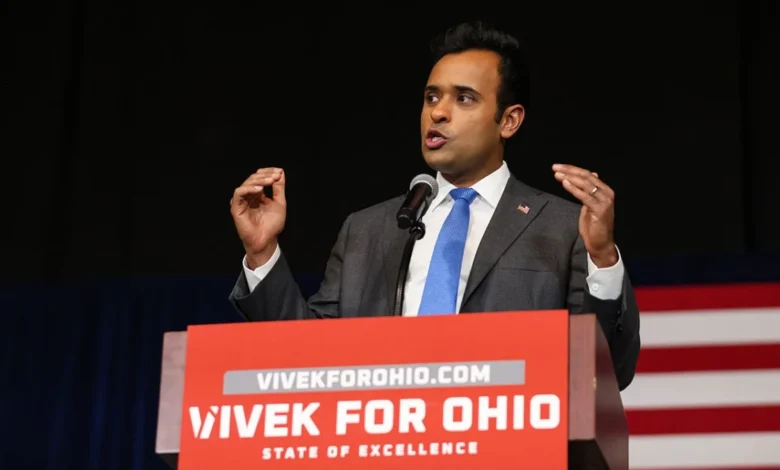
In the wake of a sweeping electoral shift that saw Democrats secure significant legislative gains across the American heartland, Florida Governor Ron DeSantis has leveled sharp criticism at the campaign performance and ideological positioning of Vivek Ramaswamy. The biotech entrepreneur, who sought the Ohio governorship with the backing of former President Donald Trump and guidance from high-level advisors associated with Vice President JD Vance, suffered a decisive 7.9 percentage point loss to Democratic challenger Amy Acton. The result, which occurred during a broader national "blue wave," has ignited a vigorous debate within the Republican Party regarding candidate selection, the alignment of GOP platforms with blue-collar demographics, and the efficacy of modern campaign tactics.
The critique from Governor DeSantis, delivered during an appearance on the Sage Steele Show, centered on what he characterized as a fundamental disconnect between Ramaswamy’s background as a tech-focused entrepreneur and the economic realities facing Ohio’s working-class electorate.
A Mismatch of Message and Demographics
DeSantis, who is currently serving out his final term as Florida’s governor, highlighted the specific socio-economic composition of Ohio, a state he noted has deep personal resonance due to his family’s roots in the industrial hub of Youngstown. According to DeSantis, the Republican apparatus failed to appreciate the nuances of the Ohio voter, opting for a candidate whose professional identity did not resonate with the state’s traditional manufacturing and labor base.
Central to this critique was Ramaswamy’s stance on immigration, specifically his advocacy for a merit-based H-1B visa system. While Ramaswamy argued that the current lottery-based process should be fundamentally restructured, DeSantis contended that the message fell flat in a region concerned with the displacement of domestic workers. The irony of the situation, as pointed out by observers, is that while Ramaswamy championed a departure from current visa protocols, his own firm, Roivant Sciences, utilized the H-1B program to secure dozens of approvals for foreign workers between 2018 and 2023. This perceived contradiction provided ammunition for critics who argued that the candidate’s personal business practices were at odds with his populist rhetoric.
The Chronology of a Failed Campaign
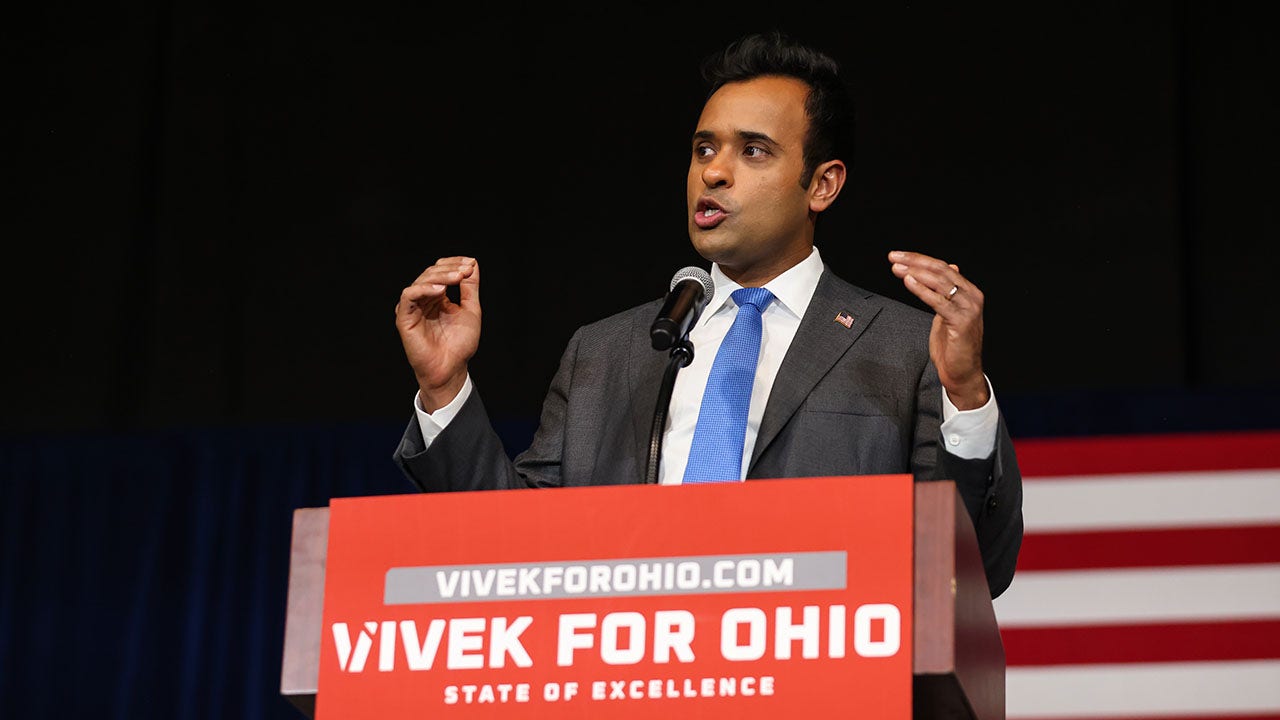
The path to the Ohio gubernatorial race was marked by high expectations and significant institutional support. Following the 2024 presidential cycle, in which Ramaswamy unsuccessfully sought the Republican nomination, he pivoted toward state-level politics. His entry into the race was immediately bolstered by an endorsement from Donald Trump, cementing his status as the establishment favorite among the MAGA-aligned wing of the party.
Throughout the primary and general election, the campaign was intended to serve as a bellwether for the influence of Trump-backed candidates in the post-2024 landscape. However, the momentum stalled significantly in the final months of the race. A defining moment in the campaign’s decline was the release of a controversial attack ad targeting Democratic candidate Amy Acton. The advertisement featured Acton’s estranged mother and challenged the candidate’s personal narrative regarding her upbringing in poverty. The maneuver backfired, drawing condemnation from both sides of the aisle. Critics argued the ad was not only factually misleading—given the context of Acton’s departure from her family home following allegations of abuse against her stepfather—but also a strategic miscalculation that alienated moderate suburban voters.
The electoral outcome was stark. In 2024, the region had trended heavily toward Republican candidates, with Donald Trump carrying Ohio by a 11.2 percentage point margin. The 2026 reversal, which saw Ramaswamy lose by 7.9 points and U.S. Senate candidate Jon Husted fall to Democrat Sherrod Brown by 4.9 points, suggests a profound shift in the political landscape of the Midwest.
Data and Disparity: The Blue Wave Analysis
The 2026 midterms were widely interpreted as a referendum on the previous administration’s policy successes and the ongoing influence of the former president’s endorsed candidates. Data from exit polls conducted by various media organizations indicated that independent voters, a crucial bloc in Ohio, moved away from the Republican ticket in favor of Democratic candidates who focused on bread-and-butter economic issues and local infrastructure.
The loss of the Ohio governorship is particularly significant given the state’s history as a bellwether for national politics. The failure to secure the seat—coupled with the loss of the U.S. Senate seat—points to a broader systemic issue for the Republican Party: the difficulty of translating national populist appeals into local governance victories. Political analysts note that when candidates like Ramaswamy, who are associated with the "tech elite" or the "donor class," attempt to adopt populist rhetoric without a track record of supporting labor-centric policies, the resulting "authenticity gap" can be fatal at the ballot box.
The Broader Impact on GOP Strategy
Governor DeSantis’s comments reflect a growing anxiety within the party that the "extinction-level event" of the 2026 midterms may not be an anomaly but rather the result of a misaligned strategy. By failing to codify key executive orders from the Trump era into law during periods of higher legislative leverage, the GOP has found itself on the defensive.
"Last night’s elections did not only kneecap the last two years of the Trump administration, it basically ensures the four years after that are going to either be Democrat years where they have a trifecta or where you have a Republican president that is hemmed in and limited," DeSantis remarked. His assessment highlights a fear that the party is losing its ability to implement a coherent governing agenda, potentially leading to a long-term decline in federal influence.
Furthermore, the failure in Ohio serves as a warning for future electoral cycles. The party’s reliance on high-profile endorsements without a corresponding ground-game that connects with blue-collar workers has been identified by party strategists as a primary vulnerability. The shifting demographics in formerly reliable GOP strongholds underscore the need for a recalibration of messaging that prioritizes the economic security of the working class over ideological purity tests or personality-driven campaigns.
Looking Toward 2028
As speculation regarding the 2028 presidential field begins to emerge, DeSantis has sought to distance himself from the noise, emphasizing that his focus remains on results-oriented governance rather than abstract political ambition. His refusal to engage in "potted plant" politics—a term he uses to describe the risk of holding office without the ability to effect change—suggests a pivot toward a more pragmatic, technocratic approach to conservatism.
Whether the Republican Party will move to embrace this pivot remains an open question. The influence of the "Trump wing" remains dominant, yet the electoral results from 2026 provide empirical evidence that the current path has clear limitations. As the party enters a period of introspection, the lessons learned from the failed Ohio gubernatorial run will likely become central to the internal dialogue.

For his part, Vivek Ramaswamy has not yet issued a comprehensive post-mortem of his campaign, though his supporters argue that his entry into the race brought essential debates about ESG investment, government efficiency, and the administrative state to the forefront of the national conversation. Regardless of the intent behind the candidacy, the electoral reality in Ohio remains a stark reminder that in the arena of state politics, the bridge between abstract ideological goals and the everyday concerns of the electorate must be carefully maintained.
The political fallout from this race is expected to resonate through the upcoming legislative sessions, as Republican lawmakers grapple with a diminished mandate and the reality of a Democratic-controlled Congress. With the 2026 results now in the books, the focus shifts to how the party will regroup—or if it will continue to lean into the strategies that, according to critics like DeSantis, led to this cycle’s significant electoral losses.