The real estate market in Hudson, New York, has long been characterized by a blend of historic preservation and high-end design aspirations, yet few properties embody this intersection as vividly as the residence on Willard Place. Originally constructed in 1875 during the height of the town’s whaling-industry prosperity, the home—now owned by acclaimed society photographer Jessica Craig-Martin—serves as a case study in the evolving aesthetic of the Hudson Valley. While many historic properties in the region face the threat of modernization that strips away their period-specific charm, this residence has undergone a thoughtful curation that balances its 19th-century architectural integrity with a modern, eclectic interior design philosophy.

Architectural Origins and the Hudson Whaling Boom
To understand the significance of the Willard Place property, one must first consider the economic context of its inception. Hudson, New York, transitioned from a modest river settlement to a booming whaling port in the mid-19th century. The wealth generated by this industry manifested in the residential landscape, where wealthy ship captains and merchants commissioned homes that reflected their prosperity. These residences were typically built in the Victorian style, defined by intricate exterior embellishments, turrets, expansive bay windows, and wrap-around porches.

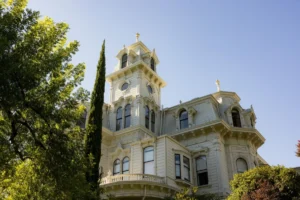
The Willard Place home stands as a quintessential, albeit particularly eccentric, example of this era. Its polychrome exterior—a hallmark of Victorian-era design that prioritized colorful, multi-layered paint schemes—was intended to showcase the owner’s status and artistic sensibilities. For decades, the house sat as a silent witness to the town’s shifting economic tides. Following the decline of the whaling industry and the subsequent industrial fluctuations of the 20th century, many such homes in Hudson were subdivided or neglected. The Willard Place property, having remained vacant for an extended period, escaped the structural degradation common in aging Victorian estates, though it required a vision to reclaim its former utility.

The Digital Paradox: AI and the Reality of Restoration
The process of acquiring the property began with a serendipitous, if not entirely accidental, visit. Craig-Martin’s initial interest was piqued by an online listing that displayed the house in a state of extreme interior clutter, featuring aggressive, hyper-saturated digital renderings. In recent years, real estate listings have increasingly utilized artificial intelligence and virtual staging to enhance the appeal of properties. However, in this instance, the technology provided a misleading, almost grotesque, caricature of the home’s potential.

Upon conducting a site visit with real estate professional Julia Crowley and artist Helen Marden, the reality of the home stood in stark contrast to the digital fabrications. The house was not merely "crammed" with furniture; it was a pristine, light-filled shell. The high ceilings, original wood flooring, and intentional, grand proportions of the rooms were laid bare by the absence of furniture. This discovery underscores a growing trend in high-end real estate: the "virtual staging" of homes often creates a barrier to understanding the actual spatial dynamics of a property. For potential buyers, the ability to look past digital manipulation is becoming a critical skill in identifying architectural value.

Chronology of a Transformation
The timeline of the acquisition and subsequent inhabitation of the Willard Place home reflects a deliberate, phased approach to historic restoration.

- 1875: Original construction of the Willard Place Victorian estate during the peak of Hudson’s whaling-driven economic expansion.
- Early 21st Century: The property enters a period of dormancy, experiencing years of vacancy and neglect.
- Pre-Acquisition Phase: The home appears on the regional real estate market with digitally staged, AI-generated imagery that fails to capture the property’s architectural merit.
- The Inspection Period: Craig-Martin conducts an in-person tour, identifying that the house lacks the "old house" structural hazards common in properties of its age.
- Purchase and Move-in: Following a successful offer, the home is transitioned into a primary residence. Initial occupation is minimalist, characterized by a "camp-like" atmosphere with essential comforts, prioritizing the preservation of the home’s original floor plan over immediate decorative overhaul.
- Current State: Two years post-acquisition, the house functions as a repository for an extensive collection of art, global textiles, and curated ephemera, serving as a live-in studio and gallery.
Curation and the "One-Way Trip" of Luxury
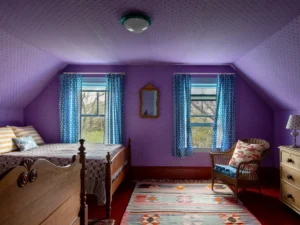
The interior design of the home is a deliberate departure from the minimalism that has dominated the luxury housing market for the past decade. Craig-Martin’s approach to furnishing the space is intentionally dense, layering works from established figures—such as Brice Marden, Fernand Léger, and Josef Albers—with artifacts collected from diverse locales, including Morocco, India, and Indonesia.

The integration of these objects serves a dual purpose: it acts as a biographical map of the owner’s life and challenges the architectural rigidity of the Victorian era. For instance, the kitchen maintains its vintage red Formica, a choice that harmonizes with modern, vibrant appliances, creating a continuity between the 1950s aesthetic and the 1870s structure. This juxtaposition of "the ridiculous and the sublime"—as noted by the owner—suggests a move away from the "form follows function" school of thought toward a "form follows identity" ethos.

The presence of the "Norma Desmond staircase," a term evocative of the grand, theatrical architecture found in classic Hollywood films, highlights the shift in modern luxury requirements. Where early 21st-century luxury was often defined by open-concept, sterile living spaces, there is a renewed appreciation for the romantic, grand, and historically significant. As Craig-Martin aptly describes it, the experience of living in a home with such architectural gravitas is a "one-way trip," implying that the standard of living has been permanently elevated.

Broader Economic and Cultural Implications
The successful restoration and habitation of the Willard Place house are emblematic of the broader "Hudson Renaissance." Since the early 2000s, Hudson has seen an influx of creative professionals, artists, and retirees relocating from New York City, drawn by the town’s proximity to cultural hubs and its preserved architectural heritage.

Data from the New York State Association of Realtors indicates that property values in Columbia County, where Hudson is the county seat, have remained resilient despite national market fluctuations. This is largely driven by the high demand for "trophy" or "legacy" properties—homes that offer historical significance combined with modern functionality. However, this demand brings challenges. As more historic properties are acquired by high-net-worth individuals, the risk of gentrification and the displacement of local residents becomes a point of concern for municipal planners.

Furthermore, the Willard Place home demonstrates the importance of historic preservation tax credits and the role of private ownership in urban conservation. By choosing to preserve the Victorian character rather than gutting the interior, the owner has contributed to the preservation of the town’s visual identity.

Conclusion: The Future of Historic Inhabitation
The story of the Willard Place home is more than a personal account of a homeowner falling in love with a structure; it is an examination of how historical spaces can be repurposed for contemporary life without sacrificing their soul. The house, once neglected and misrepresented by digital algorithms, has found new life as a vibrant, living archive.

As the real estate market continues to grapple with the tension between technological advancement and historic preservation, the success of projects like this serves as a model. By recognizing the intrinsic value of historical proportions and allowing the home’s own "madness" to guide the design, the owner has secured not just a residence, but a continuation of the architectural narrative that defined Hudson at the end of the 19th century. Whether or not this approach to "maximum-minimalism" or "curated chaos" will influence future design trends remains to be seen, but it is clear that for this particular Victorian, the future is as colorful as its history.