In January, the American political landscape underwent a significant transition as nineteen newly elected governors prepared to assume their duties. For these incoming leaders, the inauguration represents more than just a swearing-in ceremony; it marks the commencement of a logistical transition, as many must relocate to state-sanctioned executive residences. While the tradition of the governor’s mansion is deeply rooted in American civic history, the modern reality of these residences is increasingly complex. With five states—Arizona, Idaho, Massachusetts, Rhode Island, and Vermont—lacking an official residence, and others grappling with aging infrastructure or shifting preferences toward private living, the role of these historic homes is being reevaluated by state administrations across the nation.

The Historical and Architectural Significance of Executive Residences
Executive residences serve as more than just housing for a state’s chief executive; they are often the symbolic heart of a state’s heritage. These properties frequently date back over a century, reflecting the architectural zeitgeist of their founding eras, ranging from Victorian and Neoclassical to Greek Revival and Colonial styles.
For instance, Virginia maintains the oldest continuously occupied executive residence in the United States, having housed its governors since 1813. This continuity highlights a tradition of stability and public service. Conversely, other states have struggled to maintain the viability of these aging structures. The financial burden of maintaining century-old plumbing, electrical systems, and structural foundations often falls on taxpayers, leading to recurring debates regarding whether these buildings should serve as private residences or be converted into fully public museums.

The Growing Trend Toward Private Residences
In recent years, a noticeable trend has emerged: governors opting to reside in their own private homes rather than the official state residence. This shift is often attributed to a desire for personal privacy, the need for family stability, or the perceived inadequacy of the official residence.
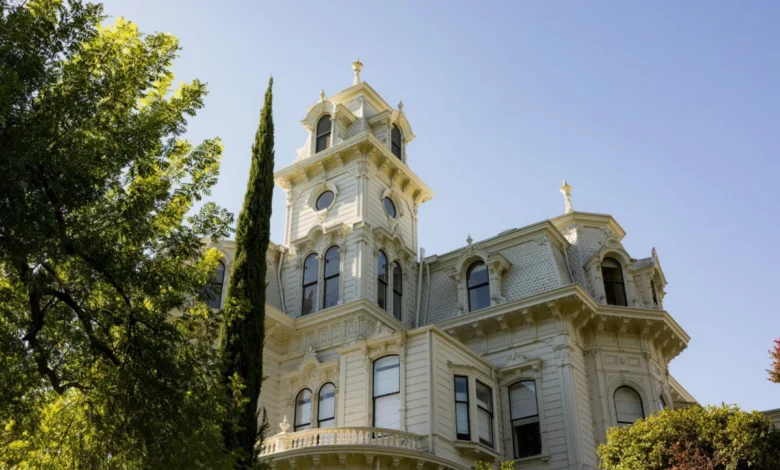
California provides a prominent example of this shift. Governor Gavin Newsom recently listed his Fair Oaks estate for $7.5 million, opting to live in a private home rather than the 19th-century Victorian residence in Sacramento. This decision highlights the tension between the ceremonial expectation of a "governor’s mansion" and the practical realities of modern life for high-profile political families. Similarly, Nebraska’s official residence has remained largely unoccupied for over a decade, signaling a potential shift in how states view the necessity of these historic assets.

Profiles of New Residences and Their Incoming Occupants
As the nineteen newly inaugurated governors settle into their roles, the following state houses remain central to their transition:
Alabama: Tommy Tuberville
Governor-elect Tommy Tuberville will move into a 17-room Neoclassical mansion in Montgomery. Built in 1907 by architect T. Weatherly Carter, the residence is characterized by its grand bifurcated staircase and four imposing Corinthian columns. Its longevity is a testament to the state’s commitment to preserving its executive heritage.

California: Xavier Becerra
Governor-elect Xavier Becerra faces a unique situation with the 20,000-square-foot Victorian in Sacramento. Following a significant renovation in 2015, the home reclaimed its status as an executive residence after being deemed uninhabitable by former Governor Ronald Reagan in 1967. With its Italian marble fireplaces and historic charm, the residence remains a focal point of California’s political life.
Colorado: Phil Weiser
The "Colorado’s Home" in Denver, a 27-room Colonial Revival estate, awaits Governor-elect Phil Weiser. Since 1960, the home has served as the official residence. It is notably modern in its amenities, including a greenhouse and a tradition of rotating local craft beers on tap, established by former Governor John Hickenlooper.

Florida: Byron Donalds
Governor-elect Byron Donalds, who made history as the state’s first Black governor, will take up residence in the Greek Revival mansion in Tallahassee. Completed in 1956, the structure replaced a 1907 original that had fallen into irreparable decay. It remains a staple of Florida’s political history, offering amenities that include a rose garden and a screened swimming pool.
Georgia: Keisha Lance Bottoms
Governor-elect Keisha Lance Bottoms will occupy a 30,000-square-foot Greek Revival home in Atlanta. Built in 1967, this massive estate underscores the scale and grandeur often associated with southern executive residences.

Iowa: Rob Sand
Terrace Hill in Des Moines serves as the official residence for Governor-elect Rob Sand. Built in 1869, this 18,000-square-foot Second Empire-style home serves a dual purpose, with the lower floors operating as a museum open to the public.
Maine: Hannah Pingree
Governor-elect Hannah Pingree will reside in the Blaine House in Augusta. Originally constructed in 1833, the home blends Federal and Greek Revival elements. It has functioned as the official residence since 1919 and offers a unique mix of historical formality and recreational space, including a tennis court and formal gardens.

Michigan: Jocelyn Benson
Michigan presents a unique case for Governor-elect Jocelyn Benson, as the state provides two residences. The Lansing home is a mid-century ranch-style house, while the Mackinac Island residence is a historic Arts-and-Crafts-style mansion, offering a distinct seasonal transition for the governor.
Minnesota: Amy Klobuchar
The 16,000-square-foot residence in St. Paul, a stunning combination of English Tudor and Beaux-Arts styles, will be home to Governor-elect Amy Klobuchar. With seven bedrooms and nine fireplaces, it represents one of the more substantial residential properties among the states.

Nevada: Aaron Ford
Governor-elect Aaron Ford will occupy a Classical Revival mansion in Carson City. Built in 1909, the home is a cornerstone of the state capital’s architectural identity, featuring a formal dining room and a dedicated governor’s study.
New Mexico: Deb Haaland
Governor-elect Deb Haaland will move into "The People’s House" in Santa Fe. This mid-century modern structure, completed in 1955, represents a departure from the traditional 19th-century styles found in many other state capitals.

Ohio: Amy Acton
Governor-elect Amy Acton will reside in a 1925 Tudor-style home in Bexley. The property is renowned for its three acres of gardens, including a "Storybook Trail" inspired by classic children’s literature, which serves as a community-facing feature of the estate.
Oklahoma: Mike Mazzei
Governor-elect Mike Mazzei will oversee a 14,000-square-foot Dutch Colonial in Tulsa. The home is noted for its limestone facade, which mimics the nearby State Capitol, and a swimming pool uniquely shaped like the state of Oklahoma.

South Carolina: Alan Wilson
The Federal-style mansion in Columbia, dating back to 1855, will serve as the residence for Governor-elect Alan Wilson. Having functioned as an official residence since 1868, it stands as one of the oldest and most historically preserved homes in the South.
Tennessee: Marsha Blackburn
Governor-elect Marsha Blackburn will reside at "Far Hills," a 10-acre estate in Oak Hill. The three-story Georgian-style mansion has been the state’s executive residence since 1949 and is celebrated for its sweeping views.

Texas: Gina Hinojosa
Governor-elect Gina Hinojosa will move into the 10,000-square-foot Greek Revival mansion in Austin, which has served as the home for Texas governors since 1856.
Wisconsin: David Crowley
Governor-elect David Crowley will occupy a 16,000-square-foot Classical Revival mansion in Madison. Built in 1928, the home is situated on an expansive property featuring ten distinct gardens and multiple fireplaces.

Wyoming: Eric Barlow
Governor-elect Eric Barlow will reside in the official home near Frontier Park in Cheyenne. While the residence has served the state since 1976, there is ongoing legislative discussion regarding the potential construction of a new facility to improve security and utility.
Economic and Practical Implications
The maintenance of these properties is a point of recurring scrutiny. When a governor chooses to live in a private residence, it can save taxpayers significant sums in security upgrades and utility costs, but it may also leave the official residence underutilized or in states of disrepair, as seen in Montana. Conversely, the high cost of maintaining a historic mansion can be offset by its value as a state landmark and a venue for official functions, charity events, and tourism.

Furthermore, the "haunted" history associated with some of these properties—such as the New York governor’s mansion—adds a layer of cultural intrigue that often draws public interest. However, for the administrators, the focus remains on functional security and the capacity to host visiting dignitaries.
Conclusion: The Future of the Executive Home
The transition of nineteen governors highlights a continuing evolution in the relationship between public officials and the state-provided housing that has traditionally defined their tenure. As the political landscape grows more diverse and the needs of modern families change, the role of the governor’s mansion will likely continue to shift. While the preservation of history remains a priority, the flexibility of future governors to balance tradition with personal and professional necessity will be a defining feature of these upcoming administrations. Whether through the preservation of historic estates or the repurposing of underutilized buildings, these residences will continue to reflect the values and priorities of the states they represent.