The coastal landscape of Cancun, Mexico, has undergone a profound transformation over the past two decades, shifting from a haven for budget-conscious spring breakers into a sophisticated global epicenter for luxury all-inclusive hospitality. When commercial tourism first took root in this corner of the Yucatan Peninsula in the 1970s, spearheaded by a master plan developed by Mexico’s national tourism development fund, Fonatur, the vision was largely centered on mass tourism, high-capacity resorts, and bustling nightlife. For years, the destination’s primary demographic consisted of college students and travelers seeking predictable, volume-driven packages characterized by buffet dining and standard swim-up bars.
However, market demands and traveler demographics have evolved significantly. Today, visitors arriving on an abundance of nonstop commercial and charter flights from major United States hubs are increasingly discerning. They demand elevated architectural design, wellness-centric programming, Michelin-caliber gastronomy, and personalized butler services—all wrapped into upfront resort pricing. Industry data from the Quintana Roo Tourism Board underscores this shift, revealing a steady multi-year increase in luxury traveler spending and a diversification of source markets. This metamorphosis has not only altered the physical skyline of the famous Hotel Zone and the quieter shores of Playa Mujeres, but it has also redefined the economic model of Caribbean hospitality.
Historical Context and the Master-Planned Rise of Cancun
To understand Cancun’s current standing as a luxury destination, it is necessary to examine its unique origins. Unlike many historic coastal cities, Cancun was intentionally engineered. In the late 1960s, the Banco de México utilized computer models to identify optimal locations for a new tourism growth pole that could generate employment and foreign currency. A deserted barrier island shaped like the number seven, previously inhabited mostly by a small community of fishermen and protected by dense mangrove forests, was chosen.
Construction began in the early 1970s, focusing initially on the 14-mile-long Hotel Zone (Zona Hotelera), flanked on one side by the Caribbean Sea and on the other by the Nichupté Lagoon. The federal government invested heavily in infrastructure, including the building of the Cancun International Airport, which has since grown into one of the busiest aviation hubs in Latin America for international arrivals.
During the 1980s and 1990s, the destination gained international notoriety as the undisputed capital of North American spring break. Massive hotels rose along the powdery white-sand beaches, catering to high-volume travel operators. While this strategy successfully built high brand recognition, it also pigeonholed Cancun as a destination primarily suited for high-energy, low-cost youth travel.
The Turning Point: Diversification and the Shift Toward Upmarket Hospitality
The turn of the 21st century marked a critical turning point for regional planners and resort operators. Recognizing the limitations of relying solely on seasonal youth tourism, stakeholders began investing heavily in infrastructure diversification. Development expanded northward into Playa Mujeres, an exclusive gated community offering a more serene, low-density resort experience, and southward toward the Riviera Maya. Simultaneously, the historic fishing village of Isla Mujeres, accessible via a short ferry ride across the Bahía de Mujeres, began attracting day-trippers and boutique hotel developers seeking an alternative to the mainland’s high-rise density.
Hospitality brands recognized that modern consumers were suffering from "all-inclusive fatigue"—a weariness stemming from standardized buffets, mediocre house-brand spirits, and impersonal service. In response, global hotel chains and independent luxury operators began reimagining the category. The traditional wristband model was phased out at high-end properties, replaced by discrete digital check-ins and personalized concierge services.
"The modern luxury traveler does not want to sacrifice quality for convenience," notes a recent hospitality trend report published by the Latin America Hotel and Tourism Association. "The expectation today is that an all-inclusive tariff grants access to world-class culinary programs, holistic wellness facilities, and bespoke cultural excursions, matching or exceeding the standards found in traditional European or urban luxury hotels."
Data-Driven Growth: Tourism Metrics and Economic Impact
The strategic pivot toward upscale tourism has yielded measurable economic dividends for the state of Quintana Roo. According to official statistics from the Secretariat of Tourism (Sedetur), Cancun and the broader Mexican Caribbean routinely record high hotel occupancy rates, frequently exceeding 80 percent during peak seasons and maintaining resilient numbers during shoulder periods.
Furthermore, average daily rates (ADR) across Cancun’s hotel sector have climbed steadily over the past decade. This metric reflects a structural shift in traveler demographics: fewer budget travelers per room are being replaced by high-net-worth individuals and families willing to invest in premium room categories, such as oceanfront swim-up suites and multi-bedroom private villas.
| Year Range | Primary Market Focus | Dominant Resort Model | Average Daily Rate (ADR) Trend |
|---|---|---|---|
| 1980s – 1990s | Spring Break, Mass Tourism | Standard Buffet, Volume-Driven | Lower, Budget-Oriented |
| 2000s – 2010s | Families, Couples, Conventions | Branded All-Inclusive, Large Pools | Moderate, Stable Growth |
| 2020s – Present | Ultra-Luxury, Wellness, Culinary | Boutique All-Inclusive, Michelin Dining | Significantly Higher, Premium Shift |
Aviation data further reinforces this trend. Airlines have responded to the sustained demand for premium leisure travel by increasing the frequency of nonstop routes from key financial and cultural centers in the United States, Canada, and Europe. Cancun International Airport now handles hundreds of international flights daily, supported by strategic expansions to its terminal capacity and ongoing discussions regarding regional rail infrastructure, such as the Tren Maya project, which aims to connect visitors more seamlessly to surrounding archaeological and cultural sites.
Redefining the All-Inclusive Experience: Gastronomy and Wellness
The modern Cancun luxury resort bears little resemblance to its 20th-century predecessor. Chief among the transformations is the culinary program. Historically, all-inclusive dining was synonymous with mass-produced buffet spreads designed to feed thousands of guests efficiently. Today, top-tier properties feature multiple à la carte restaurants helmed by internationally trained chefs, offering menus ranging from contemporary Mexican fine dining and authentic Japanese omakase to Mediterranean seafood and French-Caribbean fusion.
Beverage programs have undergone an equally dramatic evolution. The ubiquitous frozen margarita served in plastic cups from a swim-up trough remains available for those seeking nostalgia, but it now coexists with craft cocktail bars featuring artisanal mezcals, extensive wine cellars curated by professional sommeliers, and bespoke mixology classes.
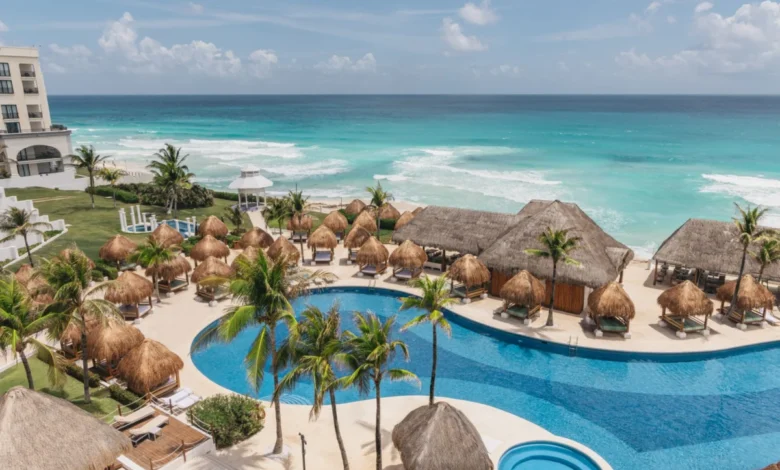
Wellness has emerged as another foundational pillar of the contemporary resort experience. Spas inspired by ancient Mayan healing traditions, state-of-the-art fitness centers offering oceanfront yoga, and personalized wellness itineraries have become standard expectations for luxury guests. Properties in areas like Playa Mujeres and the secluded stretches of the southern Hotel Zone emphasize tranquility, offering private plunge pools, holistic sleep programs, and dedicated butler service designed to anticipate every facet of a guest’s stay.
Implications for the Future of Caribbean Hospitality
The successful upscaling of Cancun’s tourism product has broader implications for the global hospitality industry. It demonstrates that the all-inclusive model is adaptable and capable of satisfying the most demanding travelers when paired with rigorous service standards and continuous capital reinvestment.
As competition intensifies among luxury operators in the Caribbean and Latin America, Cancun’s resort community continues to innovate. Environmental sustainability has also taken center stage, with many properties adopting advanced water conservation technologies, eliminating single-use plastics, and participating in local coral reef restoration initiatives to protect the natural assets that drew visitors to the region in the first place.
Ultimately, Cancun’s journey over the past twenty years reflects a maturing destination that honors its roots while aggressively looking forward. By diversifying its geographic appeal—from the bustling energy of the central Hotel Zone to the tranquil shores of Playa Mujeres and the bohemian charm of Isla Mujeres—the destination has ensured its enduring relevance. The frozen margaritas and white sand beaches that defined early vacations remain integral to the appeal, but they are now part of a much richer, multifaceted luxury landscape that continues to set the benchmark for global resort hospitality.