Methane, a colorless and odorless hydrocarbon, has emerged as one of the most significant challenges and opportunities in the global effort to mitigate the climate crisis. While carbon dioxide (CO2) often dominates the conversation surrounding greenhouse gas emissions, methane (CH4) is the second most important contributor to global heating, responsible for approximately one-third of the planet’s temperature rise since the Industrial Revolution. Composed of one carbon atom and four hydrogen atoms, methane is the primary component of natural gas, which currently generates a quarter of the world’s electricity. However, its potency as a heat-trapping gas and its relatively short lifespan in the atmosphere make it a critical target for immediate climate action.
Understanding the Potency and Nature of Methane
Methane is a paradox of climate science: it is significantly more powerful than carbon dioxide at trapping heat, yet it remains in the atmosphere for a much shorter duration. While CO2 can persist for centuries, methane breaks down in approximately 12 years. Despite this brevity, its impact is intense. Over a 20-year period, methane is 86 times more potent than CO2 on a per-mass basis. Over a 100-year horizon, it remains 28 times more powerful.
This high potency combined with a short atmospheric life means that reducing methane emissions offers a "fast-acting" lever for cooling the planet. According to the Global Methane Assessment, curbing these emissions is likely the single most effective strategy to decrease the rate of warming over the next two decades. The Intergovernmental Panel on Climate Change (IPCC) has stated that global methane emissions must be reduced by 34% by 2030, relative to 2019 levels, to keep the goal of limiting warming to 1.5 degrees Celsius within reach.

A Chronology of Rising Concentrations
The trajectory of atmospheric methane reflects the acceleration of human industrial and agricultural activity. In the pre-industrial era, methane levels were relatively stable, balanced by natural sinks like soil and chemical reactions in the troposphere. However, since the mid-18th century, concentrations have surged.
By 2023, atmospheric methane reached a record high of 1,934 parts per billion (ppb), representing a 265% increase over pre-industrial levels. Data from the World Meteorological Organization indicates that roughly 60% of current emissions are attributable to human activities. Despite international pledges to reduce output, emissions have continued to climb, with the 2020-2023 period seeing some of the highest growth rates on record. This surge is driven by a combination of expanded fossil fuel infrastructure, industrial agriculture, and climate-induced feedback loops in natural ecosystems.
Methodologies of Measurement: From Ground to Space
Accurately tracking methane is notoriously difficult because it is invisible and often leaks from disparate, remote infrastructure. Scientists employ two primary methodologies: "bottom-up" and "top-down" assessments.
The bottom-up approach involves ground-level data collection, where emissions are estimated based on specific sources, such as counting the number of cattle in a region or measuring the average leak rate of a gas valve. However, this method often underestimates reality. A landmark study found that U.S. oil and gas methane emissions were 60% higher than Environmental Protection Agency (EPA) estimates, largely because bottom-up models miss "super-emitter" events—accidental or intentional large-scale releases.

The top-down approach utilizes aerial surveys and satellite technology. Modern satellites, such as those operated by GHGSat and the recently launched MethaneSAT, can pinpoint massive plumes of methane from space. These technologies have revealed that just 5% of leaks in the gas industry are responsible for more than half of all leak-related emissions. In 2022 alone, researchers identified over 1,000 super-emitter incidents, including a leak in Turkmenistan that spewed methane at a rate equivalent to the entire hourly emissions of France.
Primary Sources of Emissions
Human-caused methane emissions are largely concentrated in three sectors: agriculture, fossil fuels, and waste management.
Agriculture: The Leading Contributor
Agriculture accounts for approximately 40% of anthropogenic methane. The majority—about 32%—comes from livestock, specifically through enteric fermentation. This biological process occurs in the digestive systems of ruminants like cows and sheep, where microbes break down food and release methane as a byproduct. As global demand for meat and dairy grows, these emissions are projected to rise significantly by 2030. Rice cultivation is another major source, contributing 8% of emissions, as flooded paddies provide an anaerobic environment perfect for methane-producing archaea.
Fossil Fuels: Extraction and Transport
The energy sector is responsible for 35% of human-caused methane. This occurs during the extraction, processing, and transport of oil and gas, as well as during coal mining. "Venting"—the intentional release of gas—and accidental leaks are the primary culprits. In coal mining, methane trapped in coal seams is released during the extraction process, with underground mines being particularly heavy emitters.

Waste and Landfills
Landfills and wastewater treatment systems contribute 20% of emissions. As organic waste decomposes in oxygen-poor environments, it releases significant quantities of gas. Due to rapid urbanization and population growth, waste-related methane is expected to be the fastest-growing emission source through 2050.
The Myth of the "Bridge Fuel"
For years, the natural gas industry has marketed itself as a "bridge fuel" that can help transition the world away from coal. The argument is based on the fact that burning natural gas emits about half as much CO2 as burning coal for the same amount of energy. However, recent scientific analysis has debunked this narrative by accounting for methane leakage.
If as little as 0.2% of methane leaks during the lifecycle of natural gas—from extraction to shipping as Liquefied Natural Gas (LNG)—its climate impact becomes equal to that of coal. Emerging data suggests leak rates are often far higher. A 2023 study concluded that when methane leaks are factored in, LNG can have a global warming potential 33% greater than coal over a 20-year period. Furthermore, the expansion of LNG infrastructure threatens to lock in fossil fuel dependence for decades, potentially canceling out gains made in renewable energy deployment.
Environmental Feedbacks and Tipping Points
One of the most alarming aspects of methane is its role in positive climate feedback loops. As the planet warms, natural systems that store methane begin to fail, releasing even more gas and further accelerating warming.

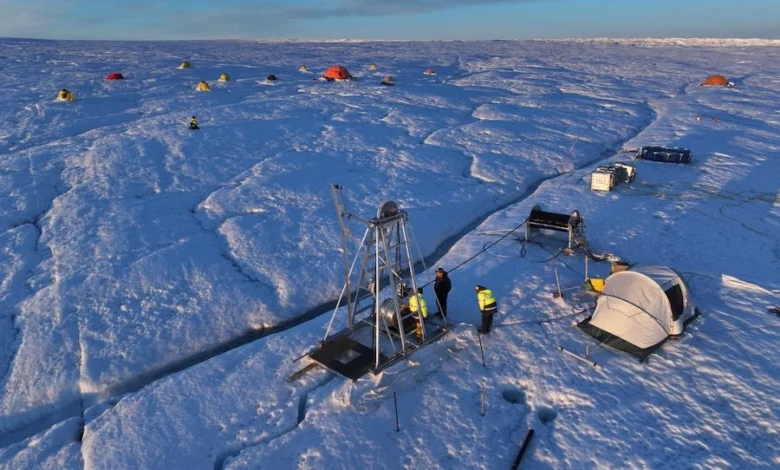
Wetlands are the largest natural source of methane. Rising temperatures and changing rainfall patterns have caused tropical and Arctic wetlands to expand and emit gas at "exceptional" rates. Similarly, the thawing of Arctic permafrost—frozen ground that holds vast amounts of ancient organic matter—is a looming "tipping point." The Arctic currently contains 2.5 times more carbon than is present in the entire atmosphere. If the permafrost melts, the resulting methane release could trigger irreversible global heating.
Public Health and Economic Impacts
Beyond its role in climate change, methane is a primary precursor to ground-level ozone (smog). Unlike the protective ozone layer in the upper atmosphere, ground-level ozone is a toxic air pollutant. It is responsible for approximately 500,000 premature deaths annually due to respiratory and cardiovascular diseases.
The economic and agricultural toll is equally staggering. Ozone reduces crop yields by damaging plant tissue. Estimates suggest that every million metric tons of methane reduced would prevent 1,430 deaths, 4,000 asthma-related emergencies, and the loss of 145,000 metric tons of vital crops like wheat and soy.
Pathways to Mitigation
While the challenge is immense, the solutions are technically feasible and, in many cases, cost-effective. The IEA reports that 70% of methane emissions from the oil and gas sector could be eliminated with existing technology, and 40% could be cut at no net cost by capturing and selling the leaked gas.

In agriculture, innovations such as adding seaweed (Asparagopsis) or chemical inhibitors like 3-NOP to cattle feed have shown the potential to reduce enteric methane by over 80%. For rice farmers, "Alternative Wetting and Drying" techniques can cut emissions by nearly half while saving water. In the waste sector, diverting organic matter from landfills to composting or biogas digesters can transform a liability into a renewable energy source.
Global Policy and the Implementation Gap
The international community took a significant step forward at COP26 with the launch of the Global Methane Pledge, which aims for a 30% reduction in global emissions by 2030. As of 2025, nearly 160 nations have joined. However, a significant "implementation gap" remains. Despite these pledges, total emissions from the energy sector have continued to rise since 2020.
Policy experts argue that voluntary pledges must be replaced by mandatory regulations, including strict leak detection and repair (LDAR) requirements and bans on non-emergency venting and flaring. As only 13% of global methane emissions are currently covered by enforceable policies, the transition from commitment to action is the most urgent task for the coming decade.
Conclusion
Methane represents both the greatest threat to near-term climate stability and the most promising opportunity for rapid progress. Its potency makes it a dangerous accelerant of the climate crisis, but its short lifespan ensures that aggressive reductions today will yield tangible cooling effects within our lifetime. Bridging the gap between scientific understanding and political will is essential to preventing the most catastrophic tipping points and ensuring a livable climate for future generations.