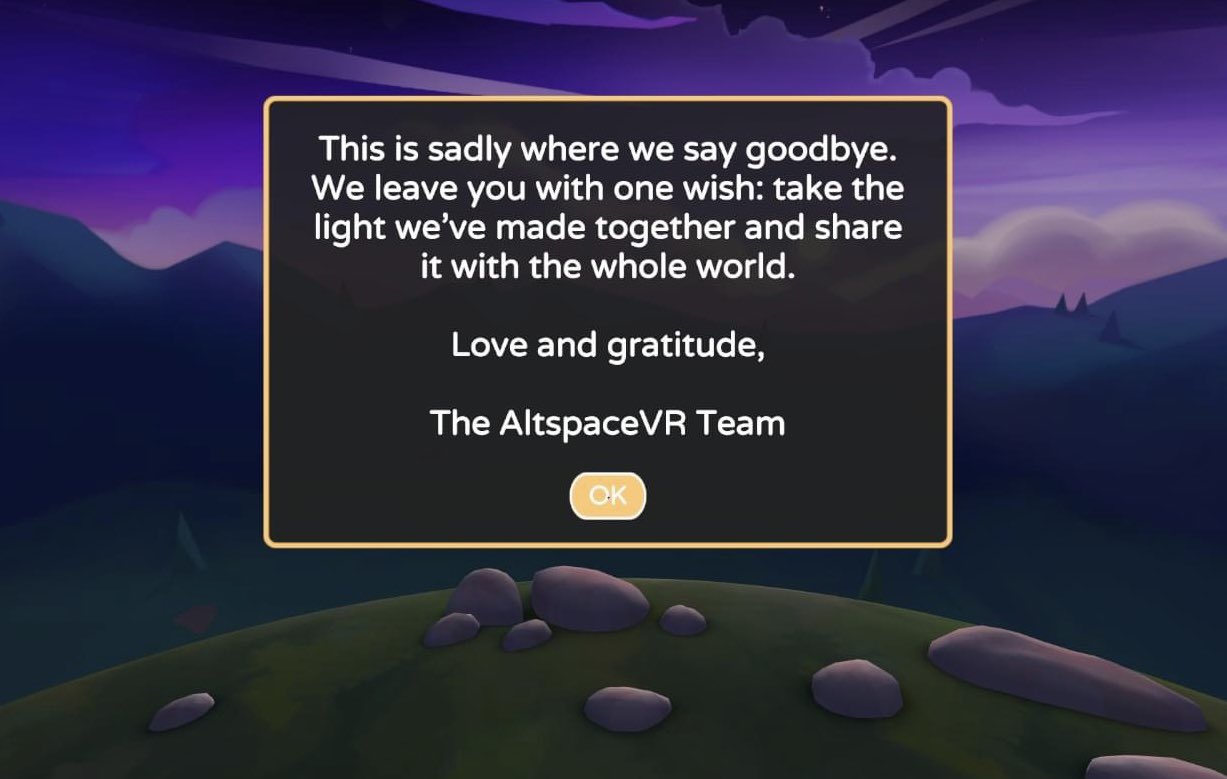

AltspaceVR’s Farewell: A Comprehensive Look at the VR Social Platform’s Demise and its Lasting Impact on the Metaverse
The sudden and widely publicized closure of AltspaceVR in early 2023 marked a significant turning point in the narrative of social VR. For years, AltspaceVR stood as a pioneering force, a virtual proving ground where the concept of a persistent, user-generated metaverse began to take tangible shape. Its demise, driven by strategic shifts within its parent company, Microsoft, sent ripples of concern and reflection throughout the virtual reality and metaverse communities. This article delves deep into the history, community, technical contributions, and ultimately, the reasons behind AltspaceVR’s closure, exploring its lasting legacy and the broader implications for the future of virtual social spaces.
AltspaceVR emerged from a landscape where virtual worlds were primarily confined to gaming or niche professional applications. Founded in 2013 by Eric Romo, the platform aimed to democratize virtual reality, making it accessible and engaging for a broad audience. Its core philosophy revolved around empowering users to create and customize their own experiences, fostering a sense of agency and ownership. This user-generated content (UGC) model was revolutionary for its time, allowing individuals to build worlds, design avatars, and host events without requiring extensive technical expertise. Early adopters flocked to AltspaceVR, drawn by the promise of genuine social interaction in a digital realm. The platform quickly became a hub for a diverse range of activities, from casual meetups and gaming sessions to concerts, art exhibitions, and even educational lectures. This rich tapestry of user-driven events demonstrated the latent potential of social VR to transcend mere entertainment and become a vibrant space for community building and shared experiences. The accessibility of AltspaceVR, supporting a wide array of VR headsets as well as desktop access, further contributed to its broad appeal, making it one of the most inclusive early social VR platforms.
The community that coalesced within AltspaceVR was its most defining characteristic. It was a melting pot of individuals from different backgrounds, geographical locations, and interests, united by a shared desire for connection in a virtual space. This diversity fostered a unique and often supportive atmosphere. Groups formed around shared hobbies, professional interests, and social causes, creating virtual neighborhoods within the larger AltspaceVR universe. The platform’s emphasis on personal expression through customizable avatars and the ability to build and decorate personal spaces allowed users to project their identities and forge deeper connections. Many long-term users developed strong friendships and even professional relationships within AltspaceVR, demonstrating its capacity to foster meaningful human interaction. The platform’s robust event system, allowing anyone to schedule and promote gatherings, was crucial to this vibrant ecosystem. From the spontaneous "Comedy Nights" to meticulously planned virtual conferences, AltspaceVR demonstrated the power of social VR to facilitate large-scale public events and intimate private gatherings alike. This community was not just a collection of users; it was a living, breathing entity that shaped the platform’s evolution through its interactions and creations.
From a technical standpoint, AltspaceVR was a significant contributor to the development of social VR. It pioneered several key functionalities that became standard for subsequent platforms. Its networking architecture, designed to handle a significant number of concurrent users in shared virtual spaces, was a crucial innovation. The platform’s robust avatar system, allowing for a reasonable degree of customization and animation, was also ahead of its time. Furthermore, AltspaceVR’s SDK (Software Development Kit) empowered developers and creators to build more complex and interactive experiences within the platform, including mini-games, custom environments, and unique social tools. The consistent efforts to improve performance and reduce latency were vital for maintaining a sense of immersion and presence, which are paramount in social VR. AltspaceVR also experimented with various interaction models, including hand tracking and spatial audio, laying the groundwork for more intuitive and natural user interfaces in virtual environments. Its commitment to cross-platform compatibility, enabling users on different VR headsets and even desktop PCs to interact seamlessly, was a forward-thinking approach that highlighted the importance of interoperability in the nascent metaverse.
Despite its successes and the loyalty of its user base, AltspaceVR ultimately succumbed to the shifting priorities of its parent company, Microsoft. Acquired by Microsoft in 2017, AltspaceVR was envisioned as a key component of the tech giant’s metaverse ambitions. However, over time, Microsoft’s focus on enterprise solutions and its own evolving strategies, particularly with the integration of Mesh for Microsoft Teams, led to a reassessment of AltspaceVR’s role. The platform, while innovative, struggled to achieve widespread commercial viability and significant user growth at the scale Microsoft likely desired. The increasing competition from other social VR platforms, such as VRChat and Meta’s Horizon Worlds, also presented a formidable challenge. Ultimately, the decision to shut down AltspaceVR was a strategic one, aimed at consolidating resources and focusing on what Microsoft perceived as more promising avenues within the metaverse landscape. This decision, though understandable from a corporate perspective, was met with widespread disappointment and a sense of loss within the AltspaceVR community and the broader VR industry.
The closure of AltspaceVR has several profound implications for the metaverse and the future of social VR. Firstly, it highlights the inherent instability and dependency of independent platforms within larger corporate structures. While acquisitions can provide resources and reach, they also expose these platforms to the whims of corporate strategy and market fluctuations. The metaverse, still in its nascent stages, is a high-risk, high-reward endeavor, and companies are constantly recalibrating their investments. Secondly, AltspaceVR’s demise underscores the challenge of achieving mass adoption and profitability in the social VR space. Despite years of development and a dedicated user base, the platform couldn’t crack the code to becoming a mainstream phenomenon. This raises critical questions about what it will take for social VR to truly break out of its niche and reach a broader audience. Factors like accessibility, compelling content, intuitive user interfaces, and the development of robust economic models all play a crucial role.
Furthermore, AltspaceVR’s legacy will continue to influence the development of future virtual social spaces. Many of the core functionalities and community-building principles that AltspaceVR championed have been adopted and refined by its successors. The emphasis on user-generated content, the importance of fostering strong communities, and the need for inclusive and accessible platforms remain critical lessons learned from AltspaceVR’s journey. The platform’s pioneering work in areas like event hosting and social interaction within VR has undoubtedly paved the way for more sophisticated and engaging experiences. The community’s resilience and its ability to adapt and migrate to other platforms, such as VRChat, demonstrates the enduring human desire for virtual connection, even when a particular platform disappears. This adaptability suggests that the spirit of social VR, cultivated within AltspaceVR, will persist and evolve.
The "RIP AltspaceVR" sentiment is not merely an obituary for a defunct platform but a recognition of its pioneering role and the valuable lessons it provided. It serves as a stark reminder that the metaverse is still under construction, a fluid and ever-changing landscape. The lessons learned from AltspaceVR’s rise and fall will be invaluable as developers and companies continue to build the next generation of virtual worlds. The challenges of user acquisition, content creation, monetization, and fostering genuine social connection remain at the forefront. The success of future social VR platforms will likely hinge on their ability to learn from AltspaceVR’s experiences, embracing its strengths while mitigating its weaknesses. This includes finding sustainable business models that don’t solely rely on the strategic whims of large corporations, and crucially, continuing to prioritize the creation of inclusive, engaging, and truly social virtual environments where genuine human connection can flourish. The future of the metaverse, while uncertain, is undeniably shaped by the foundations laid by pioneers like AltspaceVR, and its closure, while a loss, is also a catalyst for continued innovation and critical reflection.

