The government of French Polynesia has formally announced its intention to challenge a proposal by an American startup to conduct deep-sea mining exploration in international waters located immediately adjacent to its maritime borders. The move sets the stage for a significant diplomatic and legal confrontation between the Pacific territory and the United States government, highlighting a growing rift over the management of the world’s seabed and the extraction of minerals deemed critical for the global energy transition.
Moetai Brotherson, the President of French Polynesia, has expressed sharp criticism of the proposal, which was submitted by the Bay Area-based firm American Deep Sea Minerals. The company is seeking authorization from the Trump administration to explore for polymetallic nodules in a specific area of the Pacific known as "Eastern High Seas Pocket 3." This region of international water is uniquely situated, as it is entirely surrounded by the Exclusive Economic Zones (EEZs) of the Cook Islands, Kiribati, and French Polynesia.
"We were approached, but we were not consulted," President Brotherson stated in a recent interview. "We are not remaining passive while industrial activities are proposed immediately next to ecosystems that French Polynesia has chosen to protect. This case goes beyond one company or one license application; it raises a fundamental question about whether an individual country can unilaterally authorize a new industry in international waters."
The Rush for Critical Minerals and the U.S. Strategy
The application by American Deep Sea Minerals is part of a broader push by the Trump administration to secure domestic and controlled sources of critical minerals, such as cobalt, nickel, copper, and manganese. These elements are essential components in the manufacturing of high-capacity batteries for electric vehicles, as well as various advanced military technologies. As global competition with China intensifies, the United States has sought to bypass the traditional, often slow-moving international regulatory frameworks to establish itself as a leader in the nascent deep-sea mining industry.
Currently, at least a dozen applications are under consideration by U.S. regulators. This domestic permitting process is occurring in parallel—and some say in opposition—to the efforts of the International Seabed Authority (ISA). The ISA, a United Nations-mandated body based in Kingston, Jamaica, has been working for over a decade to finalize a "Mining Code" that would govern extraction in international waters, which are legally defined as the "common heritage of mankind."
Last year, the Trump administration invited American firms to apply for exploration licenses directly through the National Oceanic and Atmospheric Administration (NOAA) rather than waiting for the ISA to finalize its global rules. This unilateral approach has sparked international outcry, with many nations and legal experts arguing that it flouts the United Nations Convention on the Law of the Sea (UNCLOS), a treaty the United States has signed but never formally ratified.
The Geopolitics of Eastern High Seas Pocket 3
The specific target of American Deep Sea Minerals, Eastern High Seas Pocket 3, is a geographical anomaly that presents a complex jurisdictional challenge. Because the pocket is "landlocked" by the maritime boundaries of three Pacific island nations, any industrial activity within it has a direct and immediate impact on the surrounding protected waters.
French Polynesia has been a vocal opponent of deep-sea mining for several years. In 2022, the territory implemented a domestic ban on the practice within its own waters, a move that was followed by the French national government in 2023. These bans are rooted in the "precautionary principle," citing a lack of scientific certainty regarding the long-term impacts of sediment plumes, noise pollution, and habitat destruction on the ocean floor.
For President Brotherson, the lack of formal consultation is a violation of international norms regarding Indigenous rights. Under international law, particularly the UN Declaration on the Rights of Indigenous Peoples, communities have the right to "Free, Prior, and Informed Consent" (FPIC) regarding projects that affect their ancestral territories and resources. In French Polynesia, where 80 percent of the population is Indigenous, the ocean is not merely a resource but a central pillar of cultural identity and traditional navigation.
Environmental and Cultural Concerns: The Tainui Atea Reserve
The environmental stakes are particularly high due to the proximity of Tainui Atea, one of the world’s largest marine protected areas (MPAs). Established by French Polynesia, this sanctuary encompasses nearly the entirety of the territory’s EEZ. According to United Nations data, Tainui Atea supports a massive array of biodiversity, including 21 species of sharks, 176 species of coral, and over 1,000 species of fish.
Indigenous leaders across the Pacific have raised concerns that mining the seafloor—often described as the "sacred place of creation"—could have catastrophic spiritual and ecological consequences. Hinano Murphy, an Indigenous cultural expert from Moorea, has described deep-sea mining as a "spectre" that threatens to "strip-mine the ocean floor," potentially disrupting the complex food webs that sustain Pacific fisheries, particularly the tuna industry which is vital to the regional economy.
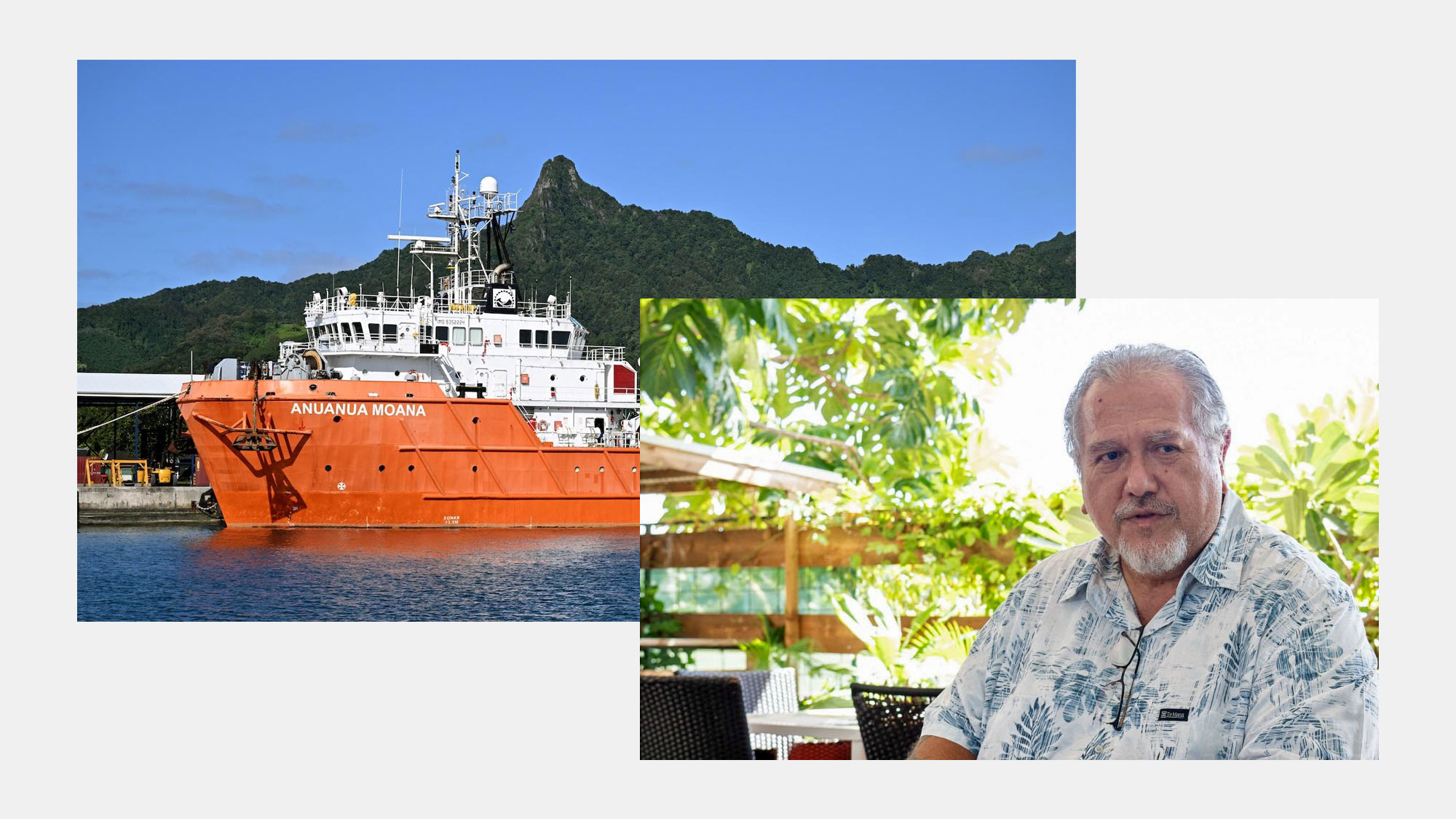
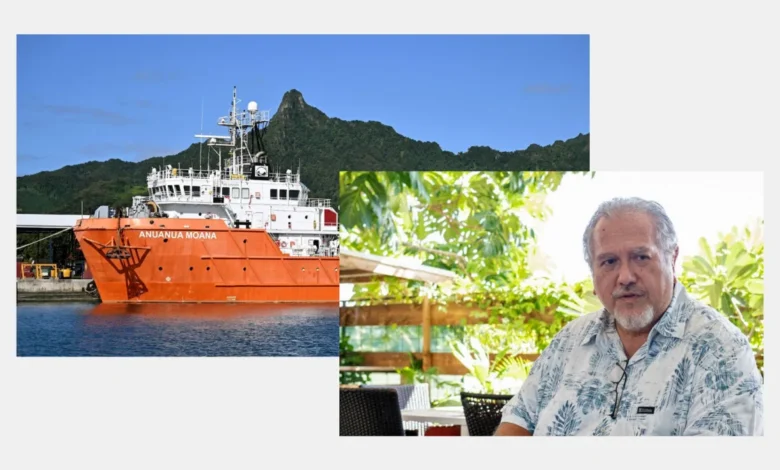
"The protection of deep-sea ecosystems is now embedded in our domestic regulatory framework," Brotherson said. "French Polynesia’s position is therefore not only a political statement but a legal requirement."
A Timeline of the Deep-Sea Mining Debate
The current conflict is the culmination of several years of accelerating interest and regulatory tension:
- 2021: The Republic of Nauru triggers a "two-year rule" at the ISA, forcing the body to finalize mining regulations by July 2023 or accept mining applications under whatever rules exist at that time.
- 2022: French Polynesia officially bans deep-sea mining in its waters, citing environmental risks.
- 2023: France follows suit, becoming one of the first major world powers to call for a complete ban on deep-sea mining in international waters.
- Late 2023: The Trump administration signals it will accept domestic applications for deep-sea mining licenses, bypassing the ISA’s stalled regulatory process.
- January 2024: The United Nations High Seas Treaty (BBNJ) takes effect, providing a legal framework for nations to establish conservation areas in international waters.
- June 2024: American Deep Sea Minerals’ application is made public by NOAA, opening a public comment period.
- July 2024: ISA delegates meet in Jamaica amid protests and diplomatic friction over U.S. unilateralism. President Brotherson announces French Polynesia’s intent to challenge the U.S. application.
The Industry Perspective: Scientific Research or Commercial Pathway?
Graham Goulet, the CEO of American Metals (the parent company of American Deep Sea Minerals), has defended the application, characterizing the initial phase as an "exploration program." Goulet told reporters that the company intends to consult with the governments of the Cook Islands, Kiribati, and French Polynesia "as the program develops."
The company’s filing with NOAA suggests that it plans to create a "benefit-sharing agreement" with Pacific nations and emphasizes its intent to avoid interference with commercial fishing operations. Goulet has argued that the research conducted during exploration will provide valuable scientific data that currently does not exist, helping the global community understand the deep-sea environment better.
However, President Brotherson and environmental advocates remain skeptical of the "neutrality" of this research. While the company has not yet applied for a commercial extraction license, the exploration permit includes plans for a "mining test," which involves deploying heavy machinery to the seafloor to test collection efficiency.
"We do not regard this particular application as neutral scientific research," Brotherson noted. "It is part of a pathway towards potential commercial mining. We expect the interests of neighboring Pacific countries and territories to be fully taken into account through prior notification and a comprehensive, independent, and participatory environmental impact assessment."
Implications of the UN High Seas Treaty
The emergence of the United Nations High Seas Treaty adds a new layer of legal complexity to the dispute. The treaty allows for the creation of highly or fully protected marine areas in international waters—areas that were previously a "wild west" beyond the reach of conservation laws.
French Polynesia has indicated that it intends to use this new international law to seek formal protection for the Eastern High Seas Pocket 3. If successful, this could create a legal "buffer zone" that would prohibit industrial mining, regardless of whether the U.S. government issues a domestic permit. This would set a major global precedent for how the High Seas Treaty interacts with the mineral ambitions of individual superpowers.
Analysis: The Future of Seabed Sovereignty
The confrontation over Eastern High Seas Pocket 3 is a microcosm of a larger global struggle. On one side is the drive for "resource security" and the economic promise of the "blue economy." On the other is an emerging coalition of Indigenous nations, environmental scientists, and Pacific states who argue that the ecological and cultural cost of mining the deep ocean is too high.
The U.S. government’s decision to fast-track these applications—recently halving the number of required environmental reviews for certain permits—has only deepened the distrust. For French Polynesia, the issue is as much about sovereignty and the right to a healthy environment as it is about the specific minerals in the ground.
As the August 3 deadline for public comment on the American Deep Sea Minerals application approaches, the international community is watching closely. The outcome will likely determine whether the future of the deep sea will be governed by collective international agreements or by a new era of unilateral industrial expansion. For the people of French Polynesia, the fight is about ensuring that the "sacred place of creation" remains undisturbed for future generations, even in the face of a global scramble for the technology of tomorrow.