The government of French Polynesia has formally announced its intention to challenge a proposal by an American startup to conduct deep-sea mining exploration in international waters located immediately adjacent to its maritime borders. This move marks a significant escalation in the global tug-of-war between industrial mineral extraction and marine conservation, highlighting a growing rift between the United States’ domestic mineral strategy and the environmental priorities of Pacific Island nations.
Moetai Brotherson, the President of French Polynesia, has voiced strong opposition to the project, emphasizing a lack of transparency and consultation. "We were approached, but we were not consulted," Brotherson stated, signaling that the territory will not remain a passive observer while industrial activities are proposed on the doorstep of protected ecosystems. The territory’s stance is rooted in a domestic policy that has already banned seabed mining within its own waters, a move that reflects a broader regional commitment to the "precautionary principle" regarding the deep ocean.
The Rise of American Deep Sea Minerals and the High Seas "Pocket 3"
The controversy centers on an application filed by American Deep Sea Minerals, a startup backed by Bay Area investors. The company is seeking approval from the United States government to explore for mineral-rich nodules in a specific area of international waters known as "Eastern High Seas Pocket 3." This geographic anomaly is a patch of the high seas entirely surrounded by the Exclusive Economic Zones (EEZs) of the Cook Islands, Kiribati, and French Polynesia.
The company’s objective is to secure access to critical minerals, including cobalt, nickel, manganese, and copper—elements that are increasingly vital for the production of high-capacity batteries, renewable energy infrastructure, and advanced military technologies. As global demand for these resources surges, the United States has moved to fast-track domestic and international mining permits. This initiative is part of a broader strategy to reduce reliance on foreign supply chains, particularly those dominated by China, and to establish American leadership in the critical minerals sector.
The permit application is currently under review by the National Oceanic and Atmospheric Administration (NOAA), the U.S. agency responsible for overseeing deep-seabed mining licenses in international waters. The agency has opened the application for public comment until August 3, providing a narrow window for international stakeholders and environmental advocates to register their concerns.
A Chronology of Marine Protection and Industrial Pressure
The current conflict is the culmination of several years of divergent policy shifts between the Pacific Islands and the United States. To understand the gravity of French Polynesia’s challenge, it is necessary to examine the timeline of events that led to this diplomatic friction:
- 2022: French Polynesia enacts a total ban on seabed mining within its waters, citing the need to protect its vast marine biodiversity and the cultural heritage of its Indigenous people.
- 2023: France follows suit, becoming one of the first major global powers to support a complete moratorium on deep-sea mining in international waters, a position that put it at odds with several other European and Asian nations.
- Late 2023 – Early 2024: The U.S. administration invites private companies to apply for deep-sea exploration permits directly through U.S. regulatory channels. This move is seen by many as a circumvention of the International Seabed Authority (ISA), the United Nations-mandated body tasked with regulating the "Area" (the seabed beyond national jurisdiction).
- January 2024: The United Nations High Seas Treaty officially takes effect. This landmark international law provides a framework for establishing marine protected areas (MPAs) in international waters, offering a potential legal tool for French Polynesia to protect the Eastern High Seas Pocket 3.
- July 2024: Negotiators from around the world gather in Kingston, Jamaica, for the ISA’s annual assembly. The session is marked by heated debates over the "Mining Code," the regulatory framework that would govern commercial extraction.
- July 2024: President Brotherson confirms that French Polynesia will actively oppose the American Deep Sea Minerals application, citing a breach of international norms regarding consultation.
The Legal and Geopolitical Vacuum
The primary point of contention lies in the unilateral nature of the U.S. permitting process. Under the 1980 Deep Seabed Hard Mineral Resources Act, the United States asserts the right to issue licenses to its citizens for exploration and mining in international waters. However, most of the world operates under the United Nations Convention on the Law of the Sea (UNCLOS), which designates the international seabed as the "common heritage of mankind."
Letitia Carvalho, the Secretary-General of the International Seabed Authority, addressed this tension during the recent meetings in Jamaica. She warned that the deep seabed belongs to no single nation or corporation. "If we lose sight of this, we risk repeating on the ocean floor the same injustices and destruction we still strive to remedy on land," Carvalho said.
For French Polynesia, the situation is further complicated by its political status. As an overseas collectivity of France, it does not hold an independent seat at the ISA. Historically, the voices of its Indigenous people, who make up 80 percent of the population, have been filtered through French diplomatic channels. President Brotherson has noted that while he prefers the international regulatory process of the ISA to the unilateral actions of the U.S., the lack of direct political self-determination remains a hurdle for Indigenous advocates seeking to protect their ancestral waters.
Ecological Stakes: Tainui Atea and the Tuna Industry
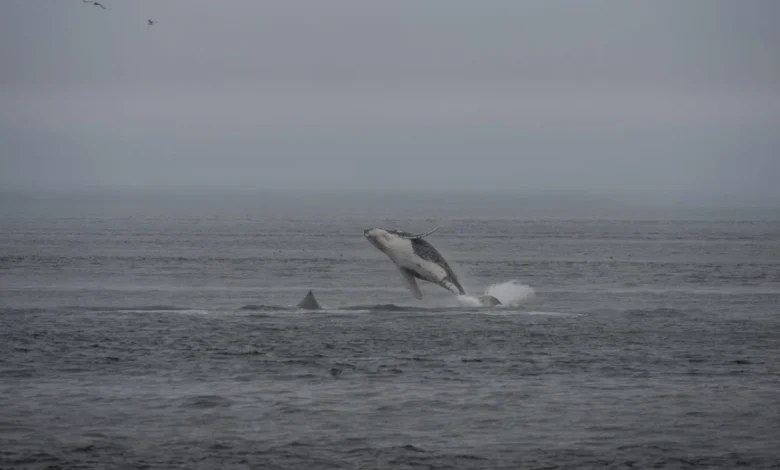
The Eastern High Seas Pocket 3 is not merely a site for potential mining; it is a critical ecological corridor. French Polynesia’s Tainui Atea marine protected area, one of the largest in the world, covers nearly all of the territory’s exclusive waters. According to United Nations data, this preserve is home to 21 species of sharks, 176 species of coral, and over 1,000 species of fish.
The proposed mining site is a known hotspot for tuna fishing, an industry that serves as a cornerstone of the regional economy. Marine biologists warn that the sediment plumes generated by seabed mining—clouds of dust and crushed rock released back into the water column—could travel for hundreds of miles. These plumes, combined with noise and light pollution from mining vessels, could disrupt the migratory patterns of tuna and other pelagic species, threatening the food security and livelihoods of Pacific islanders.
Indigenous cultural experts, such as Hinano Murphy from Moorea and Tahiti, have also raised concerns about the spiritual significance of the deep sea. In the Polynesian worldview, the ocean floor is often regarded as a sacred place of creation. "The spectre of deep-sea mining threatens to strip-mine the ocean floor, our sacred place of creation," Murphy stated, emphasizing that the ocean is an inseparable part of Indigenous identity and traditional navigation.
The Corporate Response and the "Pathway to Commercialization"
Graham Goulet, CEO of American Metals (the parent entity of American Deep Sea Minerals), has defended the project, stating that the company intends to consult with the governments of the Cook Islands, Kiribati, and French Polynesia as the program develops. Goulet maintains that these discussions will occur under U.S. oversight and will include benefit-sharing agreements with Pacific nations.
However, President Brotherson remains skeptical of these assurances. He pointed out that an initial inquiry from his government regarding the project went unanswered. Furthermore, Brotherson challenged the notion that the application is for "neutral scientific research." While the company has not yet applied for a commercial extraction license, the current application includes plans for mining tests and the gathering of data specifically required for future commercial operations. "It is therefore part of a pathway towards potential commercial mining," Brotherson argued.
Analysis of Implications: A Precedent for the High Seas Treaty
The standoff over Eastern High Seas Pocket 3 is being closely watched by international legal scholars and environmentalists as a test case for the UN High Seas Treaty. If French Polynesia succeeds in using the treaty to establish a conservation area in international waters, it would set a powerful precedent for how nations can protect biodiversity beyond their borders.
Conversely, if the U.S. proceeds with the permit without the consent of neighboring nations, it could trigger a "gold rush" in the deep sea, where individual countries issue licenses based on domestic laws rather than international consensus. Such a scenario would likely lead to a fragmented and poorly regulated industry, increasing the risk of irreversible ecological damage.
As the August 3 deadline for public comment approaches, the pressure on NOAA and the U.S. administration is mounting. The decision made in Washington will resonate far beyond the Bay Area and the halls of the ISA; it will determine whether the "common heritage of mankind" is protected by international cooperation or divided by industrial ambition. For the people of French Polynesia, the fight is about more than minerals—it is about the right to safeguard a marine legacy that has sustained them for millennia.