NEW CITY, N.Y. – The high-stakes contest for control of the House of Representatives in the upcoming autumn midterm elections is increasingly being defined not just by traditional partisan divides, but by an escalating internal struggle within the Democratic Party itself. This ideological friction, pitting the party’s left-wing against its more centrist establishment, is playing out intensely in crucial suburban swing districts across New York City’s northern and eastern peripheries, particularly in NY-17, NY-3, and NY-4. Republicans, holding a razor-thin House majority, are seizing upon these internal Democratic skirmishes, portraying the party as increasingly dominated by radical elements and using this narrative as potent political ammunition to appeal to moderate voters.
The electoral landscape of New York’s suburbs has long been a bellwether for national political trends, often reflecting the broader shifts in the American electorate. These districts, characterized by a mix of commuters, diverse communities, and varying economic interests, are highly sensitive to both national political narratives and localized concerns. The stakes are exceptionally high, as control of the House hinges on the outcomes in a mere two to three dozen competitive races nationwide, with New York’s suburban contests consistently appearing at the top of both parties’ target lists.
The Democratic Ideological Divide: A Republican Campaign Wedge
The internal dynamics of the Democratic Party have become a focal point for Republican strategists. Recent primary elections in New York City have highlighted a pronounced ideological cleavage, with far-left candidates achieving notable victories over more moderate, establishment-backed incumbents or challengers. This trend, while confined to specific urban districts, is being amplified by Republicans to suggest a broader shift within the Democratic Party, even in more moderate suburban areas.
The Recent Primary Victories and Their Echoes
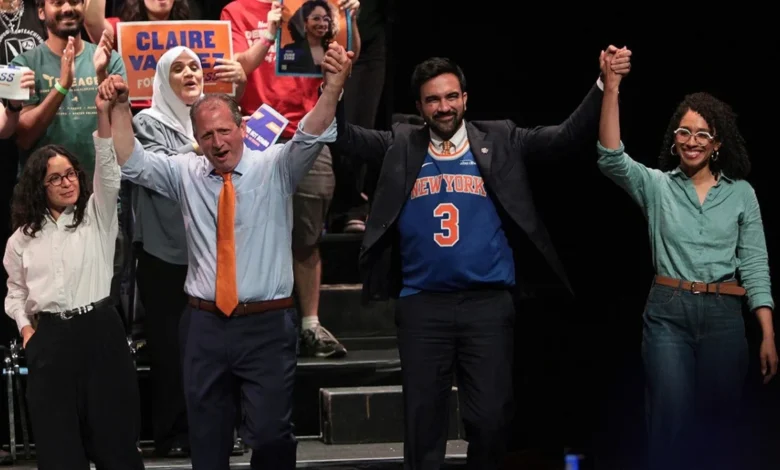
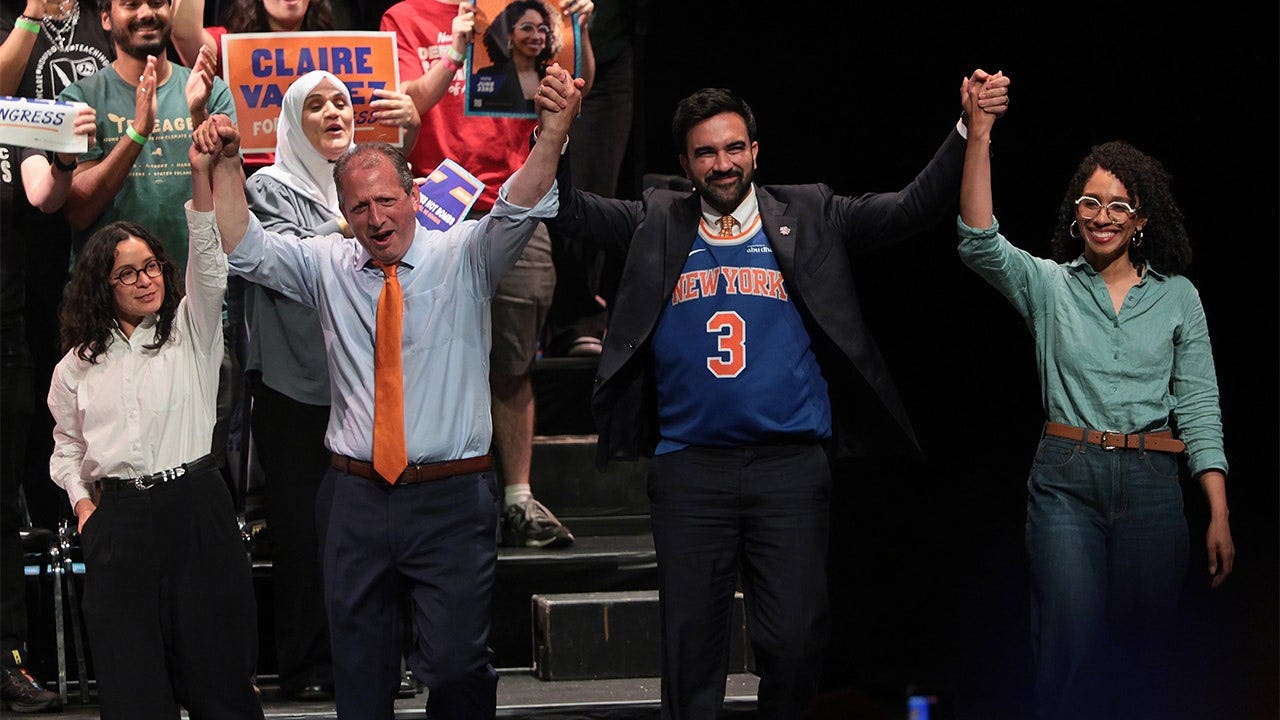
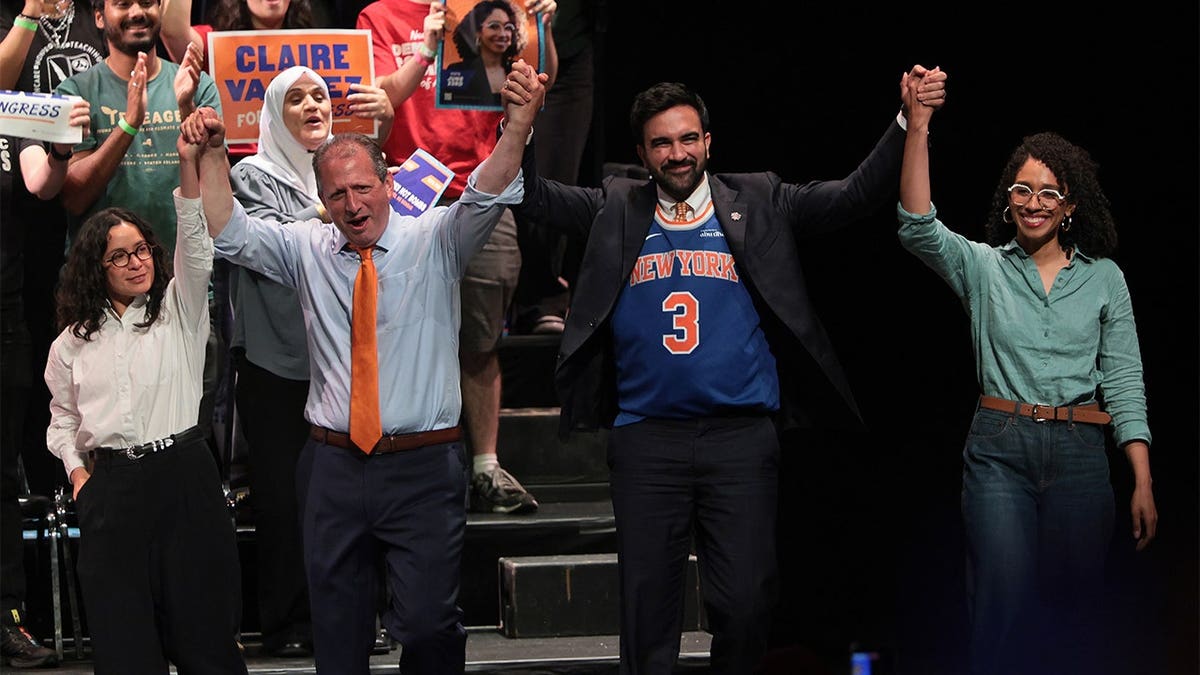
A significant development that has fueled the Republican narrative occurred recently when three far-left Democrats, notably backed by socialist New York City Mayor Zohran Mamdani, triumphed in primary showdowns that garnered considerable national attention. These victories were not merely symbolic; two of the primary winners were aligned with the Democratic Socialists of America (DSA), and two of the defeated candidates were congressional incumbents, underscoring a powerful progressive insurgent movement within the party’s base. These outcomes sent ripples through the political establishment, signaling a potential shift in the party’s center of gravity, particularly in heavily urbanized areas.
These primary results, occurring in districts primarily within New York City proper, have nonetheless been seized upon by Republicans campaigning in adjacent suburban areas. The argument is that the political currents driving these far-left victories are not isolated phenomena but indicative of a broader ideological trajectory for the Democratic Party that could influence policy and representation even in districts traditionally considered more moderate.
Republican Accusations of Radicalization
Republican Rep. Mike Lawler, a two-term lawmaker representing NY-17, which encompasses much of New York City’s northern suburbs, articulated this strategy clearly in a Fox News Digital interview. "Democrats have gone further and further and further to the left with no end in sight," Lawler argued. He specifically pointed to the influence of figures like Mayor Mamdani, asserting that "these radical socialists are taking over the Democratic Party, not just for Congress, but the state legislature. And as I said last year, Zohran Mamdani would become the face of the Democratic Party and its leader, and that is precisely what he is doing."
Lawler’s district is deeply interconnected with New York City, with many constituents commuting for work as "cops, firefighters, nurses, teachers." This demographic reality makes the perceived ideological direction of New York City’s political leadership a tangible concern for his suburban voters, who often grapple with issues like public safety, cost of living, and quality of life that are directly influenced by urban governance. The Republican tactic is to leverage these urban primary outcomes to paint a broader picture of Democratic extremism that they claim will inevitably impact suburban communities.
Voices from the Front Lines: Candidates’ Perspectives
The candidates vying for these critical House seats offer varied perspectives, reflecting the complex political calculus at play. Their statements reveal not only their individual strategies but also the broader narratives each party is attempting to establish.
Rep. Mike Lawler’s Stance and Strategy
Lawler’s campaign in NY-17 is a prime example of the Republican strategy. Despite his Democratic challenger, Cait Conley, not being explicitly backed by far-left groups like the DSA, Justice Democrats, or the Working Families Party, Lawler insists on connecting her to the broader progressive movement. He contends that Conley’s "policy standpoint" aligns with the "radical socialists," even if she doesn’t embrace the label. "My opponent would be a rubber stamp for the radical socialists who are coming, and she wouldn’t have the ability to stand up to these people and push back," Lawler charged, reiterating his core message about the Democrats’ leftward shift. This approach aims to force moderate Democrats into a defensive posture, associating them with the most progressive elements of their party regardless of their individual platforms.
Cait Conley’s Counter-Narrative
Cait Conley, Lawler’s Democratic challenger in NY-17, presents a stark contrast to Lawler’s political background. A West Point graduate and military combat veteran, Conley served six deployments in Afghanistan and Iraq, earning three Bronze Stars. Her campaign seeks to bypass the ideological labeling by focusing on authenticity and a fresh approach to leadership. Conley pushed back on Lawler’s criticisms, telling Fox News Digital, "Voters are sick of political insiders, politicians, political operatives who care more about their next reelection than they do solving the actual problems with the time they are given to represent their people." This statement, implicitly directed at Lawler, who had a career as a political strategist before becoming a state lawmaker and then a congressman, emphasizes a desire for "new leaders, not people who are part of the political insider network." Her strategy is to position herself as an outsider focused on practical solutions, thereby deflecting ideological attacks and appealing to voters weary of partisan bickering.
Long Island’s Crucial Contests: NY-3 and NY-4
The battle extends eastward into Long Island, where NY-3 and NY-4 are equally critical. These districts, located in New York City’s eastern suburbs, mirror the dynamics seen in NY-17, albeit with their own local nuances.
In NY-4, Jeanine Driscoll, the Republican nominee and current receiver of taxes in Hempstead, America’s largest township by population, is challenging Democratic Rep. Laura Gillen, who flipped the district two years ago. Driscoll echoed Lawler’s concerns, telling Fox News Digital that the far-left Democratic victories in neighboring New York City would "wake people up." She dramatically characterized the victorious progressive candidates as "three ultra left-wing people who are proclaiming themselves to be socialists, really communists," indicating the intensity of the Republican messaging. This rhetoric aims to alarm suburban voters by linking local Democratic candidates to the most extreme interpretations of the progressive movement.
Just north, in NY-3, Republican nominee Mike LePetri faces veteran Democratic Rep. Tom Suozzi, whom LePetri narrowly lost to in 2024. LePetri warned of broader consequences, stating, "Frankly, the people of Long Island and northeast Queens are scared. They’re concerned about the future of America if you have the Democrat Party take over the House of Representatives." His campaign seeks to nationalize the election, framing it as a referendum on the direction of the Democratic Party and, by extension, the nation.
Moderate Democrats’ "Promise to America"
Recognizing the vulnerability of being painted with a broad "socialist" brush, moderate House Democrats, including incumbents Laura Gillen and Tom Suozzi, have proactively sought to define themselves. Earlier this year, they launched the "Promise to America," a centrist political pledge designed to clearly delineate their positions from the party’s more progressive wing. This pledge explicitly rejects socialism, advocates for secure borders, and promotes fiscal responsibility and economic growth.
Suozzi, describing himself as a "new kind of old-fashioned Democrat," articulated this moderate stance in a recent "Fox and Friends" interview. He emphasized, "We’re for capitalism, not socialism. We’re for safety, not lawlessness. We’re proud of America. Not ashamed of America. And we need to be promoting those things." Suozzi acknowledged the internal party divide, stating, "There are people in the Democratic Party that are left of center that don’t agree with the far left. And we just need to do a better job organizing because you’ll see big rallies for people who are extremists, far right, far left, but if I show up and say ‘hey let’s work together to solve the problems that we face in our country,’ you’re not going to get a big rally for that." This highlights the challenge for moderate Democrats: to rally support for pragmatic, consensus-driven politics in an increasingly polarized environment.
However, Republicans like LePetri and Driscoll dismiss these efforts as disingenuous. LePetri charged that Suozzi "is two faced. He says one thing, but votes exactly with his conference." Similarly, Driscoll argued that despite claims of moderation, Gillen’s "voting record is not moderate." These attacks aim to undermine the credibility of moderate Democrats’ self-positioning, suggesting their public statements are merely political window dressing for a fundamentally progressive voting record.
National Party Responses and Strategic Framing
The narratives crafted by the candidates in these swing districts are deeply intertwined with the broader national strategies of both major parties, reflecting a coordinated effort to shape public perception.
Democratic Counter-Offensive: Focusing on "Pocketbook Issues"
The Democratic Congressional Campaign Committee (DCCC), chaired by Rep. Suzan DelBene, has dismissed the Republican "radical" attacks as "desperate." DelBene argued in a statement to Fox News Digital that "The midterms will ultimately be a referendum on who is going to lower costs and help improve the lives of everyday Americans – which House Republicans have failed spectacularly to do." She contended that Republicans are resorting to "desperate attacks that aren’t actually about the pocketbook issues, but just baseless spin that falls flat with voters who are eager to reject Republicans."
This Democratic counter-narrative seeks to redirect the conversation away from internal ideological divisions and towards tangible economic concerns that directly impact voters’ daily lives. By framing the election as a choice between Democrats who are working to "lower costs" and Republicans who have "failed spectacularly," the DCCC aims to shift the focus from cultural or ideological battles to kitchen-table economics. This strategy is particularly potent in purple, majority-making districts where economic anxieties often outweigh partisan purity tests. CJ Warnke, communications director at the Democrat-aligned House Majority PAC, echoed this sentiment, stating that "Republicans are grasping for straws because they have no record of success to run on. They’ve spent the last year supporting tariffs, health care cuts, and the Iran War — all of which have caused prices to skyrocket. Their poll numbers are sinking and this is a desperate ploy to save their campaigns — and it will fail."
Republican National Messaging: The "Communist Threat"
On the Republican side, the national party leadership, including former President Donald Trump and Vice President JD Vance, is actively reinforcing the narrative of a radicalized Democratic Party. President Trump has repeatedly warned of a "communist" threat, a broad and historically charged accusation designed to evoke fear and mobilize conservative voters. Vice President Vance, appearing on Fox News’ "The Ingraham Angle," expanded on this, arguing that Democrats hold "a view that the United States is an evil country that must be dismantled from the ground and then built back up. That’s communism at its core, and you see more and more momentum in that direction from the Democrat Party."
This potent rhetoric aims to solidify the perception of Democrats as fundamentally anti-American and ideologically extreme. By associating the entire Democratic Party with "communism," Republicans seek to alienate moderate and independent voters who might otherwise be swayed by economic arguments or moderate Democratic appeals. The strategy is to draw a clear, stark ideological line, forcing voters to choose between what Republicans present as traditional American values and a radical, transformative agenda.
The Broader Stakes: Implications for the House Majority
The outcomes in these New York suburban districts will have profound implications for the national political landscape, potentially determining which party controls the House of Representatives and sets the legislative agenda for the next two years.
Historical Precedent and Suburban Voters
Historically, suburban voters have often served as the swing bloc in national elections. Their concerns frequently center on a balance of economic stability, public safety, quality education, and moderate governance, making them particularly sensitive to perceived extremism from either side. In recent cycles, many suburban areas have shown a willingness to split tickets or shift allegiance based on specific issues or the perceived tone of a party. For Republicans, painting Democrats as radical aims to reclaim some of the suburban ground lost in previous cycles. For Democrats, the challenge is to prevent the "radical" label from sticking, emphasizing their mainstream appeal and focus on practical solutions.
The current political environment, characterized by high inflation, concerns over crime, and lingering societal anxieties, creates fertile ground for both narratives. Voters are grappling with real "pocketbook issues," as DelBene noted, but they are also influenced by cultural and ideological debates that often play out on national media. The ability of either party to effectively frame these issues for suburban voters will be critical.
The Role of New York in the National Landscape
New York, with its diverse electoral districts ranging from deep-blue urban centers to purple suburbs and red rural areas, is consistently a microcosm of national political battles. The state’s electoral dynamics are particularly important given its large congressional delegation. In a tightly divided House, winning even a handful of seats in states like New York can be the difference between majority and minority status. The fact that multiple New York suburban districts are among the most competitive in the nation underscores their pivotal role. The strategies employed by candidates and parties here are often tested for their applicability in similar swing districts across the country.
Funding and Grassroots Influence
Beyond rhetoric, the ideological battle within the Democratic Party also has implications for funding and grassroots mobilization. The success of groups like DSA and Justice Democrats in primaries suggests a growing ability to mobilize a dedicated base, often through sophisticated digital campaigns and energized volunteers. This grassroots energy, while powerful in primaries, can sometimes be a double-edged sword in general elections if the victorious candidates are perceived as too extreme by the broader electorate. Conversely, moderate Democrats often rely on broader coalition-building and traditional campaign funding to compete. The interplay between these different modes of political influence will shape not only the outcomes of individual races but also the future direction of the Democratic Party itself.
Conclusion: A Defining Election Cycle
The 2026 midterm elections in New York’s suburban districts are shaping up to be a defining moment for both major parties. For Republicans, it is an opportunity to consolidate their House majority by effectively leveraging the internal divisions within the Democratic Party and portraying their opponents as increasingly out of step with mainstream American values. For Democrats, it is a crucial test of their ability to unite their disparate factions, appeal to the pragmatic concerns of suburban voters, and articulate a coherent vision that transcends ideological purity tests. The battle for these few crucial swing seats is more than just a fight for individual congressional offices; it is a fundamental struggle over the identity and future direction of American political power. The resolution of this internal Democratic ideological war, and how effectively each party can capitalize on it, will ultimately determine the balance of power in Washington.