For nearly a decade, Georgia has positioned itself as the preeminent hub of the American "Battery Belt," a strategy championed by Governor Brian Kemp to transform the state into a global powerhouse for clean energy manufacturing. Through aggressive tax incentives, comprehensive worker training programs, and a concerted effort to court foreign direct investment, Georgia successfully secured multi-billion-dollar commitments from industry giants. However, the optimism that defined the state’s industrial policy over the past few years has encountered a period of significant turbulence. As the second Trump administration implements a policy agenda marked by the revocation of federal electric vehicle (EV) tax credits, the imposition of new tariffs on critical components, and a retreat from the previous federal push for fleet electrification, Georgia’s manufacturers are forced to execute a strategic pivot.
The Rise of the Georgia Battery Belt: A Chronology
The state’s current industrial landscape is the result of years of careful cultivation. The trajectory began in earnest around 2018, when Blue Bird, a Georgia-based icon in the bus manufacturing sector, began the commercial rollout of its electric bus line, eventually breaking ground on a dedicated manufacturing facility in 2023.
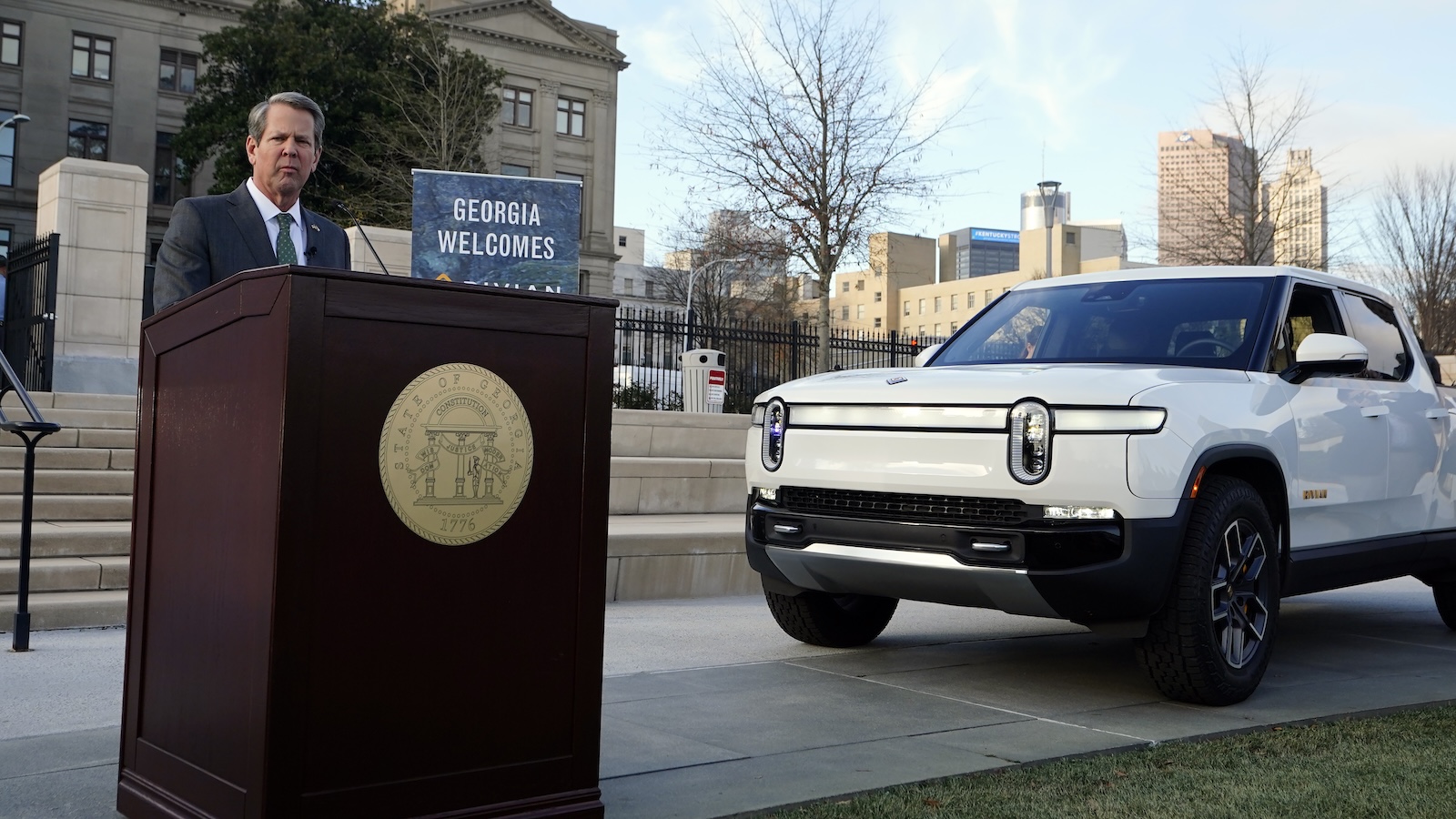
The momentum accelerated rapidly between 2022 and 2025. In 2022, Hyundai Motor Group announced a massive, dedicated EV assembly plant near Savannah, representing one of the largest economic development projects in the state’s history. In 2024, Kia reached a significant milestone by initiating EV production at its existing plant in West Point, Georgia. By early 2025, Rivian had broken ground on its own manufacturing facility near Atlanta, further cementing the region’s status as a critical node in the global EV supply chain.
This expansion was not limited to final assembly. The state successfully recruited a vast ecosystem of battery manufacturers, component suppliers, and material recyclers. Yet, this growth has not been without its fractures. In a notable event a year ago, federal immigration agents raided an EV battery facility, resulting in the detention of over 400 individuals, many of whom were skilled South Korean workers essential to the facility’s launch. This incident served as a jarring reminder of the geopolitical and regulatory risks inherent in the rapid international expansion of domestic manufacturing.
A Shifting Policy Landscape
The economic environment for these companies has undergone a profound transformation under the current federal administration. Beyond the expiration of consumer-facing tax credits, the administration has moved to loosen emissions standards for internal combustion engine vehicles and has halted the federal government’s transition toward an all-electric fleet.
These policy shifts have created a "whiplash" effect. Tariffs on imported battery packs, charging infrastructure hardware, and specialized semiconductors have increased the cost of production for companies that rely on global supply chains. According to data from the Southern Alliance for Clean Energy (SACE), more than $4 billion in planned clean energy investments across the Southeast have been canceled or significantly scaled back in the last year alone.
Tactical Flexibility: The Kia and Hyundai Response
In response to the cooling of the pure-play EV market, major manufacturers are demonstrating remarkable agility. At the Kia plant in West Point, the traditional, rigid assembly line has been replaced by a highly flexible, multi-model system. CEO Stuart Countess describes the current facility not as a traditional mass-production line, but as a "short-order kitchen."
The plant is now capable of producing vehicles with varying drive trains—gas-powered, hybrid, or electric—on the same line. This allows the company to react in real-time to consumer demand. Currently, the market preference has shifted toward hybrids, and the company has adjusted its output accordingly. Hyundai has followed a similar path, integrating hybrid production into its Savannah facility, which was originally intended to be an exclusive EV factory.
"What we’ve seen is a transition back away from maybe full EV vehicle building to this kind of a middle-of-the-road opportunity," Countess noted. While he maintains that electric vehicles represent the long-term future of the automotive sector, the immediate reality is dictated by price sensitivity, current charging infrastructure gaps, and the absence of federal purchase incentives.
The Economic Data: Scaling Back vs. Moving Forward
While the headlines are dominated by layoffs and project cancellations—such as those seen at SK Battery earlier this year—the broader economic picture remains one of significant growth. SACE reports that while $4 billion in projects have stalled, nearly $74 billion in manufacturing investment remains active and on schedule across the region.
The challenge lies in whether the local consumer base will absorb the capacity being built. Georgia currently lacks state-level incentives to promote EV adoption. Furthermore, the state imposes an additional registration fee on electric vehicles, a policy intended to recoup lost gasoline tax revenue, which critics argue serves as a deterrent to potential buyers.
"When it comes to electric vehicles, Georgia politics remains utterly confused," says Stan Cross, a representative from SACE. "The state has been incredibly successful at attracting the manufacturing side, but it has not yet built the corresponding policy framework to encourage the adoption side."
The Role of Private Infrastructure
In the absence of a unified state policy, the private sector is attempting to bridge the infrastructure gap. Kia and Hyundai have joined forces in the IONNA consortium, which is actively deploying high-speed charging stations across the state, including at the West Point manufacturing site. Simultaneously, local utility providers are increasing their investments in charging infrastructure; SACE data shows a 14% increase in utility-led EV infrastructure investment across the Southeast this year.
Experts suggest that the regulatory path may be the most viable route forward. By encouraging state utilities to take a more aggressive role in infrastructure deployment, policymakers could help stabilize the market without requiring new legislative action.
Future Outlook and Implications
The prevailing view among industry analysts is that the current "messy period" is a temporary, albeit difficult, transition. Stephanie Valdez-Streaty, director of industry insights at Cox Automotive, suggests that the normalization of the EV market is inevitable.
"Manufacturers are adjusting to the reality of the consumer," Valdez-Streaty said. "It’s a period of stabilization. The industry is still going electric; it is simply a matter of the pace of that transition."
The long-term impact on Georgia will likely be defined by the state’s ability to remain "technology-agnostic" in its manufacturing approach. By fostering a workforce skilled in both hybrid and electric power-trains, Georgia is building a manufacturing base that can pivot regardless of which specific technology dominates the market in the coming decade.
However, the state remains at a crossroads. The success of its multi-billion-dollar bet on clean energy now depends on two factors: whether manufacturers can continue to maintain profit margins amidst a protectionist federal trade environment, and whether Georgia policymakers will eventually align state incentives with the massive manufacturing footprint they have worked so hard to establish. For now, the "Battery Belt" is holding its ground, waiting for the market—and the policy environment—to catch up to the machines already rolling off the assembly lines.