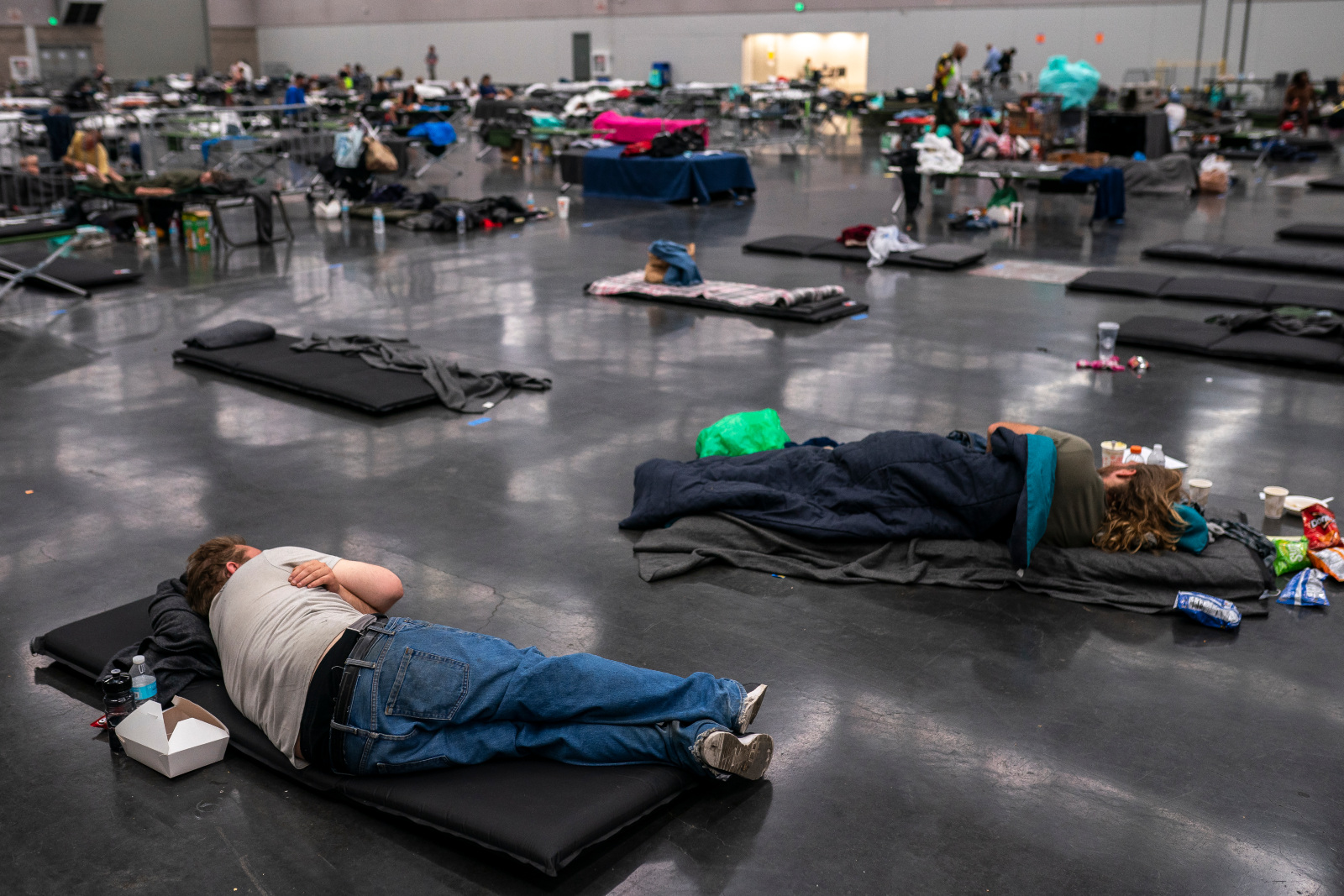
In June 2021, a meteorological phenomenon known as a heat dome descended upon the Pacific Northwest, shattering temperature records and creating a public health emergency of unprecedented proportions. In Washington state, where air conditioning is historically less prevalent than in the American South, temperatures surged to a staggering 108 degrees Fahrenheit. Among the victims of this extreme weather event was the mother of Misti Leon, who perished from heat exhaustion during the peak of the crisis. Today, that personal tragedy has evolved into a landmark legal battle that could redefine the accountability of the global fossil fuel industry.
The lawsuit, filed by Leon in Washington’s King County, alleges that the world’s largest oil companies—including Exxon Mobil, BP, Chevron, and Shell—are directly responsible for her mother’s wrongful death. The core of the argument rests on a sophisticated blend of climate science and corporate liability law: the plaintiff contends that these companies knew for decades that their products would lead to catastrophic global warming but chose to deceive the public, thereby delaying the transition to renewable energy and making the 2021 heat dome inevitable. Earlier this month, a King County judge denied the oil companies’ motions to dismiss the case, effectively clearing the path for a trial that the industry has spent millions of dollars trying to avoid.
The 2021 Heat Dome: A Scientific Turning Point
To understand the legal weight of Leon v. Exxon Mobil Corp., one must first look at the scientific consensus surrounding the event that triggered it. The June 2021 heat dome was not merely a "hot week"; it was an atmospheric anomaly that saw temperatures in Lytton, British Columbia, reach 121 degrees Fahrenheit, while Seattle and Portland saw triple-digit figures for three consecutive days. According to an analysis by World Weather Attribution, an international team of scientists, the event was "virtually impossible" without the influence of human-caused climate change. The study concluded that global warming made the heat wave at least 150 times more likely to occur.
In Washington state alone, the heat wave is linked to an estimated 1,200 excess deaths. Public health officials noted that the speed and intensity of the temperature spike overwhelmed local infrastructure. For Misti Leon and her legal team, this scientific "attribution" is the smoking gun. By linking specific weather events to the general rise in global temperatures, and subsequently linking those temperatures to the historic emissions of specific corporations, plaintiffs are attempting to bridge the gap between abstract environmental damage and concrete personal injury.
The Legal Landscape: From Consumer Fraud to Wrongful Death
The Leon case is part of a massive, multi-front legal offensive against the fossil fuel industry. Currently, there are approximately 40 climate-related lawsuits pending in various jurisdictions across the United States. While early climate litigation often focused on broad "public nuisance" claims, newer cases have pivoted toward consumer fraud, racketeering, and, in the case of Leon, wrongful death.
Margaret Barry, who manages the climate litigation database at Columbia Law School’s Sabin Center, notes that the strategy is evolving. States and municipalities, including Massachusetts, Vermont, Connecticut, the District of Columbia, and the city of Honolulu, have successfully moved their cases into the "discovery" phase. This is a critical juncture in American law where plaintiffs gain the right to demand internal documents, emails, and testimony from corporate executives. For the oil industry, discovery represents a significant risk, as it could expose internal knowledge of climate risks that contradicts decades of public-facing marketing.
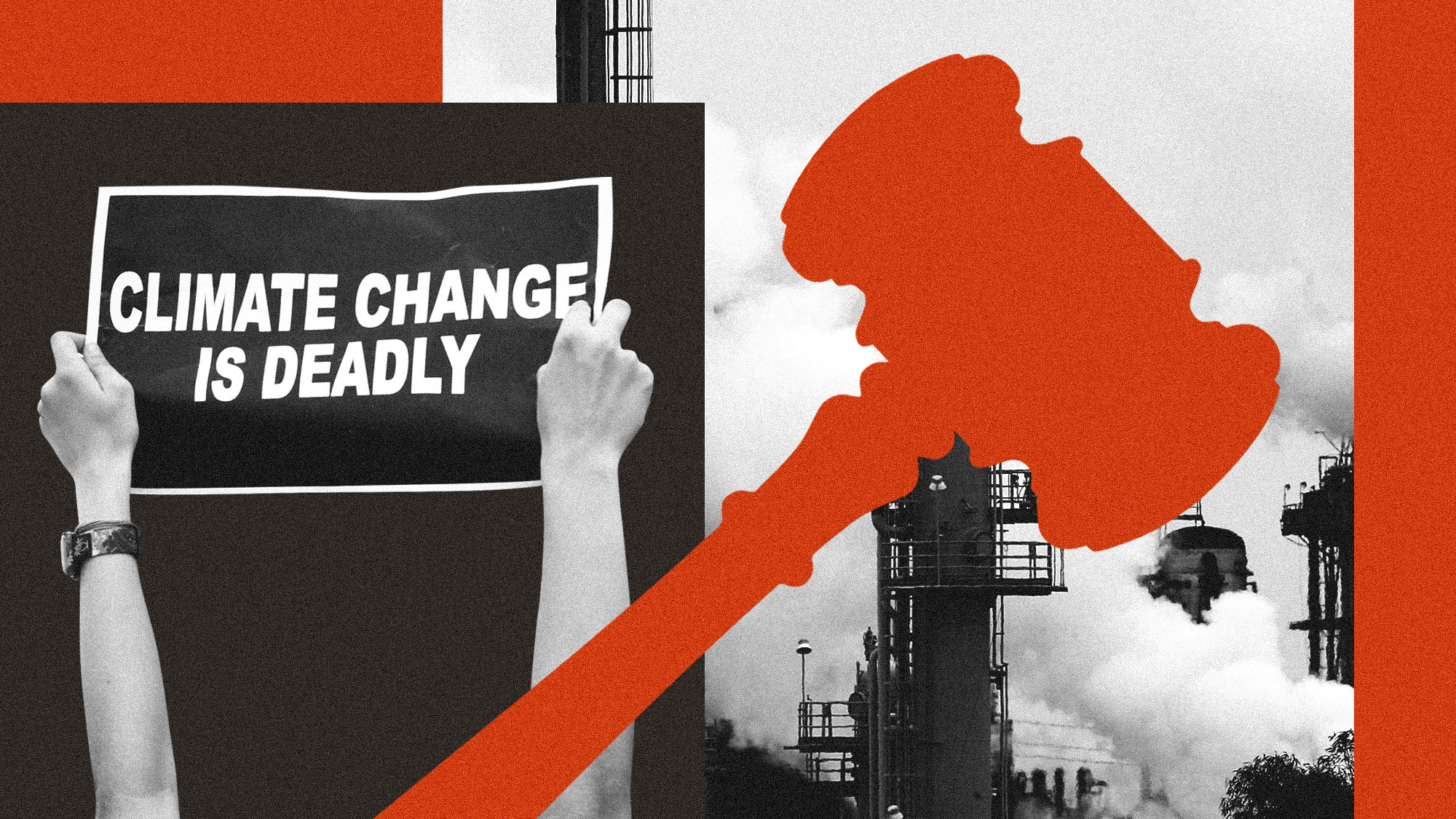
The precedent for this shift is the 1998 Master Settlement Agreement with Big Tobacco. In that instance, the discovery of internal documents proved that tobacco companies knew about the addictive and carcinogenic nature of their products while publicly denying them. The resulting $206 billion settlement fundamentally altered the industry. Climate activists and legal scholars suggest that Big Oil faces a "tobacco moment" of even greater financial and structural magnitude.
The Industry’s Counter-Offensive: Legislative Shields and Federal Support
Faced with the prospect of multi-billion-dollar judgments, the fossil fuel industry has mobilized a comprehensive defense strategy that spans the judicial, legislative, and executive branches of government. The American Petroleum Institute (API), the industry’s primary lobbying arm, has identified the suppression of "extreme climate liability policy" as a top priority for its 2026 agenda.
A key component of this defense is the introduction of "liability shield" laws in Republican-led states. In a coordinated effort involving the American Legislative Exchange Council (ALEC) and the American Tort Reform Association, several states have passed legislation designed to immunize fossil fuel companies from climate-related lawsuits.
- Utah and Iowa: Have signed laws specifically shielding companies from damages related to greenhouse gas emissions.
- Tennessee and Oklahoma: Have implemented similar protections, arguing that climate policy should be a matter of federal regulation rather than state court litigation.
- Montana: Reformed its "public nuisance" statutes to ensure they cannot be used by plaintiffs to recover damages for climate change.
On the national level, Republicans in Congress have introduced bills that would grant broad immunity to oil majors, arguing that these lawsuits threaten "American energy dominance." This sentiment was echoed by the Trump administration, which issued an executive order directing the Department of Justice to prioritize blocking state-level climate lawsuits. In a notable move this year, the Justice Department filed a countersuit against the state of Minnesota, claiming its litigation against oil companies undermined federal authority and national energy security.
The Role of Attribution Science in the Courtroom
As the legal battles intensify, the battleground has shifted toward the validity of "attribution science." This field uses high-resolution computer modeling to compare a world with human-caused greenhouse gases to a hypothetical world without them. By running thousands of simulations, scientists can determine exactly how much more likely or intense a specific storm, drought, or heat wave became due to fossil fuel combustion.
A recent report from the National Academies of Sciences, Engineering, and Medicine affirmed that this science is increasingly robust. The report noted that for extreme heat events, the link to climate change is now "unequivocal." However, this scientific advancement has met with fierce resistance. Opposition research firms have begun requesting the internal communications of scientists involved in these reports, seeking to frame the research as politically motivated rather than objectively scientific.
"We are seeing an attempt to discredit the process because the science itself is now too difficult to debunk," said Carly Phillips, a senior scientist at the Union of Concerned Scientists. The industry’s strategy appears to be a pre-emptive strike, aiming to exclude attribution science from the courtroom under "Daubert" standards, which require expert testimony to be based on scientifically valid reasoning.
High Stakes at the Supreme Court
The future of the Leon case and dozens like it may ultimately rest with the U.S. Supreme Court. This fall, the court is expected to hear a case involving the city and county of Boulder, Colorado, which sued Exxon Mobil and Suncor Energy. The companies are asking the Supreme Court to rule that such cases belong in federal court rather than state court—a jurisdictional shift that typically favors corporate defendants.
If the Supreme Court rules in favor of the oil companies, it could create a "federal ceiling" that prevents states from using their own consumer protection or wrongful death laws to hold companies accountable for global emissions. Conversely, a ruling in favor of the plaintiffs would likely trigger a flood of new litigation, as cities and individuals seek compensation for the rising costs of infrastructure repair, disaster relief, and healthcare.
Implications for the Global Energy Transition
The outcome of Leon v. Exxon Mobil Corp. extends far beyond the borders of Washington state. If a jury eventually finds that an oil company can be held liable for a specific death caused by a climate-intensified event, the financial implications would be existential for the industry. Insurance companies, already reeling from the costs of climate-driven disasters, may be forced to hike premiums for fossil fuel projects or withdraw coverage entirely, making oil and gas extraction financially unviable.
Furthermore, these cases are driving a shift in corporate transparency. Even without a final verdict, the threat of litigation is forcing companies to disclose more about their climate risks to shareholders. For Misti Leon, however, the case remains a pursuit of personal justice for a mother lost to a preventable catastrophe.
As Mike Meno of the Center for Climate Integrity summarizes, "The industry is in panic mode because they know the evidence is catching up with them. If they did nothing wrong, they wouldn’t be begging for immunity. They are fighting like hell because they know that once a jury sees the timeline of what they knew versus what they said, the era of impunity is over."
The trial in King County, should it proceed, will likely serve as the ultimate test of whether the American legal system is equipped to handle the complexities of the climate crisis. For now, the world watches as a single wrongful death suit threatens to dismantle the legal protections of the most powerful industry on Earth.