The landscape of American energy is undergoing a quiet but profound transformation, centered not just on how power is generated, but on how it is stored and redistributed. In a significant move toward modernizing the electrical infrastructure of the Northeast, a coalition of major utilities and technology firms has announced the launch of an early-stage vehicle-to-grid (V2G) pilot program in Massachusetts. This initiative, involving Eversource, National Grid, EnergyHub, Sunrun, and The Mobility House, aims to prove that electric vehicles (EVs) can serve as more than just a clean mode of transportation; they can act as a critical "superpower" for the electrical grid.
Under the new framework, electric vehicle batteries will be integrated into the existing ConnectedSolutions program, a demand-response initiative that already manages residential batteries and smart thermostats. By allowing utilities to tap into the massive energy reservoirs parked in residential driveways and corporate lots, the program seeks to stabilize the grid during periods of extreme demand, such as summer heat waves or winter cold snaps. This shift marks a transition from a one-way relationship—where the grid simply provides power to the car—to a bidirectional ecosystem where the car supports the grid.
The Mechanics of Bidirectional Energy Flow
Vehicle-to-grid technology relies on bidirectional charging, which allows electricity to flow in two directions: from the grid into the vehicle’s battery and from the battery back into the grid. While standard EVs are designed to pull power from the wall, a growing number of newer models are equipped with the hardware necessary to push power back out.
When the demand for electricity spikes—typically in the late afternoon or early evening when people return home, turn on air conditioners, and start appliances—utilities often struggle to keep up. Traditionally, they have relied on "peaker plants," which are often older, less efficient, and more polluting gas or oil plants that only run during these peak hours. V2G offers a cleaner, more cost-effective alternative. By aggregating hundreds or thousands of EV batteries, utilities can create a "Virtual Power Plant" (VPP) that provides a surge of clean energy exactly when it is needed most.
Participants in the Massachusetts program will be compensated for the energy they provide. This creates a new revenue stream for EV owners, effectively lowering the total cost of vehicle ownership. For the utility, it reduces the need to purchase expensive emergency power or invest in costly new physical infrastructure.
Contextualizing the Shift: A Grid Under Pressure
The Massachusetts pilot arrives at a critical juncture for the U.S. energy sector. The national power grid is currently facing three simultaneous pressures that threaten its reliability and affordability.
First, the demand for electricity is rising for the first time in decades. The proliferation of power-hungry data centers—driven by the explosion of artificial intelligence—alongside the electrification of home heating via heat pumps and the transition to electric transportation, is straining existing capacity. Second, the transition to renewable energy sources like wind and solar, while necessary for climate goals, introduces intermittency. These sources do not produce power 24/7, necessitating massive investments in energy storage to bridge the gaps when the sun is down or the wind is still.
Third, the physical infrastructure of the grid is aging. Utility companies are spending billions to "harden" the grid against climate-change-induced weather events, such as burying power lines to prevent wildfires or reinforcing poles against hurricanes. These costs are often passed on to consumers through higher utility bills. V2G technology offers a way to mitigate some of these costs by utilizing assets that are already paid for and sitting idle: the batteries inside the 3.3 million EVs already on American roads.
Comparative Data: The Scale of EV Storage Potential
To understand the impact of V2G, one must look at the sheer scale of energy storage capacity involved. A typical residential backup battery, such as the Tesla Powerwall, usually holds between 10 and 13.5 kilowatt-hours (kWh) of energy. In contrast, a standard electric sedan often has a battery capacity of 60 to 80 kWh, while electric trucks like the Ford F-150 Lightning can carry up to 131 kWh.
"It’s the cheapest cost of flexible energy storage that will be available for the grid," noted Russell Vare, vice president of vehicle-grid integration at The Mobility House North America. Because the consumer has already purchased the battery as part of their vehicle, the utility does not need to spend capital building a stationary battery farm. Even if a utility only draws a small fraction of a vehicle’s total charge to protect the owner’s ability to drive the next day, the cumulative effect of thousands of vehicles is massive.
Data from recent studies suggests that if only 10 percent of EVs in a state like Massachusetts participated in V2G, they could provide enough power to offset several peaker plants. This would not only lower carbon emissions but also reduce the "capacity charges" that utilities pay to ensure enough power is available, ultimately lowering electricity rates for all customers, including those who do not own an EV.
Strategic Collaboration and Stakeholder Perspectives
The success of the Massachusetts pilot depends on a complex coordination between hardware manufacturers, software providers, and utility operators. EnergyHub provides the "brain" of the operation, using software to communicate with the vehicles and the grid. Sunrun, a leader in residential solar, brings expertise in managing distributed energy resources, while The Mobility House focuses on the charging infrastructure.
Seth Frader-Thompson, president of EnergyHub, emphasized that the technology is rapidly maturing. "As hardware costs come down, installation becomes simpler, and standards continue to mature, we expect vehicle-to-grid to become dramatically more accessible over the next several years," he stated.
From the utility perspective, the goal is to make the process invisible to the consumer. Participants can use apps to set their preferences, ensuring their car is always charged to a certain level by the time they need to commute. The "demand response" events, where the battery discharges to the grid, occur only a few dozen times a year during the most critical hours.
Chip Silverman, director of grid services at Sunrun, highlighted the collective power of this approach. "If you have a higher number of batteries out there in a virtual power plant, you can actually use less energy from each individual battery," Silverman said. "But collectively, when you patch them all together and aggregate them, it comes out to a very large resource. And that’s really where the magic is."
Chronology of V2G Development
The path to the Massachusetts pilot has been years in the making. The concept of V2G was first proposed in the late 1990s, but several hurdles prevented its adoption:
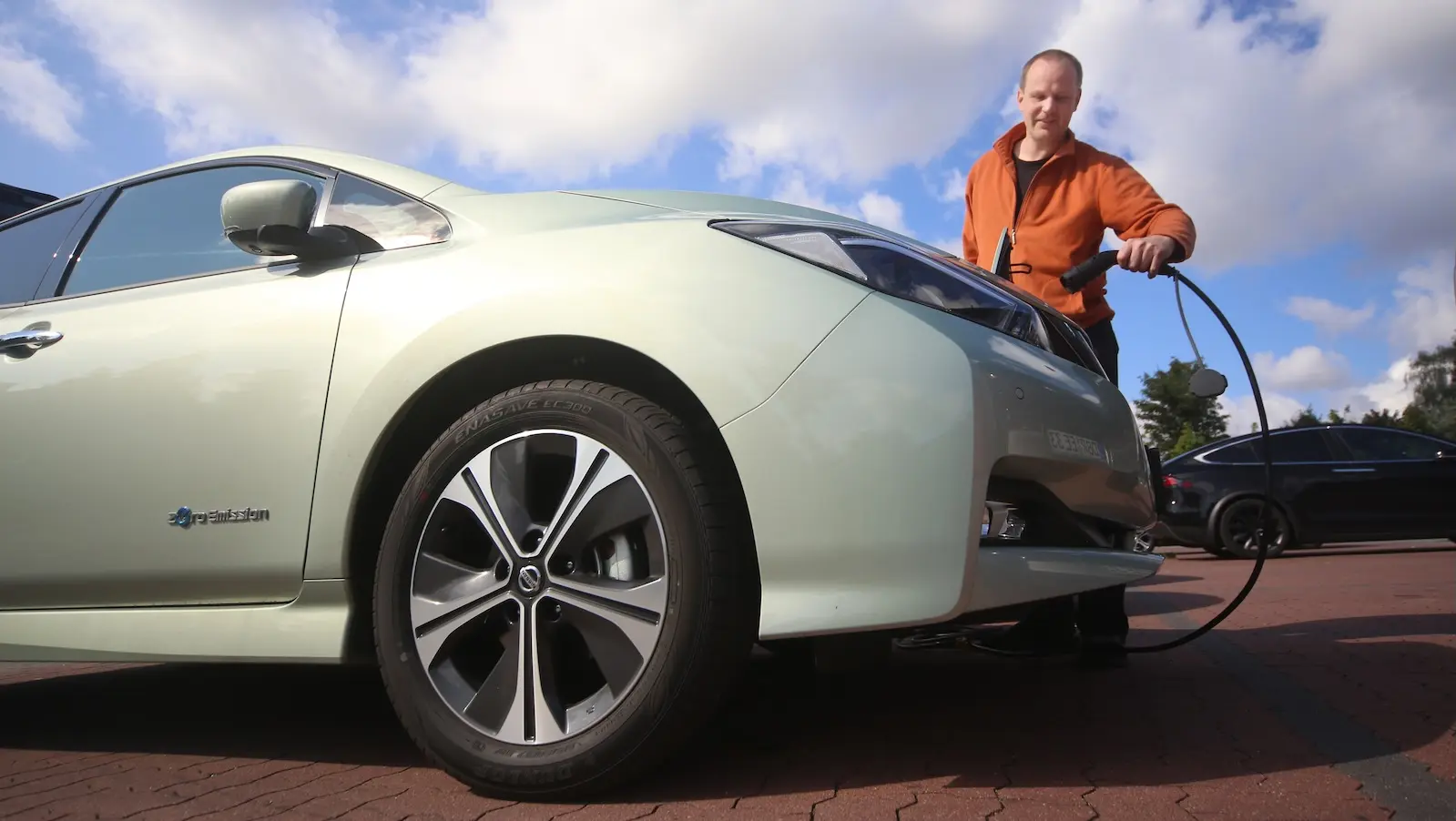
- 2010–2015: Early experiments focused on the Nissan Leaf, one of the few vehicles built with the CHAdeMO charging standard, which supported bidirectional flow natively.
- 2016–2020: Utilities began "managed charging" (V1G) programs, which allowed them to pause an EV’s charging during peak times, but did not yet allow for discharging back to the grid.
- 2021–2023: Major automakers, including Ford, General Motors, and Hyundai/Kia, announced that their new EV platforms would support bidirectional charging (V2H or V2G).
- 2024: The launch of the Massachusetts coalition represents one of the first times multiple major utilities and tech firms have aligned to offer a consumer-facing V2G program within a standard regulatory framework.
Analysis of Implications and Future Outlook
The implications of this pilot extend far beyond the borders of Massachusetts. If successful, the program will serve as a blueprint for other states grappling with grid instability. It represents a fundamental shift in the "social contract" of energy: consumers are no longer passive recipients of power but active partners in grid management.
However, challenges remain. The cost of bidirectional chargers is currently higher than standard Level 2 chargers, and many older EV models lack the necessary internal hardware. There are also persistent concerns regarding battery degradation. While modern lithium-ion batteries are designed for thousands of cycles, some owners worry that frequent discharging for the grid could shorten their battery’s lifespan. Proponents argue that the "shallow" discharges used for V2G are far less stressful on a battery than the high-speed driving or fast-charging that EVs undergo daily.
Furthermore, regulatory hurdles persist. Utility commissions must determine how to fairly compensate EV owners while ensuring that the costs of the program do not unfairly burden non-participants. The Massachusetts pilot is specifically designed to answer these questions, providing the empirical data needed to set long-term policy.
As the planet continues to warm, the demand for air conditioning will only increase, creating a feedback loop of higher energy demand and higher emissions. V2G breaks this cycle by providing a flexible, carbon-free buffer. By turning the millions of EVs expected to hit the roads this decade into a distributed network of batteries, the energy sector may have found its most effective tool for stabilizing a green grid. The lessons learned in Massachusetts over the coming months will likely dictate the speed at which the rest of the country—and the world—adopts this "superpower" for the common good.