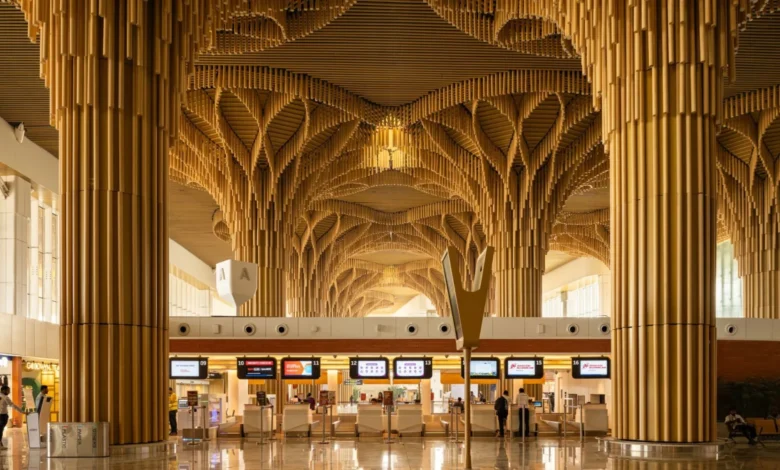
The intersection of global logistics and high-concept architecture has reached a new pinnacle with the unveiling of the 2026 Prix Versailles World’s Most Beautiful Airports List. Announced in Paris on June 15, the annual selection highlights seven international terminals and airports that have transcended their primary function as transit hubs to become cultural landmarks and destinations in their own right. This year’s laureates, spanning from the dense urban centers of China and Germany to the emerging landscapes of Cambodia and the United States, reflect a significant shift in aviation philosophy. The focus has moved away from the utilitarian "non-place" of the late 20th century toward structures that embody regional identity, environmental sustainability, and a sophisticated "sense of place."
The Evolution of the Prix Versailles and the 2026 Selection
The Prix Versailles, established in 2015 and associated with UNESCO, serves as a global architectural award that recognizes the intersection of culture and the economy. The awards emphasize the importance of sustainable development and the role that architecture plays in social and economic dynamics. For the 2026 cycle, the judges focused on terminals that successfully balance the high-volume demands of modern travel with aesthetic excellence.

The seven selected airports include Guangzhou Baiyun International Airport Terminal 3 (China), Frankfurt Airport Terminal 3 (Germany), Lokapriya Gopinath Bardoloi International Airport Terminal 2 (India), Navi Mumbai International Airport Terminal 1 (India), Techo International Airport (Cambodia), Pittsburgh International Airport (USA), and San Diego International Airport Terminal 1 (USA). Later this year, three of these projects will be awarded additional world titles for Architecture, Interior, and Exterior design, cementing their status as the preeminent examples of contemporary infrastructure.
Regional Identity and the Concept of the Sky Forest
A recurring theme among the 2026 selections is the integration of nature into the passenger experience, often referred to as "biophilic design." This is most evident in the Lokapriya Gopinath Bardoloi International Airport (Terminal 2) in Guwahati, India. Architect Nuru Karim designed the terminal to pay homage to the bamboo orchid, a flower native to northeast India. The interior features a "sky forest"—a vast indoor landscape under a vaulted ceiling that mimics the dense vegetation of the region.
The design is not merely aesthetic but functional; the patterns on the ceiling trace the movement of the Brahmaputra River, acting as a wayfinding tool for passengers. By incorporating indigenous art and tribal narratives, the terminal serves as a cultural gateway to the Seven Sister States, ensuring that travelers feel the specific character of the region the moment they disembark.
.jpg)
Similarly, the Techo International Airport in Cambodia, designed by the world-renowned firm Foster + Partners, utilizes a canopy inspired by traditional Cambodian basketry. The roofline evokes the silhouettes of historic palaces and temples, while giant structural columns branch out like trees. The inclusion of the rumduol tree—Cambodia’s national flower—within the central terminal space further bridges the gap between the built environment and the natural world.
Engineering Feats and the Symbolism of the Lotus
The inclusion of Navi Mumbai International Airport Terminal 1 highlights the extraordinary engineering challenges associated with modern mega-projects. Designed by Zaha Hadid Architects, the terminal is defined by a massive canopy resembling a blooming lotus flower. The construction of this facility required a monumental transformation of the local landscape, including the redirection of rivers, the relocation of high-voltage power lines, and the reclamation of marshland.
The lotus motif is deeply symbolic in Indian culture, representing purity and rebirth. Inside, the architecture translates this symbolism into geometric portals and fluted columns. Beyond its beauty, the airport is expected to alleviate the immense pressure on Mumbai’s existing Chhatrapati Shivaji Maharaj International Airport, representing a critical economic driver for the Maharashtra region.

The Modernization of the American Gateway
The 2026 list also recognizes a significant shift in the United States, where aging infrastructure is being replaced by terminals that prioritize light, air, and local geography. Pittsburgh International Airport and San Diego International Airport represent this new era of American aviation design.
Pittsburgh’s new terminal, a collaboration between Gensler, HDR, and Luis Vidal + Architects, draws direct inspiration from the Allegheny Mountains. The roof’s rolling folds and the 38 steel branching columns create a "man-made forest" that reflects Western Pennsylvania’s wooded terrain. Notably, the design includes four outdoor terraces, allowing passengers to access fresh air—a rarity in major American airports. The "Petal Tunnel" feature, inspired by the city’s famous Fort Pitt Tunnel, provides a cinematic transition that mirrors the experience of entering downtown Pittsburgh.
In California, San Diego International Airport’s Terminal 1 addresses the challenges of a high-density, single-runway environment. The defining feature is an 800-foot-long curved glass wall designed by James Carpenter and Gensler. This facade is engineered to filter the intense Southern California sun, preventing the "greenhouse effect" while flooding the interior with natural light. The structural innovation used here allowed for the removal of numerous internal columns, resulting in a 30% reduction in the building’s carbon footprint—a key metric for the Prix Versailles judges.

European Modularity and Chinese Monumentality
Frankfurt Airport’s Terminal 3 represents the European approach to large-scale infrastructure: a "city within a city." Architect Christoph Mäckler organized the terminal around plazas and neighborhood squares, using familiar urban layouts to help passengers orient themselves. The design emphasizes modularity, allowing the airport to adapt to future technological shifts and changes in passenger volume. The inclusion of rotating aluminum disc art installations adds a sense of kinetic energy to the vast space.
In China, the Guangzhou Baiyun International Airport Terminal 3 continues the nation’s trend of building on a monumental scale. Known as the "City of Flowers," Guangzhou’s terminal combines motifs of clouds and blossoms within one of the world’s largest transport buildings. The project, designed by Artelia and the Guangdong Architectural Design and Research Institute, features the highest open-air observation deck in any Chinese airport, offering a unique public space for aviation enthusiasts.
Official Responses and Architectural Philosophy
Jérôme Gouadain, Secretary General of the Prix Versailles, emphasized that the 2026 selections represent a turning point in how society views transit spaces. According to Gouadain, contemporary airports have become "innovative, inescapable hallmarks of their regions and their eras."

"They are innovative because they resolve the apparent conflict between the increasing frequency of travel and the need for speed," Gouadain stated. He further noted that these spaces can no longer be described as mere "transfer" areas. Instead, they are becoming "emblems of economic, cultural, and social dynamics that will continue to shape the societies of tomorrow."
The judges’ panel, comprised of leading architects and cultural figures, noted that the selected airports successfully balance the "demands of fast, high-volume travel" with a "meaningful sense of place." This transition is viewed as a response to the "non-place" phenomenon described by anthropologists, where transit hubs were once indistinguishable from one another regardless of their global location.
Broader Impact and the Future of Aviation Design
The economic and social implications of these architectural achievements are profound. Airports are no longer just points of departure; they are major employers and centers of commerce. By investing in high-quality architecture, regions are signaling their economic vitality and cultural confidence.

- Environmental Stewardship: The emphasis on natural lighting, modular construction, and reduced carbon footprints (as seen in San Diego and Pittsburgh) reflects a global mandate for the aviation industry to mitigate its environmental impact.
- Tourism and First Impressions: For many international travelers, the airport terminal is the first and last experience of a country. The use of regional motifs—such as the Cambodian basketry or the Indian lotus—serves as a powerful branding tool for national tourism.
- Technological Integration: The 2026 winners demonstrate a seamless integration of technology. From interactive digital artworks in Navi Mumbai to the modular spaces in Frankfurt, these terminals are designed to evolve alongside advancements in biometrics and automated baggage handling.
Conclusion
The 2026 Prix Versailles World’s Most Beautiful Airports List serves as a testament to the power of architecture to transform mundane experiences into extraordinary ones. By prioritizing beauty, regional identity, and environmental responsibility, these seven airports are redefining the global landscape of travel. As the world moves toward 2026, these structures will stand not just as hubs of transit, but as monuments to human ingenuity and the enduring desire for connection. The transition from "transfer spaces" to "attractive settings" marks a new chapter in the history of humanity’s movement across the globe, ensuring that the journey is as significant as the destination.