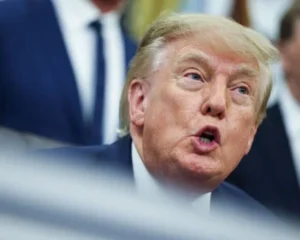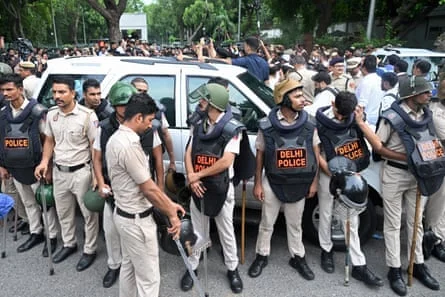
Opposition parties across India have orchestrated a complete shutdown of parliamentary proceedings, demanding the immediate resignation of Education Minister Dharmendra Pradhan. This dramatic escalation on Wednesday comes in fervent solidarity with the burgeoning youth-led "Cockroach Janata Party" (CJP) movement, which has galvanized thousands across the nation over pervasive exam scandals and recent police brutality against peaceful demonstrators. The unprecedented disruption highlights a profound fissure between the ruling government and a frustrated populace, particularly India’s vast youth demographic, whose aspirations have been repeatedly challenged by systemic issues within the education sector.
Parliamentary Standoff and Opposition’s Demands
In the capital city of Delhi, the Lok Sabha and Rajya Sabha, India’s two houses of parliament, ground to a halt as opposition politicians, prominently led by the Congress party and its figurehead Rahul Gandhi, united in protest. Many opposition members gathered outside the iconic parliament building, clad in black, a symbolic gesture of mourning and dissent, waving placards that unequivocally called for Minister Pradhan’s exit. Inside the hallowed chambers, the atmosphere was equally charged, leading to the swift suspension of proceedings. Opposition figures vehemently demanded that Prime Minister Narendra Modi’s government address two critical issues: the widely condemned police violence unleashed against young protestors earlier this week and the series of scandals that have engulfed crucial national examinations, perceived by millions as gateways to their future. The opposition bloc has accused the Modi administration of attempting to stifle dissent and refusing to be held accountable for the crisis.

The Genesis of the ‘Cockroach Janata Party’ Movement
The "Cockroach Janata Party" (CJP) movement, a name born from satirical online discourse, has remarkably transformed into a formidable political force, challenging the establishment with its grassroots momentum. What began as an ironic online joke, playfully referencing the resilience and ubiquitous nature of cockroaches to symbolize the persistent and often overlooked frustrations of common citizens, particularly the youth, has now evolved into a significant political challenge to the Modi government.
At its core, the CJP movement articulates a deep-seated anger over a string of alleged irregularities in high-stakes competitive examinations. These "crucial exams" are not mere academic hurdles; they are the primary determinants for millions of young Indians seeking admission to prestigious universities or securing coveted government jobs. Repeated instances of question paper leaks, alleged cheating, and opaque evaluation processes have systematically eroded faith in the sanctity of the examination system. For a nation with the world’s largest youth population, estimated to be over 600 million individuals under 25, these systemic failures represent a direct assault on their future, fueling widespread disillusionment and a sense of betrayal. The movement’s demands, initially focused on transparency and accountability in the education sector and the resignation of Education Minister Pradhan, have broadened to encompass a wider spectrum of grievances, including youth unemployment and the perceived lack of opportunities.
A Tumultuous Week: A Chronology of Escalation
The current parliamentary deadlock is the culmination of a week marked by escalating tensions and confrontations.
- Monday’s Mass Protest and Police Crackdown: The week commenced with one of the largest anti-government demonstrations in years, organized by the CJP in Delhi. Despite police denying permission for the march on parliament, an estimated 50,000-plus people, predominantly young students and activists, converged in the capital. The demonstration, initially peaceful, reportedly devolved into clashes by late afternoon. Police resorted to teargas and baton charges against the demonstrators, leading to dozens of injuries on both sides. Authorities reported 60 civilians and 118 police personnel sustained injuries, accusing protesters of instigating the violence. However, CJP organizers vehemently condemned the "high-handedness" of the authorities, asserting that hundreds of peaceful protesters, including at least one woman now in intensive care on a ventilator, were injured due to disproportionate police force.
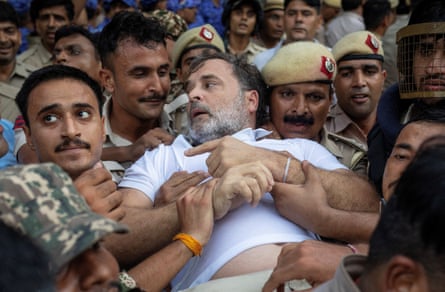
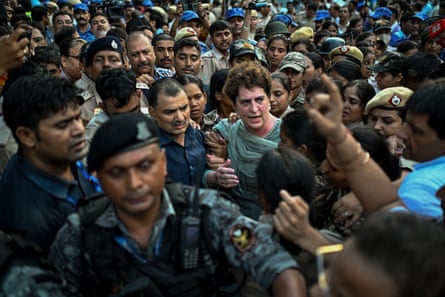
- Tuesday’s High-Profile Detentions: The fallout from Monday’s events quickly drew the direct intervention of senior opposition leaders. On Tuesday, Congress leader Rahul Gandhi staged a defiant sit-in protest outside Prime Minister Modi’s residence. During his protest, Gandhi was briefly detained by police, an incident captured on video showing him being carried away by officers. He accused the prime minister of "destroying the future of India’s youth," a potent charge resonating with the CJP’s core grievances. His sister, Priyanka Gandhi, a senior Congress party strategist, was also briefly detained the same day, underscoring the political establishment’s growing involvement in the youth movement. Both were later released.
- Wednesday’s Parliamentary Paralysis: Building on the momentum of the CJP protests and the detentions of their leaders, opposition parties on Wednesday moved to paralyze parliamentary proceedings. Their demands for a debate on police violence and exam scandals, coupled with the call for Minister Pradhan’s resignation, led to the suspension of legislative work, effectively bringing governance to a standstill in the national assembly. Simultaneously, the CJP’s core protest in central Delhi continued unabated. More than 1,000 people remained camped out at the site, enduring the gruelling heat and humidity of the Delhi summer. Many had traveled considerable distances, vowing not to disperse until their demands were met. Their resilience was bolstered by a steady stream of food deliveries, some ordered from abroad by sympathetic supporters, keeping morale high as slogans and songs echoed through the protest site.
Government’s Evolving Stance and Opposition’s Resolve
The government’s response to the escalating crisis has shown a notable shift. Education Minister Dharmendra Pradhan, who had previously dismissed the CJP protesters as a "B-team of terrorists," adopted a more conciliatory tone in his first public comments since Monday’s widespread protests. In a social media post, Pradhan acknowledged the gravity of the situation, stating, "We owe them [students] answers, reforms and accountability. That is exactly what our government remains committed to delivering." However, he also took a swipe at the opposition, adding, "The students of India deserve far better than being treated as props in a political campaign," implicitly referring to Rahul Gandhi’s high-profile protest. Prime Minister Modi, meanwhile, has maintained a conspicuous silence on the protests, leaving the public to interpret the government’s official position primarily through his minister’s statements.
The opposition, however, remains resolute. Congress has vehemently accused the Modi government of evading responsibility, specifically for "brutality unleashed on students" and for its refusal to address the core issues plaguing the education system. Rahul Gandhi reiterated his stance, stating on Tuesday, "The government doesn’t want to take any accountability, nor does it want to have a debate on it in parliament." Sandeep Dikshit, a senior leader of the Congress party, framed the situation in constitutional terms: "What happened yesterday is our constitution got trampled upon. After that, no self-respecting politician or citizen can stand aside." Several other key opposition parties have also thrown their weight behind the student movement, condemning the police actions and demanding accountability from the government.
Wider Ramifications and National Impact
The CJP movement and the subsequent parliamentary shutdown underscore a growing wave of youth discontent that extends beyond the confines of Delhi. Solidarity protests have been reported in major metropolitan centers like Mumbai and Bengaluru, drawing hundreds of people and signaling a broader national resonance for the movement’s demands. This geographically dispersed support highlights the widespread nature of frustration among India’s youth, a demographic critical to the nation’s future and its electoral landscape.
The implications of this unfolding crisis are significant. For the Modi government, the sustained protests and the opposition’s united front pose a considerable challenge to its image of stability and efficiency, particularly in its second term. The handling of the education crisis and the response to youth dissent will undoubtedly be scrutinized, potentially impacting public trust and future political narratives. The CJP, born from digital satire, has demonstrated the power of online mobilization translating into tangible real-world activism, setting a new precedent for youth engagement in Indian politics. Its ability to sustain momentum, attract cross-party support, and articulate specific grievances beyond initial online humor speaks to a deep well of untapped political energy.
The current deadlock also raises concerns about the functioning of India’s democratic institutions. A paralyzed parliament not only delays legislative work but also symbolizes a breakdown in dialogue between the government and the opposition, crucial for addressing national issues. The allegations of police excess against peaceful protesters also bring into focus fundamental questions about the right to dissent and the state’s response to civil unrest in a democratic society. As the CJP movement continues to gather strength, fueled by the unwavering resolve of its young participants and the growing support from the political opposition, India finds itself at a critical juncture, grappling with the aspirations of its youth and the future direction of its governance.