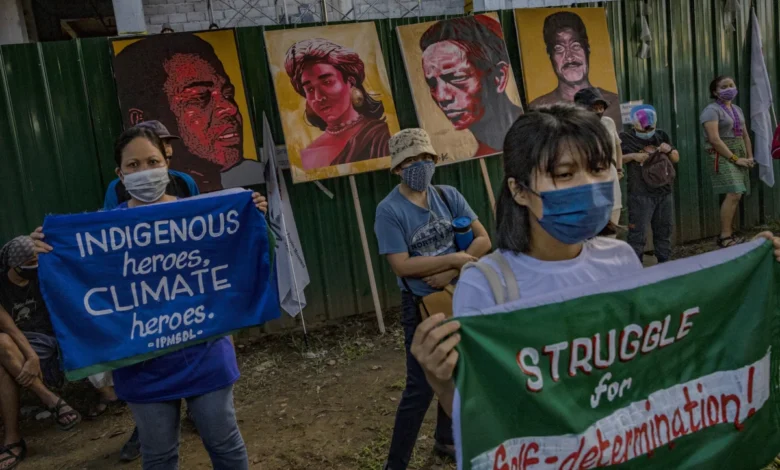
The global struggle to preserve the planet’s remaining biodiversity and mitigate the effects of climate change has reached a perilous crossroads. In 2025, environmental and Indigenous rights defenders remained among the most targeted human rights advocates in the world, facing a brutal paradox: even as international courts and more than 160 nations have formally recognized the right to a healthy environment, those who fight to protect that right are being murdered, imprisoned, and harassed at staggering rates.
A comprehensive report released by Front Line Defenders, a Dublin-based organization dedicated to protecting activists at risk, paints a grim picture of the dangers inherent in environmental advocacy. According to the data, at least 358 human rights defenders were killed in 2025. While these deaths span various sectors of activism, environmental and land rights defenders continue to bear a disproportionate share of the violence. Nearly a quarter of those killed—84 individuals—were targeted specifically for their work protecting land and the natural environment. Indigenous rights defenders, whose work is often inextricably linked to environmental conservation but tracked as a separate category by researchers, accounted for an additional 17 percent of the documented killings.
The geography of this violence is vast, with lethal attacks documented across South America, Southeast Asia, Europe, and Africa. The list of countries where defenders were silenced includes Brazil, Colombia, Ecuador, France, Honduras, Guatemala, Mexico, India, Indonesia, Peru, the Philippines, Turkey, Somalia, and Palestine. These statistics, however, represent only the tip of the iceberg. The report emphasizes that for every defender killed, thousands more endure non-lethal forms of repression designed to break their resolve and dismantle their movements.
The Anatomy of Repression: Beyond Lethal Violence
While the death toll provides a harrowing metric of the risks faced by activists, the Front Line Defenders report highlights a much broader spectrum of abuse. In 2025, there were nearly 4,000 documented non-lethal attacks on human rights defenders across 119 countries. These incidents include arbitrary detention, enforced disappearances, torture, physical assault, and sophisticated surveillance.
The report’s authors warn that these figures are likely a significant undercount. In many jurisdictions, "civic space"—the ability of citizens to organize and protest—has been almost entirely shuttered. In countries like China, the Democratic Republic of Congo, and Iran, the combination of internet blackouts, state-mandated media suppression, and the systematic targeting of those who document abuses makes it nearly impossible to record the full extent of the violence.
Furthermore, the rise of digital repression has introduced new threats. Surveillance technology is increasingly used to track the movements of land defenders, while state-sponsored or corporate-funded smear campaigns on social media are used to delegitimize activists, labeling them as "terrorists," "enemies of development," or "foreign agents." This dehumanization often serves as a precursor to physical violence, creating a social environment where attacks against defenders are tolerated or even encouraged.
Case Study in Conflict: The Death of Efraín Fueres
The human cost of this global trend is perhaps best illustrated by the case of Efraín Fueres, an Ecuadorian environmental defender killed in late 2025. Fueres, a 46-year-old community leader, had been a vocal opponent of the Ecuadorian government’s aggressive push to expand extractive industries, including large-scale mining and oil drilling in sensitive ecological zones.
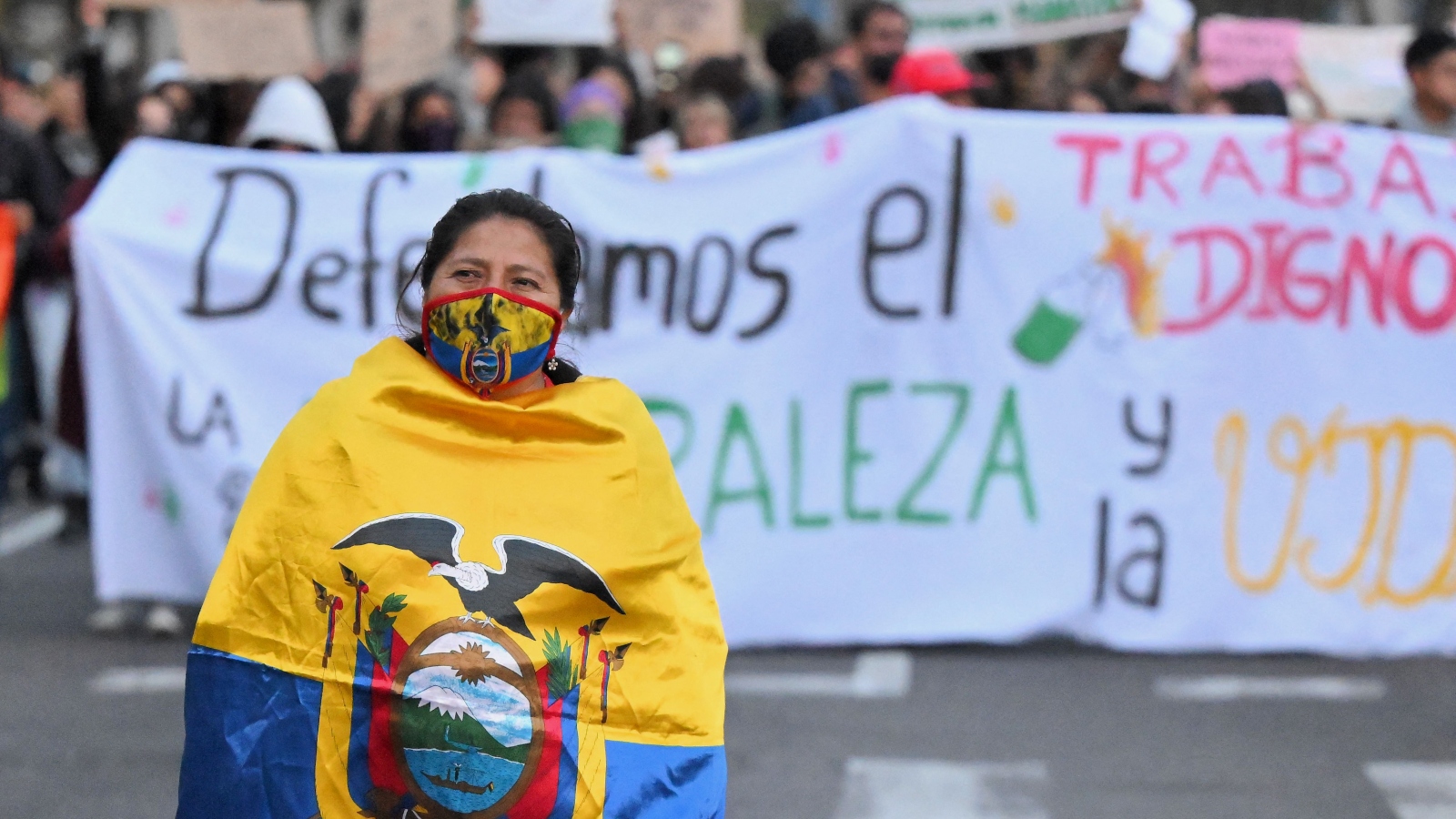
Fueres was killed during a period of nationwide unrest sparked by government policies that many Indigenous and rural communities viewed as a direct threat to their sovereignty and their water sources. Video evidence circulated on social media captured the chilling final moments of his life: Fueres was gunned down while participating in a peaceful march. As he lay dying in the street, a military vehicle approached. Armed officers surrounded Fueres and a companion who was kneeling over his body; the footage shows the officers repeatedly kicking the grieving companion rather than offering medical assistance.
The silence from official channels has been deafening. Neither the Ecuadorian Consulate in Washington, D.C., nor the country’s public prosecutor’s office has provided a substantive response to inquiries regarding the investigation into Fueres’ death. His case is emblematic of a broader culture of impunity, where the perpetrators of violence against defenders—whether they are state actors, private security forces, or criminal syndicates—rarely face legal consequences.
The Rise of "Economies of Violence"
A key finding of the 2025 report is the emergence of what researchers call "economies of violence." This term describes the overlapping networks of government officials, multinational corporations, private security firms, and organized crime groups that operate around extractive industries and land development.
In remote regions, the line between legal and illegal activity is often blurred. In Ecuador and parts of the Amazon basin, illegal miners frequently operate within areas designated for legal concessions. These "gray zones" create intense friction within local communities, which are often divided by the promise of short-term economic gain versus the long-term protection of their environment.
Defenders who challenge land dispossession or the environmental impact of these projects find themselves facing a unified front of opposition. Whether a project is formally sanctioned by the state or is a purely criminal enterprise, the response to opposition is often the same: violence and criminalization. The report notes that defenders often confront the same networks of power regardless of the legal status of the industry they are protesting.
Legal Harassment and the Misuse of the Justice System
Beyond physical threats, the global trend toward "lawfare"—the use of legal systems to silence critics—has accelerated. Governments and corporations are increasingly relying on criminal charges and retaliatory lawsuits to stifle environmental opposition.
Strategic Lawsuits Against Public Participation (SLAPPs) have become a common tool for corporations to drain the financial and emotional resources of activists. In many cases, defenders are hit with defamation suits or accused of "sabotage" and "terrorism" for participating in peaceful protests. In Ecuador, the majority of criminalization cases occurred in the context of socio-environmental conflicts where mining projects were imposed on communities without their Free, Prior, and Informed Consent (FPIC).
This misuse of the law serves a dual purpose: it removes leaders from their communities through imprisonment and sends a deterrent message to others who might consider speaking out. The process of defending oneself against baseless charges can take years, effectively neutralizing an activist’s ability to continue their work.

A Landmark Shift in International Jurisprudence
The escalation of violence is occurring simultaneously with a historic shift in international law. Courts are beginning to recognize that a healthy environment is a fundamental prerequisite for the enjoyment of all other human rights, including the right to life and health.
Last year, the Inter-American Court of Human Rights issued a landmark advisory opinion on the climate crisis. The court stated unequivocally that "respect for and guarantee of the rights of environmental human rights defenders is particularly important because they perform a task that is fundamental for strengthening democracy and the rule of law." The court further noted that the role of these defenders is critical given the scale of the climate emergency and the necessity of public involvement in environmental decision-making.
Similarly, the International Court of Justice (ICJ) has been moving toward affirming the legal obligations of states to address climate change and protect those who advocate for climate action. More than 165 countries have now recognized the human right to a clean, healthy, and sustainable environment in their domestic laws or through international treaties.
Analysis: The Implementation Gap
The central tragedy of 2025 is the widening "implementation gap" between international legal standards and the reality on the ground. While the halls of justice in The Hague or San José may resonate with declarations of support for environmental defenders, those same defenders are being hunted in the forests of Mindanao and the highlands of the Andes.
This gap exists because the economic incentives for land grabbing and resource extraction often outweigh the political will to enforce human rights protections. As the global transition to renewable energy accelerates, the demand for "transition minerals" like lithium, copper, and cobalt has sparked a new wave of extractive projects. This "green boom" is frequently occurring at the expense of Indigenous rights, as seen in recent conflicts over lithium mining in Nevada and South America.
The protection of environmental defenders is not merely a matter of human rights; it is a necessity for global climate stability. Data from the United Nations and various environmental NGOs consistently show that lands managed by Indigenous peoples and local communities have lower rates of deforestation and higher levels of biodiversity. By silencing these defenders, the global community is losing its most effective frontline against ecological collapse.
Chronology of Environmental Rights Evolution
- 1972: The Stockholm Declaration marks the first time the link between human rights and the environment is recognized on a global stage.
- 1998: The Aarhus Convention establishes the rights of the public to access environmental information and participate in decision-making.
- 2018: The Escazú Agreement is adopted in Latin America and the Caribbean, the first treaty to include specific protections for environmental defenders.
- 2022: The United Nations General Assembly declares that access to a clean, healthy, and sustainable environment is a universal human right.
- 2024-2025: International courts (ICJ and Inter-American Court) issue advisory opinions linking climate obligations to the protection of defenders.
- 2025: Front Line Defenders reports 358 killings, highlighting the persistent failure of states to translate legal recognition into physical safety.
The Path Forward
The findings of the Front Line Defenders report serve as an urgent call to action for the international community. Experts argue that the protection of environmental defenders must be integrated into all climate and trade agreements. Furthermore, corporations must be held accountable for the actions of their subsidiaries and security contractors through mandatory human rights due diligence laws.
Without a concerted effort to dismantle the "economies of violence" and end the culture of impunity, the legal victories of the past decade will remain hollow. As the climate crisis intensifies, the world cannot afford to lose the very people who are risking their lives to defend the planet’s future. The survival of environmental defenders is increasingly synonymous with the survival of the ecosystems they protect.