In the dense urban landscape of Boston, where historic architecture meets the increasingly volatile realities of a changing climate, Marie Tai found herself facing a common modern dilemma: how to maintain a livable indoor environment without succumbing to the exorbitant costs of traditional HVAC upgrades. Last year, Tai’s 1,000-square-foot, two-bedroom condominium was struggling under the weight of an intense summer. Her window air-conditioning units, once a standard solution for older New England homes, were proving ineffective against record-breaking heatwaves. Beyond her own comfort, Tai was motivated by the health of her 16-year-old cat, Mittens, who was in a delicate state of recovery after being struck by a vehicle.
Tai’s search for a sustainable solution led her to the heat pump, an all-electric technology capable of both heating and cooling by transferring thermal energy rather than generating it through combustion. However, the initial financial barrier was daunting. Three separate contractors provided estimates ranging from $28,000 to $40,000—prices that Tai, the head of finance and administration at Harvard University’s Project Zero, identified as disproportionate for a space of her size. This "sticker shock" is a primary deterrent for many homeowners looking to transition away from fossil fuels. It was only through a localized, demand-aggregation program organized by Laminar Collective that Tai found a viable path forward, eventually securing a ductless mini-split system for $20,000. By leveraging a $8,500 state rebate and zero-percent interest financing, the project became a catalyst for both financial savings and improved quality of life.
The Mechanics of Demand Aggregation in Residential Electrification
The success of Tai’s installation highlights a growing trend in the United States: the "group-buy" model for residential energy upgrades. This approach, which mirrors the bulk-purchasing strategies used by large corporations or warehouse clubs, allows individual homeowners to band together to secure lower rates. Organizations such as Laminar Collective, VoltHub, and iChoosr act as intermediaries, coordinating a large volume of customers to provide contractors with a guaranteed pipeline of work.
The economic logic of the group-buy model is centered on reducing "soft costs"—the expenses associated with marketing, lead generation, and administrative overhead. In a typical HVAC business model, contractors spend significant resources on individual sales calls, many of which do not result in a contract. By aggregating demand, these organizations present contractors with a "ready-to-install" list of clients. This efficiency allows installers to purchase equipment in bulk and optimize their labor schedules, passing the savings—typically between 10 and 20 percent—on to the consumer. For a standard whole-home installation, this can represent a price reduction of $3,000 to $6,000.
Technical Context: Why Heat Pumps are Replacing Traditional Systems
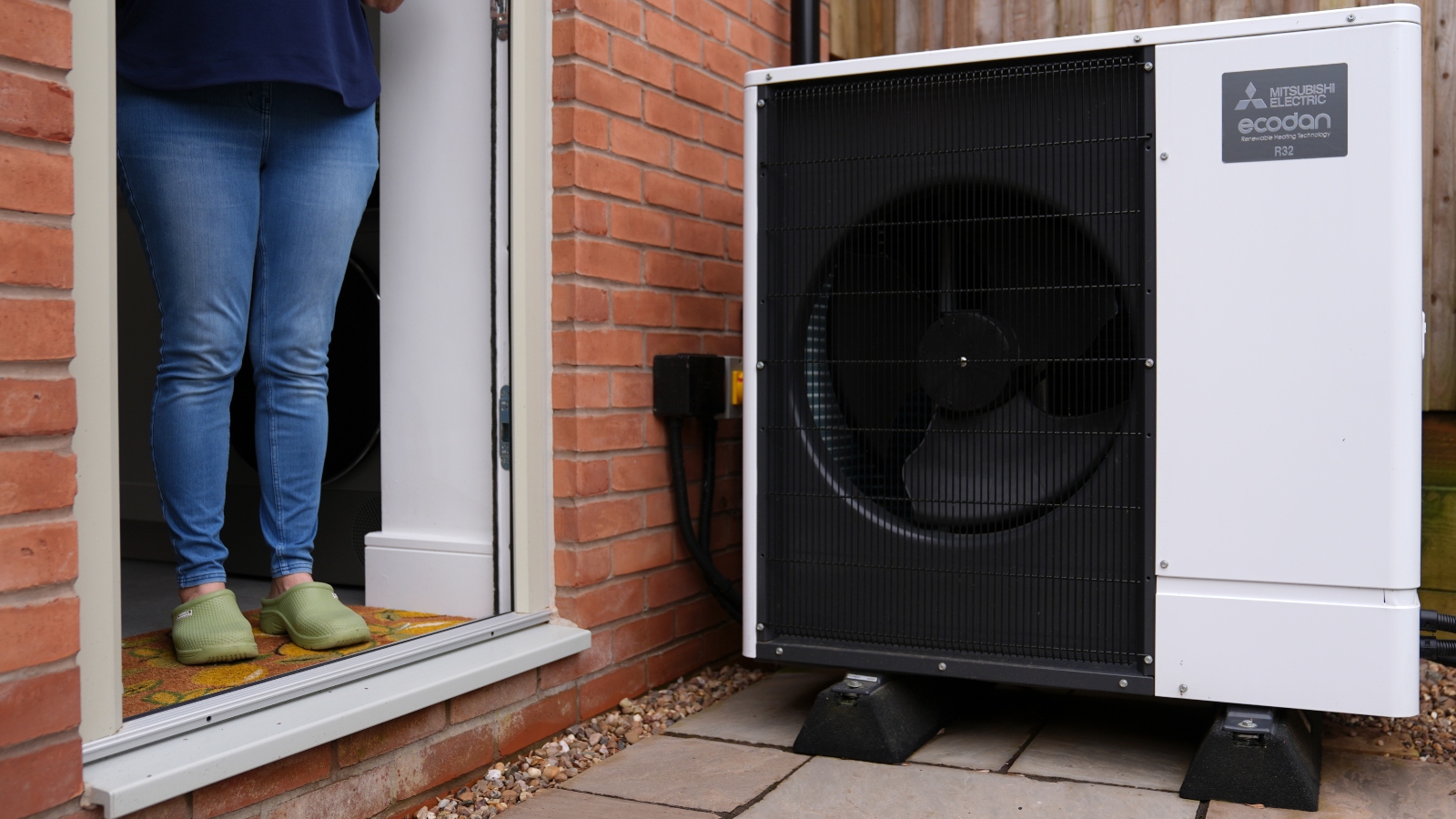
To understand the urgency of these programs, it is necessary to examine the technology itself. Heat pumps are widely regarded as the "Swiss Army knife" of the energy transition. Unlike traditional furnaces that burn natural gas or heating oil, heat pumps use electricity to move heat from the outside air into the home during the winter and reverse the process during the summer.
Modern units, particularly those designed for cold climates like Boston’s, remain highly efficient even when outdoor temperatures drop below freezing. For Tai, the transition meant abandoning fuel oil—a carbon-intensive and often expensive heating source—in favor of a system that is three to five times more efficient than traditional electric resistance heating. Furthermore, the indoor units of ductless mini-splits include advanced air-filtration systems. For Tai, this resulted in a noticeable improvement in her allergy symptoms and a significantly quieter living environment compared to the roar of window AC units.
A Shifting Policy Landscape and Federal Challenges
The rise of community-led group buys arrives at a critical juncture for American climate policy. While the transition to electric heating is a cornerstone of national decarbonization goals, the regulatory environment has become increasingly fractured. Recent shifts in federal administration priorities have led to the erosion of several key incentives.
Last year, the elimination of a $2,000 federal tax credit for home heat pumps removed a significant layer of financial support for middle-income households. More recently, the Department of Energy indicated that it would restrict the use of certain home energy-efficiency rebates for residents seeking to switch from gas to electric systems. These policy reversals have placed a greater burden on state governments and private-sector innovations to bridge the affordability gap. In Massachusetts, programs like MassSave continue to offer substantial rebates, but in states with less robust local support, the group-buy model may soon become the only way for many families to afford the upfront costs of electrification.
Contractor Benefits and Market Stabilization
While consumers benefit from lower prices, the group-buy model also offers significant advantages to the HVAC industry, which has traditionally been plagued by extreme seasonality. Most HVAC companies experience a "boom and bust" cycle, where technicians are overwhelmed during the first heatwave of summer or the first freeze of winter, followed by periods of relative inactivity known as "shoulder seasons."

Shreyas Sudhakar, CEO of the California-based contractor Vayu, notes that while emergency replacements will always be a staple of the industry, group buys allow for better long-term planning. By scheduling group-buy installations during typically slow months, companies can maintain a steady revenue stream and keep their skilled labor force employed year-round. DR Richardson, CEO of Elephant Energy, estimates that his firm saves approximately $300 per project through these initiatives, largely due to the reduction in marketing costs. These operational efficiencies are vital in a competitive market where labor shortages often drive up the cost of specialized trades.
Chronology of the Group-Buy Movement
The concept of demand aggregation for green technology is not entirely new, but its application to heat pumps represents a significant evolution of the strategy.
- 2007: Solar United Neighbors begins organizing rooftop solar co-ops, helping thousands of homeowners navigate the complexities of solar installation and financing.
- 2023: International companies like iChoosr, having found success with heat pump group buys in the United Kingdom and the Netherlands, launch their first U.S. pilot programs in the Colorado Front Range and the Washington, D.C. metro area.
- Late 2023: The first round of U.S. heat pump group buys concludes, with approximately 90 households completing installations.
- Spring 2024: Demand surges as over 1,000 households sign up for a second round of programs in Colorado and D.C.
- Summer 2024: Expansion begins into new markets, including Houston, Dallas, Chicago, and Northern Arizona, targeting regions with high cooling demands and diverse climate challenges.
Economic Analysis: The "Costco" Effect on Home Energy
The financial implications of these programs extend beyond the initial purchase price. According to data from Rewiring America, a whole-home heat pump installation typically ranges from $17,000 to $30,000. For many American families, this represents one of the largest home investments outside of the mortgage itself.
The group-buy model effectively democratizes access to these systems. By providing a "menu" of vetted options and transparent pricing, organizations like Laminar Collective and iChoosr remove the "information asymmetry" that often leads to homeowners overpaying. In Tai’s case, her $20,000 investment yielded a $1,300 reduction in annual energy bills. When combined with the $8,500 rebate, the "payback period"—the time it takes for energy savings to cover the net cost of the system—is significantly shortened, making the investment a rational financial decision rather than just an environmental one.
The Role of Local Government and Grassroots Advocacy
The scalability of these programs depends heavily on the involvement of local municipalities. Fred Wu, a director at iChoosr, emphasizes that local government partnerships provide the "credibility and visibility" necessary for these programs to thrive. When a city or county endorses a group-buy initiative, it signals to residents that the contractors have been properly vetted and the pricing is fair.

In Denver, the city’s Office of Climate Action, Sustainability, and Resiliency has been proactive in promoting group-buy programs as part of its broader strategy to cut carbon pollution from buildings. This top-down support, combined with grassroots word-of-mouth—such as Marie Tai sharing her experience with her neighbors in Boston—creates a "contagion effect" that can rapidly transform a neighborhood’s energy profile.
Future Outlook and Broader Implications
As the United States continues to grapple with the dual challenges of an aging housing stock and the need for rapid decarbonization, the group-buy model offers a scalable, market-driven solution. By addressing the primary barriers to adoption—high upfront costs, complex decision-making, and contractor mistrust—these initiatives are moving heat pumps from a niche luxury for the "eco-conscious" into the mainstream.
The success of these programs in disparate markets, from the cold winters of Massachusetts to the sweltering summers of Texas, suggests that the appetite for affordable, efficient home cooling and heating is universal. For residents like Marie Tai, the result is a home that is not only more environmentally responsible but also more resilient and comfortable. As federal incentives remain in a state of flux, the power of collective bargaining may prove to be the most resilient tool in the effort to electrify the American home.