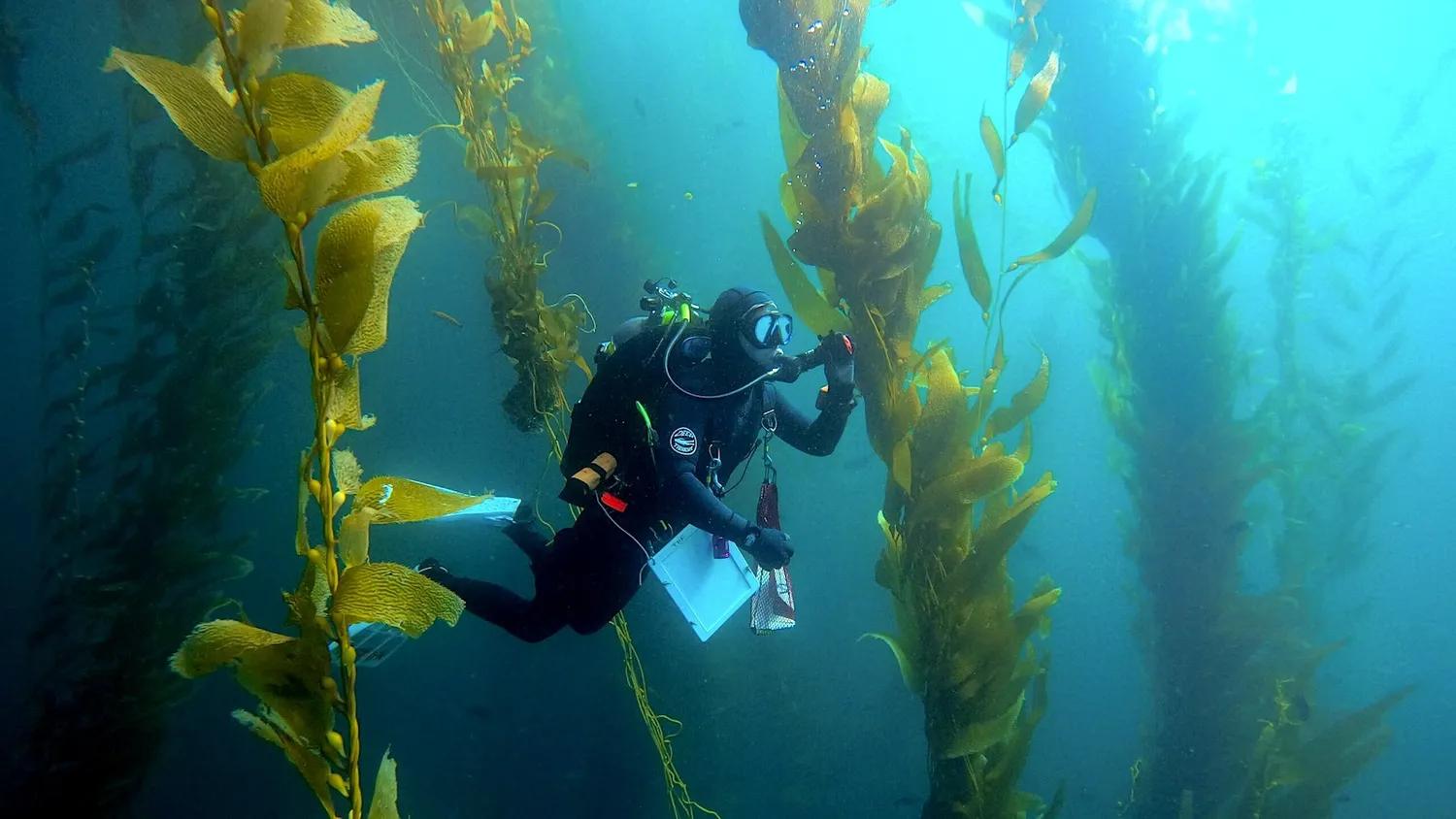
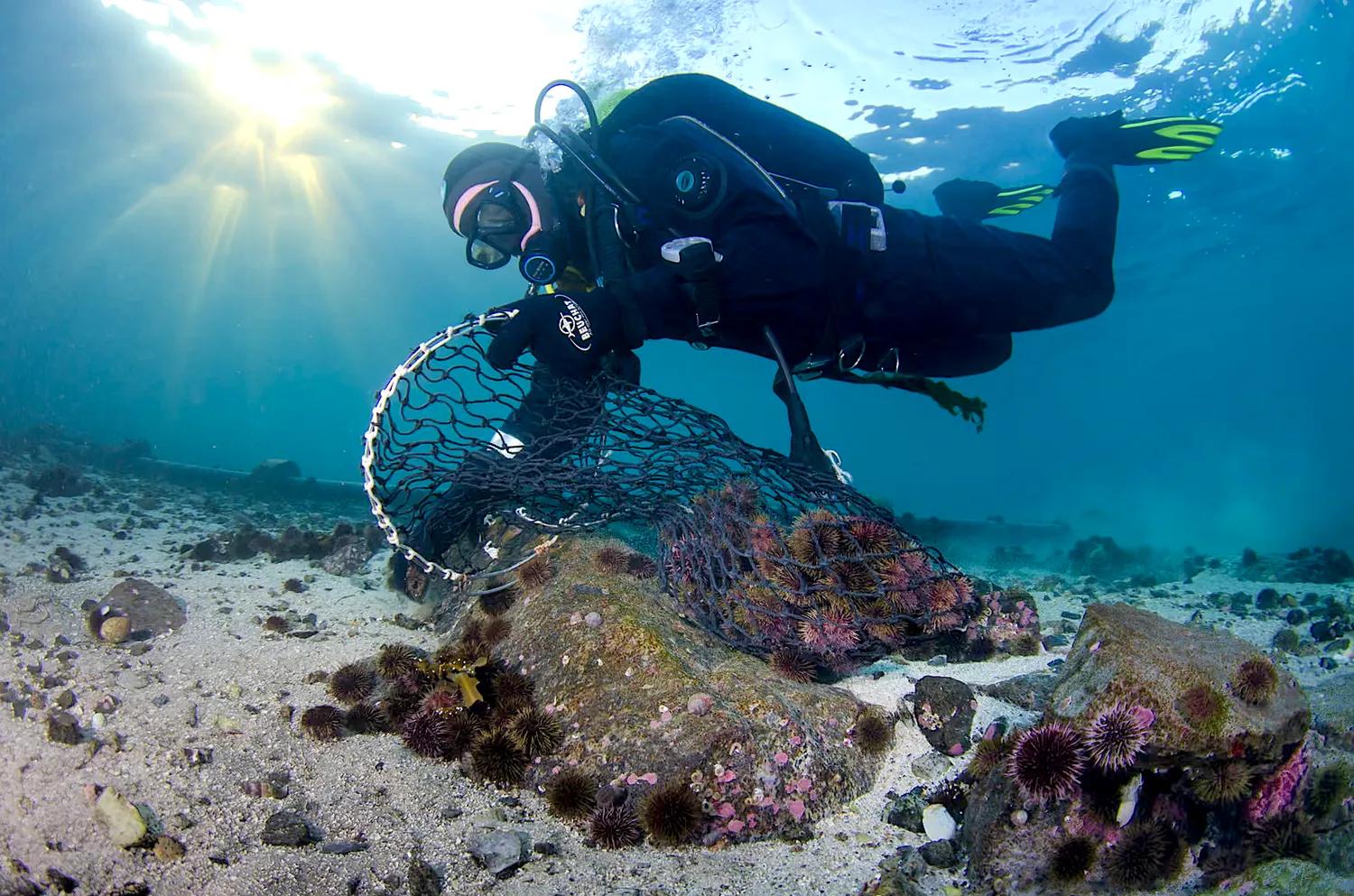
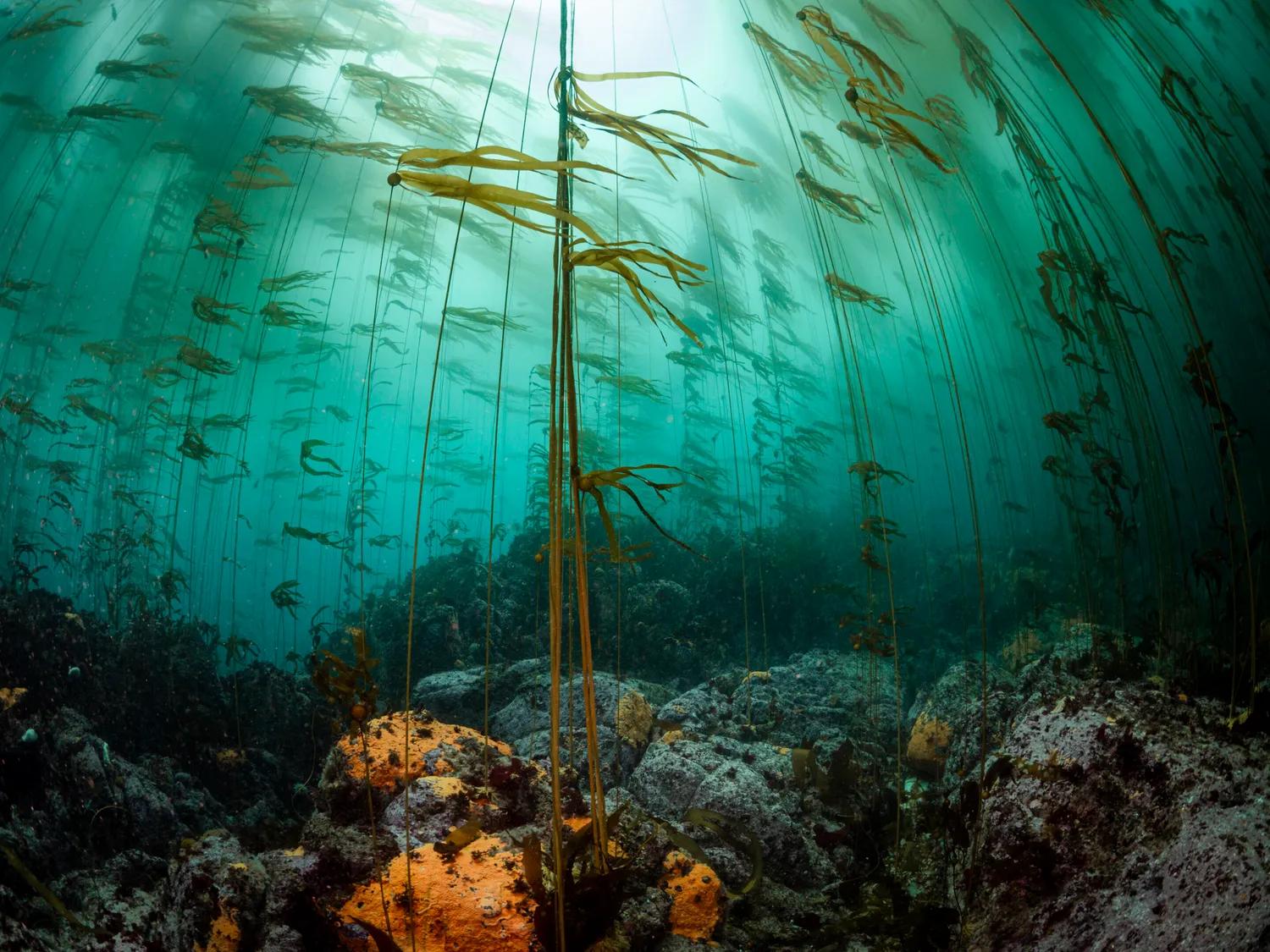
In the cold, nutrient-dense coastal waters off British Columbia, a quiet battle is being waged beneath the surface. Tribal volunteers from the Haida Nation are diving into dense forests of rippling golden-brown kelp, but they are not there merely to observe the majestic ecosystem. They are on a mission to remove purple sea urchins, spiny invertebrates that have transitioned from a natural part of the food chain to a destructive force capable of leveling entire underwater forests. As sunlight filters through the kelp canopy, creating a mesmerizing dance of light and shadow, the volunteers work amidst rays, sea lions, and sharks to protect a habitat that is as vital to the planet as the Amazon rainforest.
Kelp forests are among the most productive and biodiverse ecosystems on Earth. These "foundation species" are teeming with a colorful variety of seaweeds, sponges, crustaceans, and small ocean animals, many of which are endemic to specific coastal regions. Historically, vast kelp beds spanned roughly one-third of the world’s coastlines, thriving in shallow, nutrient-rich waters. Beyond their role as a biological nursery, they serve as a physical buffer for the land, reducing the kinetic energy of waves, minimizing coastal erosion, and providing essential shelter for commercially important fish, invertebrates, and marine mammals.
However, these underwater cathedrals are currently facing an existential crisis. Driven by a combination of water pollution from terrestrial agriculture, coastal development, destructive bottom trawling, and a population explosion of kelp-devouring urchins, kelp forests are on life support. Perhaps most daunting of all is the rapid warming of the global ocean, a trend that threatens to push kelp beyond its physiological limits.
The Biological Significance and Global Decline of Kelp
Healthy kelp forests require cool, nutrient-rich seawater to maintain their rapid growth rates. As ocean temperatures rise, kelp is increasingly unable to survive in parts of its former range, leading to a phenomenon known as "range contraction." The scale of the loss is staggering: kelp forests are currently vanishing twice as fast as coral reefs and four times faster than tropical rainforests. Estimates suggest that between 40 percent and 60 percent of the world’s kelp forests have been lost or significantly degraded over the last 50 years.
Until recently, these precipitous declines received far less scientific and public attention than higher-profile ecological crises like the bleaching of the Great Barrier Reef. However, the narrative is shifting as the scientific community recognizes the immense value of kelp in the context of carbon sequestration. A 2023 literature review of more than 180 scientific papers suggested that the climate benefits of these underwater forests have been "grossly underestimated." Albert Pessarrodana, a research fellow at the University of Western Australia and the review’s lead author, notes that kelp is among the fastest-growing organisms on the planet, capable of uptaking as much carbon per unit of area as a tropical rainforest.
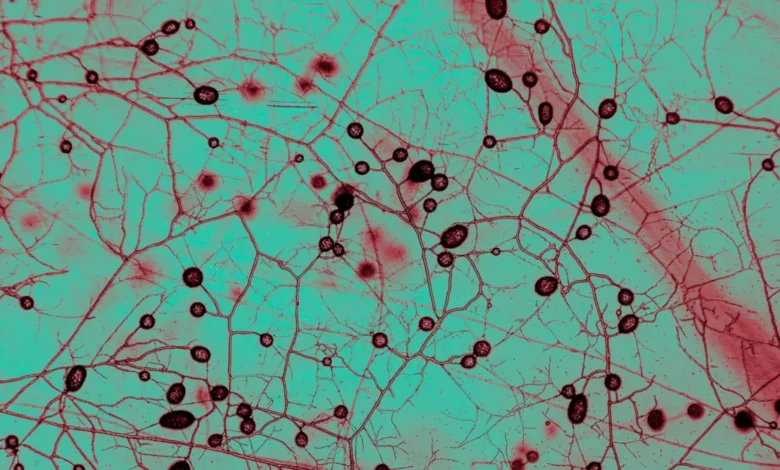
The mechanism of this carbon storage is complex. While much of the carbon captured by kelp is released back into the marine environment as "leaf litter" or detritus—often consumed by fish and excreted within days—a significant portion is transported to the deep ocean. Coastal currents carry an estimated 62 million tons of kelp-derived carbon into the deep sea every year, where it can remain sequestered for centuries or even millennia.
A Chronology of Crisis: From "The Blob" to Urchin Barrens
The decline of kelp forests is not a uniform process but rather a series of catastrophic events and steady environmental pressures. In Northern California, the most significant turning point occurred between 2013 and 2015 during a massive marine heatwave known as "the Blob." This unprecedented warming event, combined with an El Niño cycle, caused ocean temperatures to spike, leading to a 95 percent reduction in kelp populations in the region.
The timeline of the crisis is further complicated by the 2013 outbreak of sea star wasting disease. This epidemic decimated populations of the sunflower sea star, a voracious predator that serves as the primary check on sea urchin populations. Without the sea stars to hunt them, purple sea urchins multiplied unchecked, moving from crevices onto the open reef to mow down every kelp sprout in sight. This transition transforms a vibrant forest into an "urchin barren"—a rocky, lifeless desert where urchins can persist for decades in a semi-dormant, "zombie-like" state, preventing any natural recovery of the kelp.
In California’s kelp forests, water temperatures have largely failed to drop below the 57-degree Fahrenheit threshold required for optimal kelp health since 2015. Higher temperatures disrupt the reproductive cycle of the macroalgae, preventing the development of viable offspring. Like corals, stressed kelp can undergo a bleaching process, losing the chlorophyll necessary for photosynthesis and eventually disintegrating.
Innovations in Restoration: AI, Biobanking, and Selective Breeding
To counter these losses, scientists are turning to high-tech solutions and genetic research. The Scripps Institution of Oceanography, in collaboration with the San Diego Zoo, has begun utilizing artificial intelligence to create digital twins of kelp ecosystems. These AI models allow researchers to assess the vulnerability of specific beds to climate change, helping to prioritize restoration efforts in areas with the highest probability of long-term survival.
Furthermore, a "biobank" has been established to preserve genetic varieties of kelp. This genetic library is essential for future restoration projects and the burgeoning kelp farming industry. At the Woods Hole Oceanographic Institution on Cape Cod, researchers are using selective breeding to develop "super-kelp" strains that possess a higher tolerance for warming waters. Similar genetic engineering and breeding efforts are currently underway in Australia and China, where scientists hope to "future-proof" coastal ecosystems against a warming climate.
The Role of Apex Predators and Ecological Balance
Restoration is not solely about planting new kelp; it is about restoring the ecological balance that allows kelp to thrive. The reintroduction of apex predators has proven to be one of the most effective strategies for controlling urchin populations. Sea otters, which were driven to the brink of extinction by the fur trade in the 19th century, have seen a substantial recovery in parts of Washington, British Columbia, and Northern California.
Data indicates that kelp forests in areas with healthy sea otter populations are significantly more resilient. Similarly, efforts are being made to rehabilitate the sunflower sea star. Scientists recently isolated the bacterium responsible for the wasting disease epidemic, allowing aquariums to treat affected stars with antibiotics. The goal is to eventually release disease-resistant, captive-bred sea stars back into the wild to resume their role as the "guardians" of the kelp.
In Australia, the Nature Conservancy is working on the Great Southern Reef—a 5,000-mile system of rocky reefs. Scott Breschkin, a lead researcher on the project, emphasizes that eradicating invasive long-spined urchins is a non-negotiable first step. Without the removal of these grazers, any attempt to replant kelp is doomed to fail.
Economic Value and Global Models for Success
The loss of kelp is not only an ecological disaster but an economic one. In California alone, kelp forests are estimated to contribute $250 million in annual economic value through fisheries and tourism. They serve as nurseries for abalone, cod, and rockfish—species that support thousands of jobs.
While restoration projects in the United States have historically been small-scale—often covering less than 100 acres due to high costs and complex zoning laws—East Asian nations provide a model for large-scale success. South Korea has implemented the world’s most ambitious kelp restoration program, successfully "re-greening" over 71,000 acres of its coastline with a goal of restoring 75 percent of its original kelp habitat. In Japan, where kelp (kombu) is a culinary staple, over 700 restoration projects are currently active.
The commercial viability of kelp is a significant driver for these efforts. Kelp is increasingly used in sustainable food products, cosmetics, and even biodegradable packaging. By creating a market for kelp products, these nations have incentivized the protection and expansion of underwater forests.
The Threat of Turf Algae and the Road Ahead
Despite the success of localized restoration, the long-term outlook for kelp remains precarious. As kelp forests vanish, they are often replaced by "turf algae"—a low-lying, carpet-like vegetation that offers little to no habitat for other species. This "radical ecological transformation," as described by Shane Farrell of the University of Maine, creates a feedback loop where turf algae prevents kelp spores from settling and growing.
Coastal geographers like Kyle Cavanaugh of UCLA warn that unless global greenhouse gas emissions are drastically reduced, the frequency of marine heatwaves will continue to rise. While selective breeding and urchin removal can provide a temporary buffer, the physiological limits of kelp cannot be engineered away entirely.
The battle for the kelp forests represents a broader challenge in marine conservation: the need to move from reactive, small-scale interventions to proactive, ecosystem-wide management. The work of the Haida Nation, the geneticists at Woods Hole, and the restoration teams in South Korea underscores a growing global realization: the health of our oceans, our climate, and our coastal economies is inextricably linked to the survival of the golden forests beneath the waves. The success of these efforts will determine whether future generations will inherit a vibrant, biodiverse ocean or a series of barren, underwater deserts.