The United States Congress finds itself at a significant legislative crossroads as the debate over the multi-billion-dollar farm bill intensifies, primarily driven by a contentious provision known as the Save Our Bacon Act. It has been nearly eight years since the last comprehensive reauthorization of the farm bill, a massive legislative package that serves as the backbone of the nation’s agricultural and food assistance programs. Traditionally updated every five years, the farm bill governs a vast array of sectors, including crop insurance, rural development, forestry, and the Supplemental Nutrition Assistance Program (SNAP). However, the current cycle has been marred by persistent partisan disagreements and a burgeoning "civil war" within the agricultural industry itself, centered on the federal government’s authority to override state-level animal welfare protections.
The latest friction point emerged this week when the Senate Agriculture Committee released its draft of the farm bill. Notably absent from the Senate version was the Save Our Bacon (SOB) Act, a measure that has become a cornerstone of the House of Representatives’ version of the bill. Supported vocally by Representative G.T. Thompson, Chairman of the House Agricultural Committee, the SOB Act seeks to establish federal preemption over state and local laws that regulate the production and sale of agricultural products. The primary target of this legislation is California’s Proposition 12, a landmark animal welfare law that has fundamentally altered the landscape of the American pork industry.
The Genesis of the Conflict: California’s Proposition 12
To understand the current legislative gridlock, one must look back to 2018, when California voters overwhelmingly approved Proposition 12, the Farm Animal Confinement Initiative. This law prohibits the sale of pork, eggs, and veal in California unless the animals are raised in conditions that meet specific minimum space requirements. For the pork industry, this meant a definitive ban on the use of gestation crates—metal enclosures so small that pregnant sows cannot turn around or fully extend their limbs.
The impact of Proposition 12 extends far beyond California’s borders because the state represents approximately 15 percent of the U.S. pork market. Because the law regulates the sale of products within the state, producers in Iowa, North Carolina, and Pennsylvania must comply with California’s standards if they wish to access its lucrative market. This led to a high-stakes legal battle that reached the U.S. Supreme Court in 2023. In National Pork Producers Council v. Ross, the Court upheld Proposition 12, ruling that states have the right to regulate products sold within their borders, even if those regulations affect out-of-state businesses.
The Save Our Bacon Act was conceived as a direct legislative rebuttal to the Supreme Court’s decision. Proponents of the act argue that a "patchwork" of state laws creates an undue burden on interstate commerce and threatens to drive up food prices for consumers. Opponents, however, view the act as an egregious overreach of federal power that silences the voices of voters and undermines the progress made in sustainable and humane farming.
A Divided Industry: The Economic and Social Split
The debate over the SOB Act has revealed a deep schism within the agricultural community. While major industry lobbying groups like the National Pork Producers Council have historically fought against confinement regulations, a growing number of independent farmers and smaller organizations are breaking ranks.
The American Meat Producers Association (AMPA), founded just last year, has emerged as a prominent voice against the Save Our Bacon Act. According to Holly Bice, President of AMPA, many hog farmers view Proposition 12 not as a burden, but as a market opportunity. By transitioning to crate-free operations, these farmers can sell their pork at a premium, catering to a consumer base that is increasingly concerned with animal welfare and food transparency.
"Most hog farmers do not support the Save Our Bacon Act," Bice stated, noting that the transition has helped many producers "keep their heads above water" at a time when industrial consolidation continues to squeeze out family-owned farms.
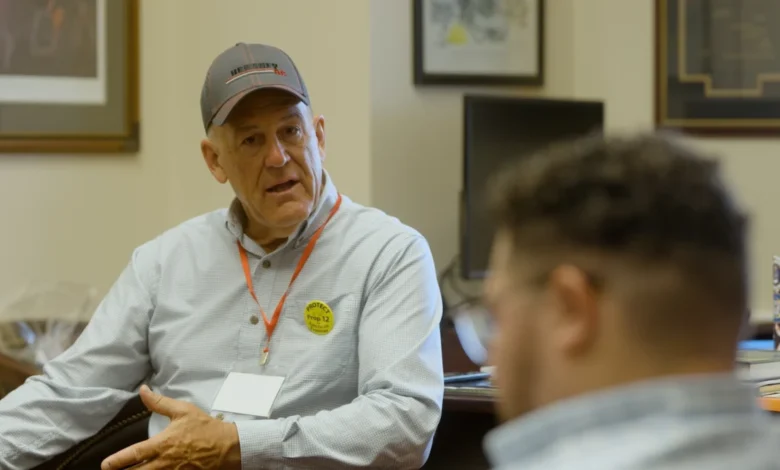
This sentiment is echoed by Brent Hershey, a hog farmer from Pennsylvania and an AMPA member. Hershey admitted that he was initially resistant to changing his operation’s methods. However, after years of listening to consumer feedback and observing the shifting market, he transitioned his farm to be entirely crate-free three years ago. For farmers like Hershey, who have already invested significant capital and labor into meeting higher welfare standards, the passage of the SOB Act would be "devastating," as it would effectively nullify their competitive advantage and devalue their investments.
Environmental and Public Health Implications
Beyond the ethics of animal treatment, the confinement of livestock has profound environmental consequences. Large-scale factory farming operations, characterized by high-density animal populations, produce massive quantities of manure. In many industrial hog farms, this waste is stored in open-air "lagoons," which can leak into groundwater or overflow during extreme weather events, polluting local waterways with nitrates and pathogens.
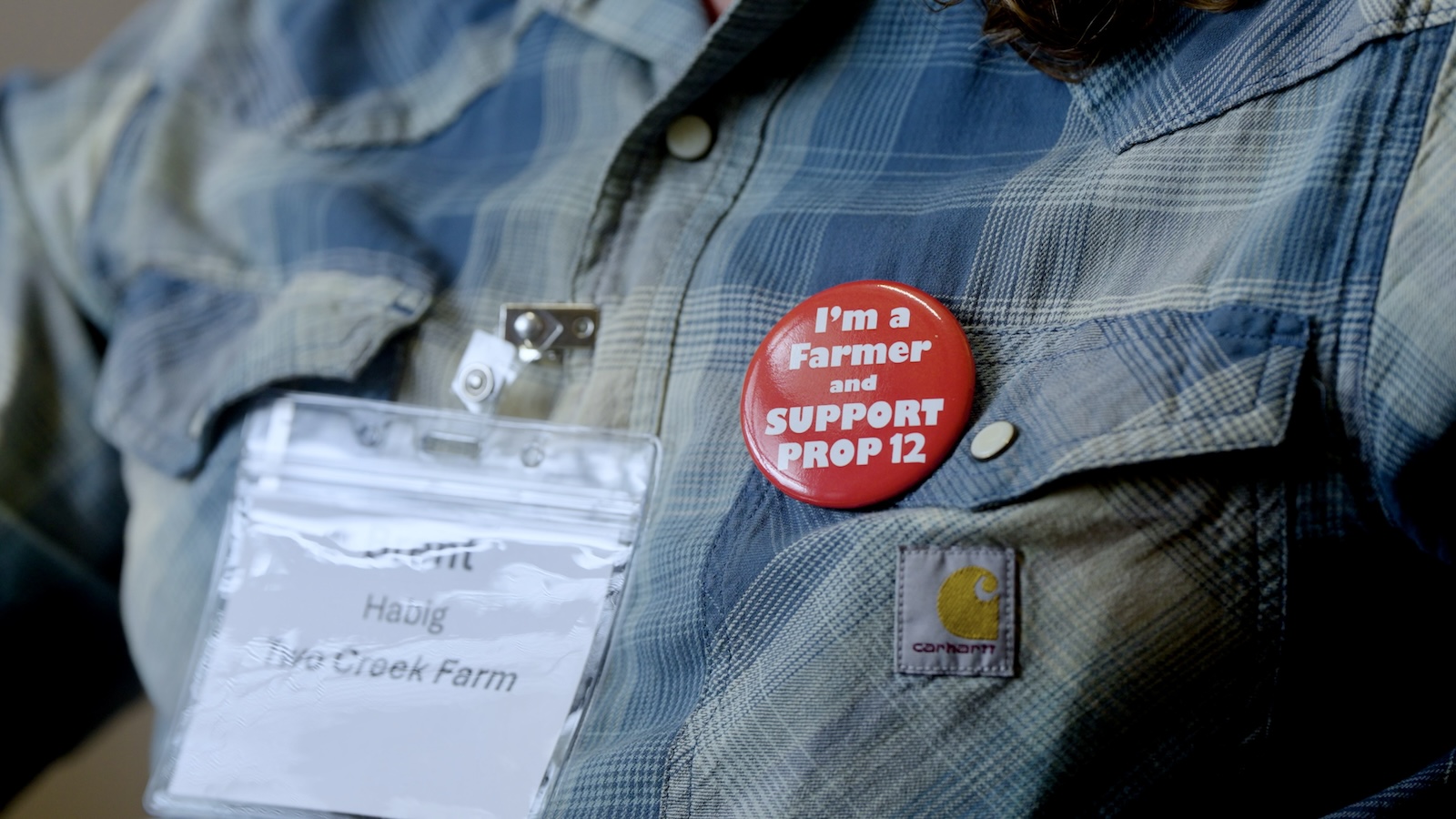
Advocacy groups such as Friends of the Earth argue that the Farm Bill should be a vehicle for promoting "climate-smart" agriculture rather than protecting outdated industrial practices. Molly Armus, an animal agricultural policy expert at Friends of the Earth, pointed out that transitioning away from extreme confinement is often a precursor to adopting more sustainable, pasture-raised systems. These systems generally have a lower carbon footprint and reduce the concentration of pollutants.
The USDA recently reported that approximately 27 percent of hog farmers—roughly one in four—are already compliant with Proposition 12. This suggests that the industry is already moving toward a more humane and potentially more sustainable model, regardless of the federal legislative hurdles.
The Precedent of Federal Preemption
Legal experts and environmental advocates are also concerned about the legal precedent the Save Our Bacon Act would set. J.W. Glass, a senior policy specialist at the Center for Biological Diversity, warned that if the federal government successfully overrides state animal welfare laws, it could open the door to overturning other state-level protections.
"When you’re doing something that, in a more macro sense, erodes states’ abilities to roll back some of the more harmful aspects of massive commercial agricultural operations, how does that impact any law that could impact agriculture?" Glass asked. He specifically cited state laws that restrict the use of certain pesticides or regulate air quality near industrial farms. The concern is that the SOB Act could serve as a "Trojan horse" for a broader deregulation of the agricultural industry, stripping states of their right to protect the health and environment of their citizens.
Chronology of the Farm Bill Gridlock
The path to a new farm bill has been fraught with delays and temporary measures:
- 2018: The Agriculture Improvement Act of 2018 is signed into law, set to expire in 2023.
- 2023: As the expiration date approaches, lawmakers fail to reach a consensus on funding for climate initiatives and SNAP benefits. A one-year extension is passed to keep programs running through September 2024.
- Early 2024: House Agriculture Committee Chairman G.T. Thompson introduces a draft including the Save Our Bacon Act, signaling a hardline stance on state-level agricultural regulations.
- Mid-2024: The Senate Agriculture Committee, led by Senator Debbie Stabenow, releases a competing draft. The Senate version focuses on protecting "climate-smart" funding and excludes the SOB Act, creating a clear legislative impasse.
- Late 2024: With the expiration of the extension looming and an election year in full swing, the likelihood of passing a comprehensive bill before the end of the year diminishes, raising the prospect of another stop-gap extension.
Economic Data and the Trillion-Dollar Stakes
The farm bill is often referred to as the "trillion-dollar bill" due to its massive projected costs over a ten-year window. The Congressional Budget Office (CBO) estimates that the next farm bill could cost upwards of $1.5 trillion.
A significant portion of this funding—roughly 80 percent—is allocated to the Nutrition Title, which funds SNAP. The remaining 20 percent is divided among commodity programs, conservation, and crop insurance. The disagreement over the SOB Act is just one of several "poison pill" provisions that have stalled the bill. Other points of contention include:
- SNAP Funding: House Republicans have sought to restrict future updates to the Thrifty Food Plan, which determines benefit levels, while Senate Democrats have vowed to protect the program from cuts.
- Climate Funding: The Inflation Reduction Act (IRA) provided roughly $20 billion for conservation programs. Senate Democrats want to ensure this money remains dedicated to climate-specific practices, while some House members want to fold the funds into the general farm bill bucket without the climate-smart requirements.
Future Outlook and Legislative Uncertainty
As it stands, the future of the Save Our Bacon Act—and the farm bill itself—remains highly uncertain. In the Senate, the measure is viewed by many as a non-starter. Sara Amundson, president of the Humane World Action Fund, noted that the exclusion of the act from the Senate draft was a calculated move by leadership who recognize the political toxicity of overturning popular state laws.
If the House refuses to budge on the SOB Act and the Senate remains firm in its opposition, the most likely outcome is continued gridlock. This would force the federal government to rely on further short-term extensions, leaving farmers, conservationists, and low-income families in a state of prolonged policy limbo.
The resolution of this conflict will ultimately determine whether the U.S. agricultural system continues to move toward a model of localized regulation and animal welfare standards or reverts to a federally mandated, industrialized status quo. For now, the "civil war" among pork producers and the ideological divide in Washington ensure that the path forward for the American farm bill will be anything but smooth.