When the New England Clean Energy Connect transmission line officially commenced operations in January 2024, it was celebrated by policymakers and environmental advocates as a watershed moment for the Northeast’s decarbonization strategy. The high-voltage direct current (HVDC) line, stretching 145 miles from the Canadian border through the forests of Western Maine, was designed to act as a massive green artery, pumping clean hydroelectricity from the reservoirs of Quebec into the energy-hungry markets of Massachusetts and the broader New England region. However, six months into its operational life, a complex picture is emerging that suggests the transition to a carbon-free grid may be more turbulent than initially promised.
The early performance data of the New England Clean Energy Connect (NECEC) has raised significant questions among energy analysts and regional stakeholders. While the line was marketed as a way to significantly increase the net flow of renewable energy into the region, the actual uptick in imported power has been marginal. Furthermore, the reliability of the new infrastructure has faced early tests, with approximately 27 days recorded during the first half of the year in which no electricity flowed through the line at all. These outages, combined with shifting dynamics in the Canadian energy market, suggest that the "clean energy windfall" expected by New England consumers may be delayed or dampened by environmental and technical realities.
Historical Context: A Decade of Legal and Political Conflict
The NECEC project did not emerge in a vacuum; it was the survivor of a brutal decade-long struggle to find a path for Canadian hydropower into the United States. The project’s origins date back to the Massachusetts Energy Diversity Act of 2016, specifically Section 83D, which mandated that the state procure 9.55 terawatt-hours (TWh) of clean energy annually—roughly 20 percent of the state’s total load.
The initial solution was not the Maine route, but rather the "Northern Pass," a proposed 192-mile line through New Hampshire. That project was unceremoniously killed in 2018 when New Hampshire regulators rejected it due to concerns over its impact on the state’s tourism-heavy landscapes and the White Mountain National Forest. Following this collapse, Massachusetts utilities pivoted to the Maine-based NECEC, a partnership between Avangrid (the parent company of Central Maine Power) and the state-owned utility Hydro-Québec.
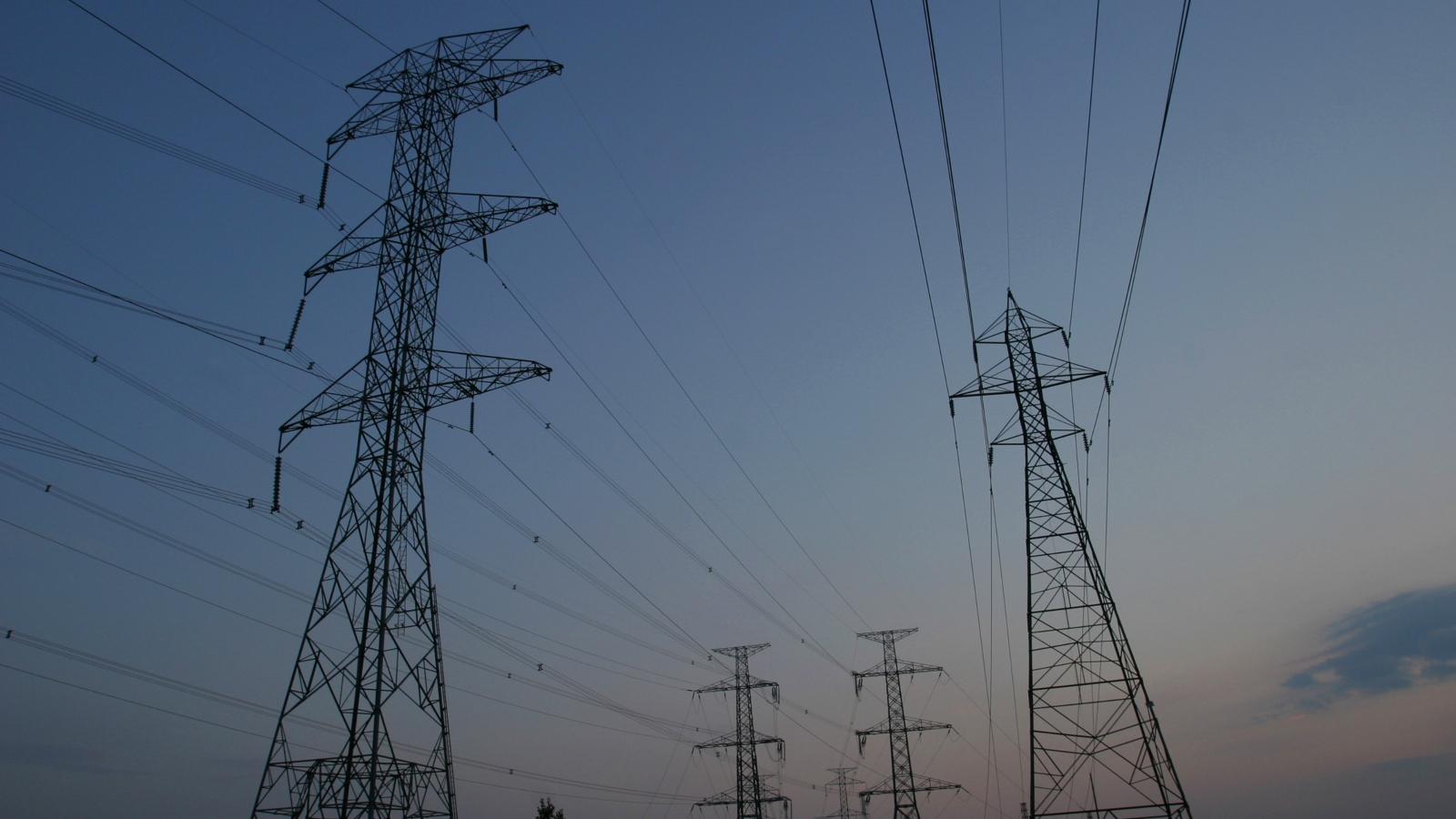
Even in Maine, the project faced unprecedented opposition. In 2021, Maine voters approved a statewide referendum intended to retroactively block the project, leading to a total halt in construction. It was only after a 2023 jury verdict ruled that the developers had "vested rights" to continue because they had performed significant work in good faith that the project was allowed to proceed to completion. The $1 billion-plus project finally went live in early 2024, but the scars of its long journey remain visible in the region’s polarized energy discourse.
Technical Performance and Early Setbacks
Since the first electrons crossed the border in January, the NECEC has struggled with the "optimization and fine-tuning" phase common to large-scale infrastructure projects. Hydro-Québec officials confirmed that a significant outage occurring between late May and early June was the result of "technical difficulties" that required specialized repairs.
"With any new transmission infrastructure, a period of optimization is to be expected," said Lynn St-Laurent, a spokesperson for Hydro-Québec. While the utility maintains that deliveries resumed promptly once repairs were finalized, the cumulative 27 days of downtime have contributed to a sense of unease. Through the end of April, the line had moved approximately 2.4 terawatt-hours of power—a respectable figure, but one that must be viewed in the context of the region’s total energy landscape.
The skepticism from industry observers stems from a phenomenon some call the "re-routing effect." Before the NECEC was built, New England already imported significant amounts of power from Quebec via the "Phase 2" transmission line, which terminates in central Massachusetts. Data from the early months of 2024 shows that as power began flowing through the new NECEC line, imports through the older Phase 2 line plummeted. For nearly three weeks in early 2024, Phase 2 exports to New England ceased entirely.
The Drought Factor: Why the Water Isn’t Flowing
The most critical factor limiting the impact of the NECEC is not technical, but environmental. Quebec has been grappling with persistent drought conditions over the past several years. Hydro-Québec’s system relies on massive reservoirs that act as batteries, storing water during wet seasons to generate power during dry ones. When water levels are low, the utility must prioritize its domestic customers in Quebec, who rely heavily on electricity for home heating.
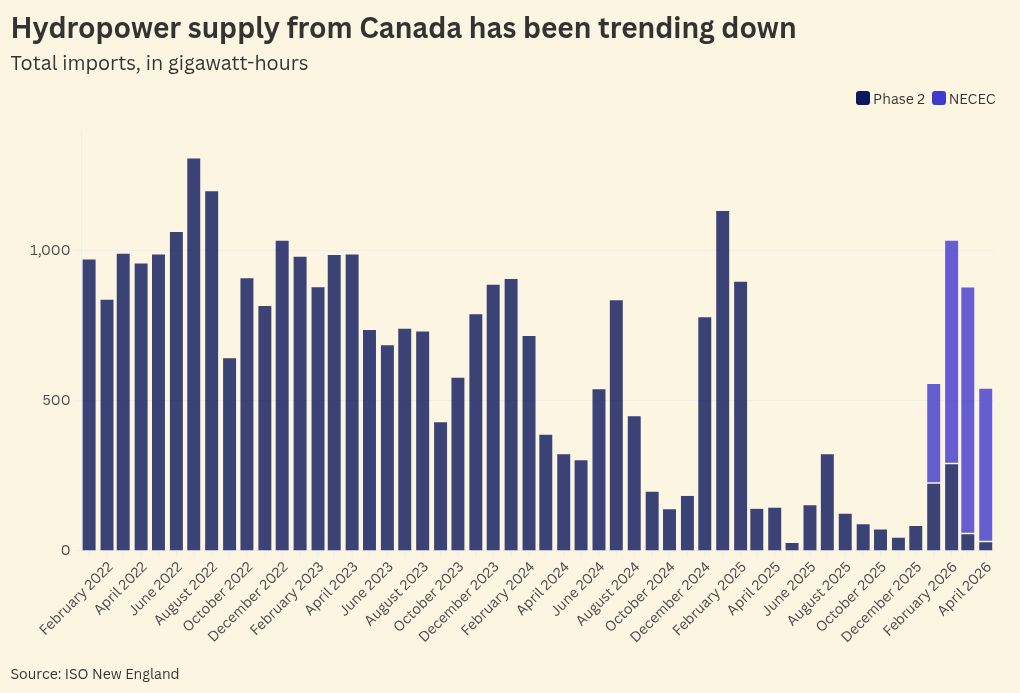
Gilbert Bennett, a senior adviser for WaterPower Canada, noted that hydropower generators are at the mercy of hydrological cycles. "During drier times, the first obligation is to supply domestic customers," Bennett explained. This has led to a startling reversal: during certain periods in 2024, New England was actually exporting electricity north to Canada via the Phase 2 line to help Quebec stabilize its own grid.
Because New England’s marginal power generation is largely provided by natural gas-fired plants, this means the region is occasionally burning fossil fuels to send electricity to Canada, even while it receives hydropower via the NECEC. This "net energy flow" reality contradicts the simplified narrative of a one-way street of green energy flowing south. Dan Dolan, president of the New England Power Generators Association, pointed out that the region is currently running close to the net energy flows of 2023, which were among the lowest imports from Quebec on record.
Economic Safeguards and Consumer Protections
Despite the underwhelming start in terms of net energy volume, Massachusetts consumers are largely shielded from the financial fallout of these fluctuations. The contracts signed between Massachusetts utilities and Hydro-Québec are "performance-based." If Hydro-Québec fails to deliver the contracted 9.55 terawatt-hours of electricity, the company is liable for financial penalties.
Joseph LaRusso, manager of the Clean Grid Program at the Acadia Center, emphasized that these provisions ensure that the Canadian utility must "make the electric utilities whole" for the cost of any replacement power they have to buy on the open market. "To the extent that imports are curtailed, the risk lies with the supplier, not the ratepayer," LaRusso said.
Furthermore, proponents of the project argue that the value of the NECEC is not just in the total volume of energy, but in its timing. On May 16, 2024, the grid operator ISO New England observed a scenario that offered a glimpse into the future. It was a sunny day with high solar output and low demand. The NECEC was operating at full capacity, allowing the region to significantly curtail its natural gas generation. For a brief window, the combination of regional renewables and Canadian hydro allowed the grid to operate almost entirely on non-fossil fuel resources.
Broader Regional Implications and the New York Connection
The challenges facing the NECEC are particularly relevant given the recent launch of the Champlain Hudson Power Express (CHPE). This similar project is designed to bring 1,250 megawatts of Quebec hydropower directly into New York City. With two massive new lines now competing for Quebec’s surplus energy, the pressure on Hydro-Québec’s reservoir levels will only increase.
If Quebec continues to experience dry years, the competition between New York and New England for Canadian electrons could lead to higher prices or more frequent periods where the lines sit idle. However, climate modeling for the region offers a glimmer of hope. Long-term forecasts suggest that climate change may actually make northern Quebec wetter, increasing the long-term "fuel" supply for these massive dams.
Analysis: The Long Road to a Green Grid
The early months of the NECEC serve as a reality check for the pace of the energy transition. The project demonstrates that while building the hardware—the towers and the cables—is a monumental task, managing the "software" of international energy markets and fluctuating climates is equally complex.
The NECEC is a critical piece of infrastructure that provides New England with a "clean energy battery" it desperately needs to balance out the intermittency of its growing offshore wind and solar fleets. However, the reliance on a single source of imported power, especially one affected by climate-driven droughts, highlights the need for a diversified portfolio of regional energy resources.
In the long run, the success of the NECEC will not be measured by its first six months, but by its performance over the next 20 years. As Hydro-Québec invests in new wind farms and enhances its dam efficiency, and as the regional grid learns to better integrate these massive flows of power, the "technical difficulties" of 2024 may eventually be seen as mere birth pains of a more sustainable energy future. For now, the region remains in a state of watchful waiting, hoping that the promised "green flood" of Canadian power will eventually arrive in full force.